
The excitement of a renovation often evaporates the moment you see your first hacked wall.
It’s dusty, loud, and chaotic. But the real stress starts earlier—when you try to pick the person who will tear your house apart. You are likely staring at three quotations, and the price gap is confusing. One is RM80k, the other is RM120k.
You are in the Active Planning phase. You need a partner, not just a laborer. In my 15 years designing homes, I have seen projects fail not because of budget, but because the wrong team was hired. Here is how to vet your builder before you sign anything.
1. The "Smell Test" on a Live Site
Do not rely on Instagram photos. A filter hides a lot of sins. Ask to visit a site they are currently working on.
Touch the walls: Run your hand over a freshly plastered wall. Is it gritty and uneven, or smooth and cool?
Look down: Is the floor protection taped securely, or is it peeling up, trapping grit that will scratch the new tiles?
Smell the air: Does the site smell like stale cigarette smoke inside the master bedroom? That tells you how they treat a client's private space.

Pro-Tip: Look at the "wet" materials. Cement bags should be stacked on a pallet, off the floor. If they are sitting directly on damp concrete, that cement is already compromised and will result in weak bonding later.
2. Decode the Quotation (The "Lump Sum" Trap)
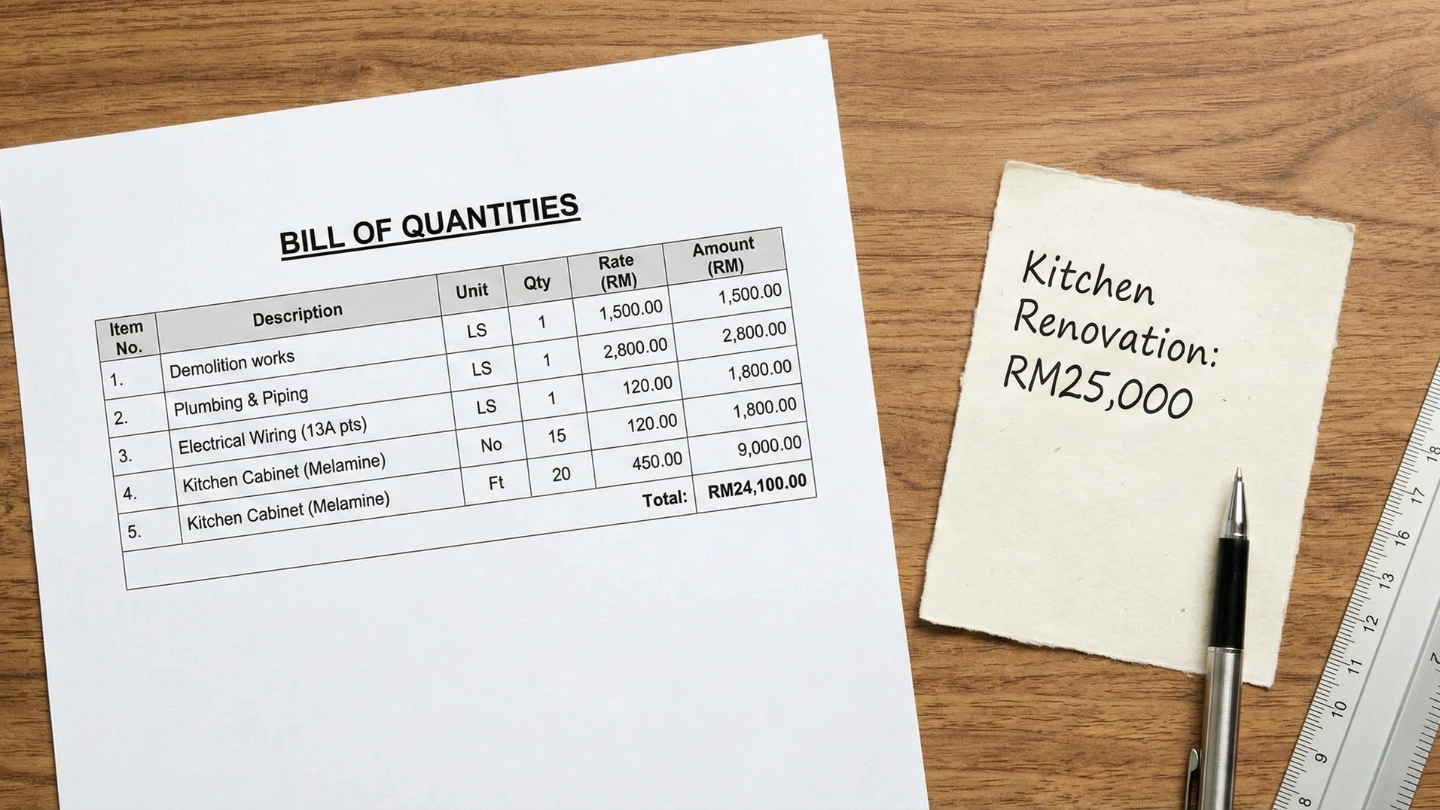
If a contractor gives you a one-page quote that says "Kitchen Renovation: RM25,000," throw it away. You need a Bill of Quantities (BQ).
A vague quote allows them to swap high-end materials for cheap ones.
Vague: Supply and install tiles.
Specific: Supply and install 600x600mm Porcelain Tiles (Brand: Guocera or equivalent). Allow for RM12.00/sqft material cost.
If they don't specify the brand or the "allowance" price, you will end up with warped tiles that create a tripping hazard.
3. The CIDB Check is Non-Negotiable
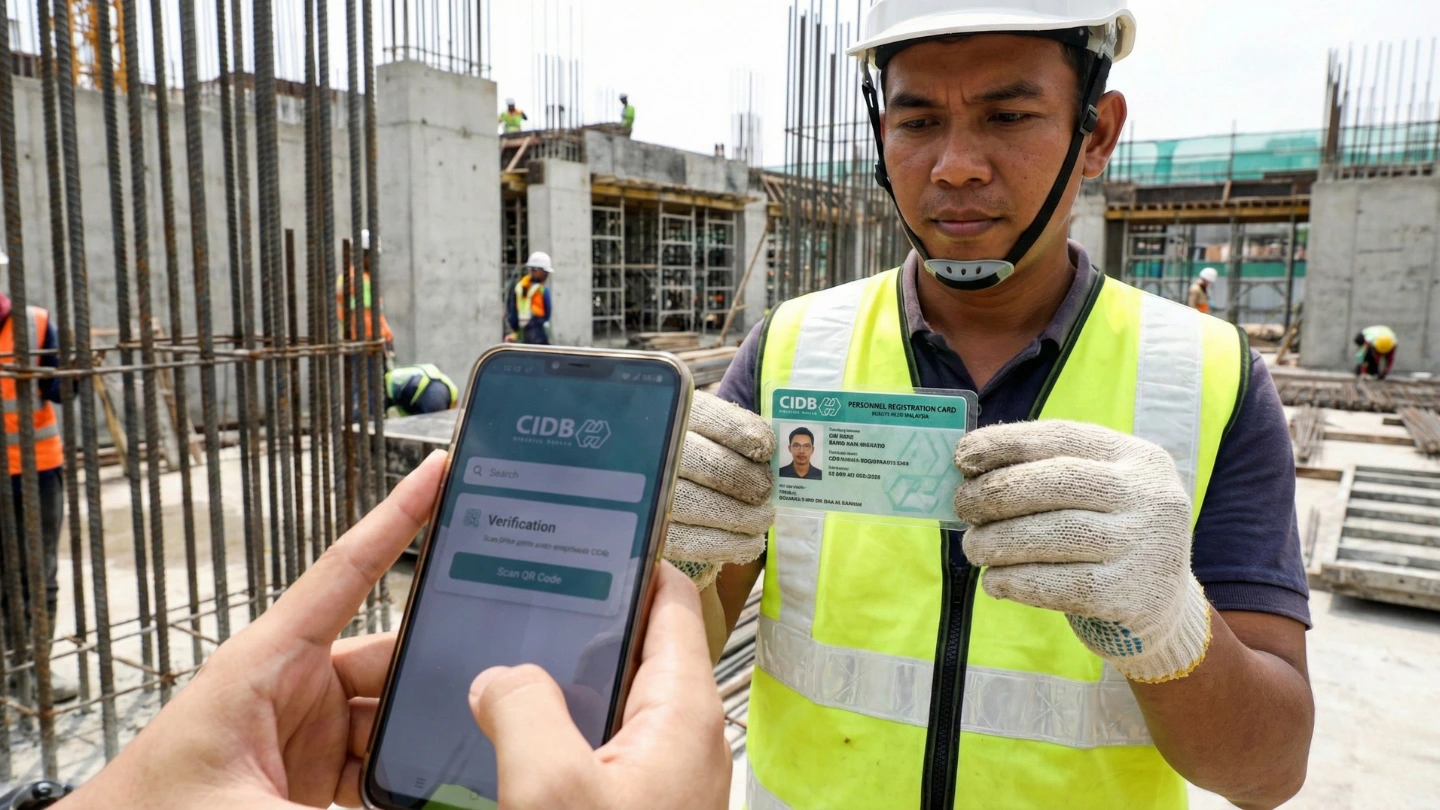
In Malaysia, a contractor must be registered with the Construction Industry Development Board (CIDB). This is not just paperwork; it is your safety net.
Grade G1: Can only do work up to RM200k.
Grade G3: Can do work up to RM1 million.
If you are doing a massive extension on a corner lot, a G1 contractor is legally out of their depth. Ask for their registration number and check it on the CIDB app. If they hesitate, they are likely unlicensed.
4. Money Talk: The 5% Retention Sum
This is the industry standard for protecting yourself, yet most homeowners don't know to ask for it.
Never pay 100% upon completion. Negotiate a 5% Retention Sum. This means you hold onto the final 5% of the total cost for 3 to 6 months after handover.
Why? Defects like hairline cracks or leaking pipes often don't show up until weeks after you move in.
The Leverage: That 5% ensures they come back to fix the problem. Without it, you are chasing ghosts.
5. Red Flags During the Interview
"I can start tomorrow." Reliable contractors usually have a 2-4 week lead time. If they are free immediately, ask why.
The "Yes Man." If you ask to remove a structural pillar and they say "Sure, no problem" without asking for a structural engineer's drawing, they are dangerous.
Pressure Tactics: "Material prices are going up next week, sign now." This is a sales tactic, not a construction reality.

A Final Thought
Go back to your shortlist. Send them a text asking about their Defect Liability Period (DLP). A confident builder will offer at least 6 to 12 months. If they offer "1 month warranty," they don't trust their own work. Why should you?