
If you are reading this, you likely have a Pinterest board full of shaker-style cabinets and fluted islands, but you are also staring at a quotation that makes your eyes water. Or perhaps you are standing in an empty new condo unit, trying to figure out if you can actually knock down that wall to create an open-concept dry kitchen without the management office seizing your deposit.
The kitchen is the most technical, expensive, and permanent renovation you will undertake. Unlike a bedroom where you can swap out a rug or repaint a wall, a kitchen mistake is set in stone (sometimes literally, if you choose the wrong countertop).
In my 15 years designing for Malaysian homes, I have seen too many homeowners blow their budget on aesthetic finishes while neglecting the "boring" infrastructure—only to face leaking pipes or warping cabinets two years later.
This is not a list of trends. This is a masterclass on how to build a kitchen that survives real life—and real sambal—in the Malaysian climate.
Phase 1: The Layout (Wet vs. Dry Logic)
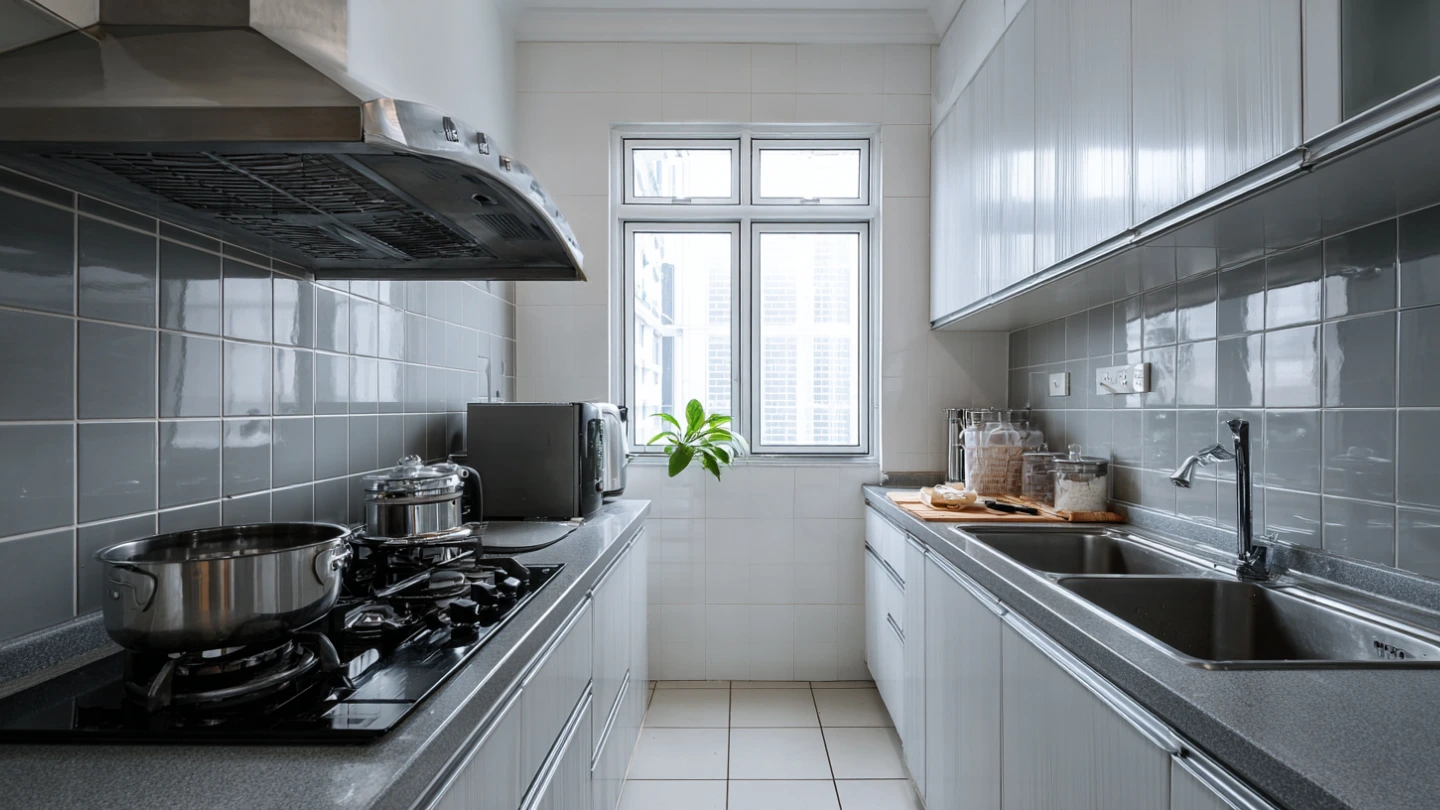
In Western design blogs, you will see massive open kitchens. In Malaysia, we have a unique cultural necessity: the separation of the "Wet" and "Dry" kitchen.
If you do heavy cooking—frying fish, stir-frying with wok hei, or cooking curries—a single open kitchen is a risk. Oil particles travel. The smell of belacan lingers on curtains and sofas.
The Dry Kitchen (The "Show" Kitchen)
This is where you make coffee, prep light breakfasts, and host guests. It often connects to the dining or living area.
Priorities: Aesthetics, lighting, and light storage (snacks, cups).
Appliance focus: Fridge, microwave, coffee machine, wine chiller.
Flooring: Can flow from the living room (e.g., timber or vinyl).
The Wet Kitchen (The "Workhorse")
This is where the battle happens. It needs to be enclosed or semi-enclosed with powerful ventilation.
Priorities: Ventilation, durability, and washability.
Appliance focus: Gas hob (high BTU), deep sink, dishwasher, heavy-duty extractor hood.
Flooring: Non-slip tiles are non-negotiable here.
Designer Pro-Tip:
If you are in a smaller condo (under 1,000 sq ft) and cannot spare space for two separate rooms, consider a glass partition or sliding door system. It keeps the visual "openness" of a dry kitchen but creates a physical barrier against grease and fumes during heavy cooking sessions. (See our guide on Small Space Storage Solutions for more ideas on maximising compact layouts).
Phase 2: The Infrastructure (What You Don't See)
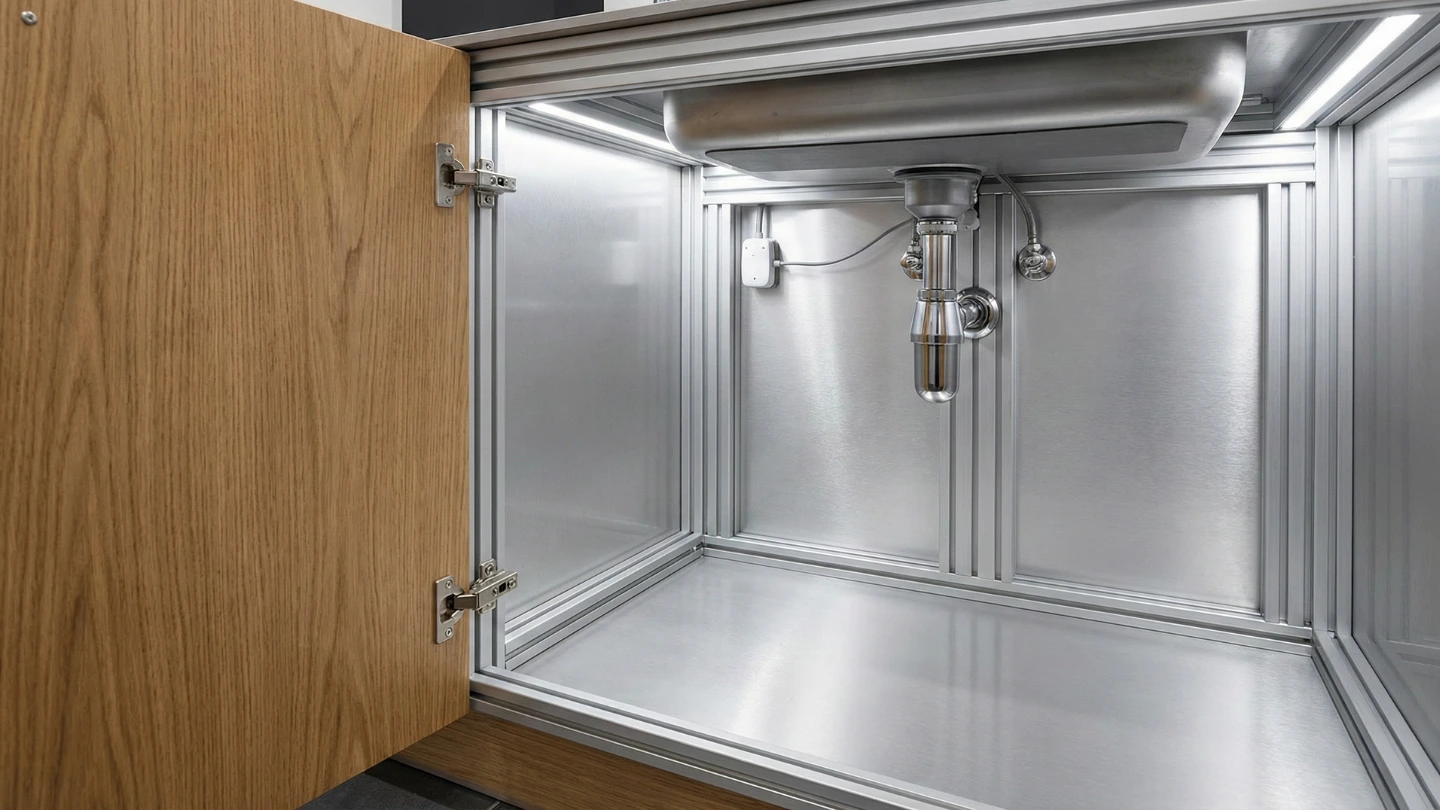
Before we look at door handles, we must talk about the veins of the kitchen: plumbing and electrical. If you are already at this stage, make sure you check our 7-Day Checklist Before the Hacking Starts to avoid common site prep mistakes.
1. Plumbing & Gas
Piping: If you are renovating an older terrace house (20+ years), replace the concealed piping. Old galvanised iron pipes rust and leak. Switch to poly piping.
Gas: If you use gas cylinders, plan a ventilated cabinet for the tank. It needs louvres or holes at the bottom (gas is heavier than air) to prevent dangerous build-up in case of a leak.
2. Electrical & Power
Heavy Duty Points: Your induction cooker, oven, and steam oven usually require a dedicated 15A or 20A power point directly from the DB box. Do not let your contractor loop these off a standard socket; it is a fire hazard.
The "Hidden" Sockets: Plan sockets inside your appliance garage for the rice cooker or Thermomix, and under the sink if you plan to install a water dispenser or waste disposal unit later.
3. Ventilation (The Hood)
For Malaysian cooking, a recirculating hood (which filters air and blows it back out) is rarely enough. You need a ducted hood that pipes fumes outside.
Check the suction power: Look for at least 1,200 m³/hr.
Check the ducting route: In condos, you are often limited by where the original hole is cored. Do not add too many bends to the ducting pipe, as every bend reduces suction efficiency.
Phase 3: Materials (Surviving Humidity & Heat)
The tropical climate is brutal on interiors. Humidity causes poor-quality wood to swell, and heat can peel lesser laminates.
1. Cabinet Carcass (The Body)
Melamine Chipboard: Standard for dry kitchens. Cost-effective.
Plywood: Stronger and more water-resistant. Recommended for wet kitchens.
Aluminium: The ultimate survivor. It is water-proof, termite-proof, and fire-resistant.
Designer Pro-Tip:
Use a "hybrid" approach to save money. Use melamine for wall units (safe from water) and Aluminium or PVC foam board strictly for the sink unit carcass. The area under the sink is the #1 spot for leaks and rot. Investing here saves you a full cabinet replacement in five years.
2. Cabinet Doors (The Face)
Melamine: cheapest, but edges can peel if exposed to heat/water over time.
4G/Glass: Very popular in KL. It is glass adhered to a frame. Easy to wipe down, high gloss, and scratch-resistant.
Spray Paint / PU: The premium choice for that seamless, matte, "modern farmhouse" look. However, it chips if you bang a pot against it.
3. Countertops (The Work Surface)
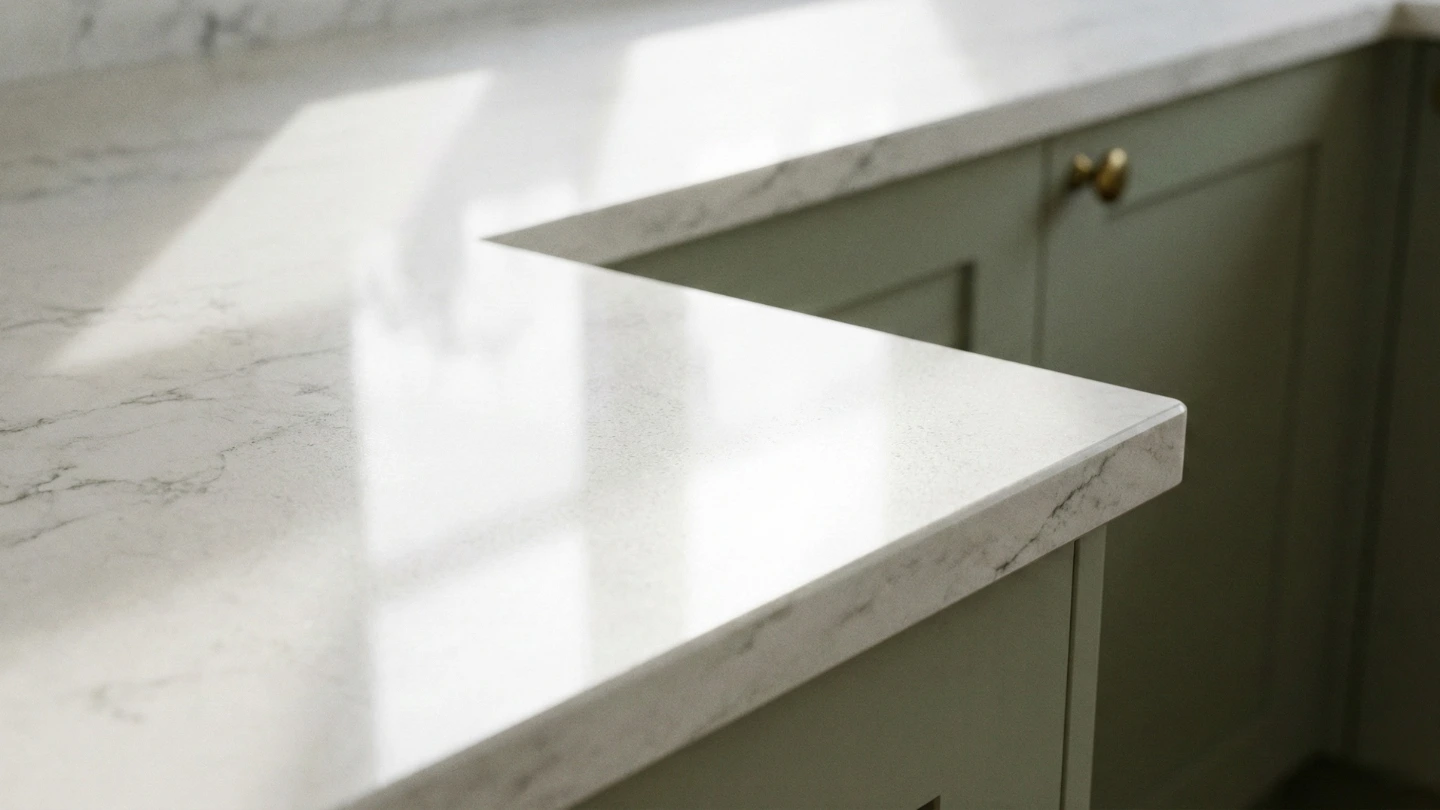
Quartz: The current king. Engineered stone that is non-porous (won't stain from curry if wiped quickly) and hard.
Sintered Stone: The new contender. It is essentially porcelain. You can put a hot pot directly on it without scorch marks (unlike Quartz).
Solid Surface: Avoid this for wet kitchens. It is softer and scratches easily. It also melts under high heat.
Granite: Natural and beautiful, but porous. It needs sealing every year, or that turmeric stain will be there forever.
Phase 4: The Triangle vs. The Zone
The old "Kitchen Work Triangle" (Line between Sink, Fridge, Stove) is dated. Modern kitchens are often too big or have multiple cooks. Instead, think in Zones.
Prep Zone: Next to the sink. You need at least 900mm of clear counter space here. This is where you chop vegetables.
Cooking Zone: Flanking the hob. You need space for ingredients on the left and a landing pad for the hot wok on the right.
Storage Zone: Fridge and pantry. Place this near the entrance of the kitchen so hungry kids don't get in the chef's way when grabbing a juice.
Phase 5: Real Costs (2026 Estimates)
Budgeting is where the stress peaks. Let’s break down realistic costs for a standard 10ft x 10ft L-shaped kitchen in the Klang Valley. Note: These are renovation costs, excluding appliances.
Tier 1: The "Rental" Spec (RM 12,000 - RM 18,000)
Materials: Melamine doors, melamine tops, basic soft-close hinges.
Scope: straightforward cabinet replacement, no major hacking or rewiring.
Looking for more ways to save? Read our guide on Kitchen Renovation Under RM15,000.
Tier 2: The "Homeowner" Spec (RM 25,000 - RM 45,000)
Materials: 4G glass or Acrylic doors, Quartz stone countertop, quality plywood carcass.
Scope: Includes plumbing relocation, tiling backsplash, better internal fittings (pull-out baskets), and under-cabinet lighting.
Tier 3: The "Chef's Dream" (RM 55,000+)
Materials: Sintered stone tops, PU spray paint finish or premium laminate, full aluminium carcass.
Scope: Blum hardware throughout (lift systems, drawer runners), complex electrical work, smart home integration, and extensive tiling/flooring work.
Where does the money go?
People forget that "invisible" costs eat up 30% of the budget.
Haulage & Disposal: removing the old kitchen debris.
Protection: Corrugated board to protect your condo lift and hallway flooring.
Permits: Management office deposits and processing fees.
Common Mistakes to Avoid
Ignoring the Backsplash: You paint the wall behind the stove to save money. Two months later, it is covered in yellow grease spots that won't scrub off. Install a backsplash (tiles or tempered glass) at least 600mm high.
Deep Corner Cabinets: The "Blind Corner" is a black hole where Tupperware goes to die. If you have a corner, you must budget for a kidney-shape pull-out mechanism, or accept that the space is dead.
Lighting Errors: A single ceiling light casts your shadow onto the chopping board. You need task lighting—LED strips under the wall cabinets are essential, not just aesthetic.
A Note on Project Management
Renovating a kitchen involves a plumber, an electrician, a cabinet installer, a wet works contractor (tiler), and a painter. If one is late, the others cannot start.
If you are coordinating this yourself, be prepared to be on-site daily to solve conflicts ("The wireman put the socket exactly where the cabinet guy needs to drill"). This is often the biggest hidden cost—your time. We break down these trade-offs in our article DIY vs Interior Designer Malaysia: Cost Breakdown.
We manage the timeline so you don't have to explain to the tiler why the plumber hasn't shown up.
Ready to Build Your Kitchen?
A kitchen renovation is a journey. It requires balancing your culinary habits with structural realities. Whether you need a heavy-duty wet kitchen for family feasts or a sleek dry kitchen for entertaining, we can help you navigate the materials and layouts that make sense for your specific unit.
Don't let the technical details overwhelm you. Let's sit down and look at your floor plan together.