
Everything Malaysian homeowners need to know about aircon placement, choosing the right HP, installation costs, and avoiding common mistakes in condos and landed homes.
Malaysia's heat and humidity make air conditioning less of a luxury and more of a necessity. But here's the thing — buying a good aircon unit is only half the battle. Where you put it, how it's installed, and whether it's the right size for your room can mean the difference between a cool, comfortable home and an electricity bill that keeps you up at night.
Whether you're renovating a new condo, fitting out a terrace house, or simply replacing an old unit, this guide covers everything you need to get your aircon installation right the first time.
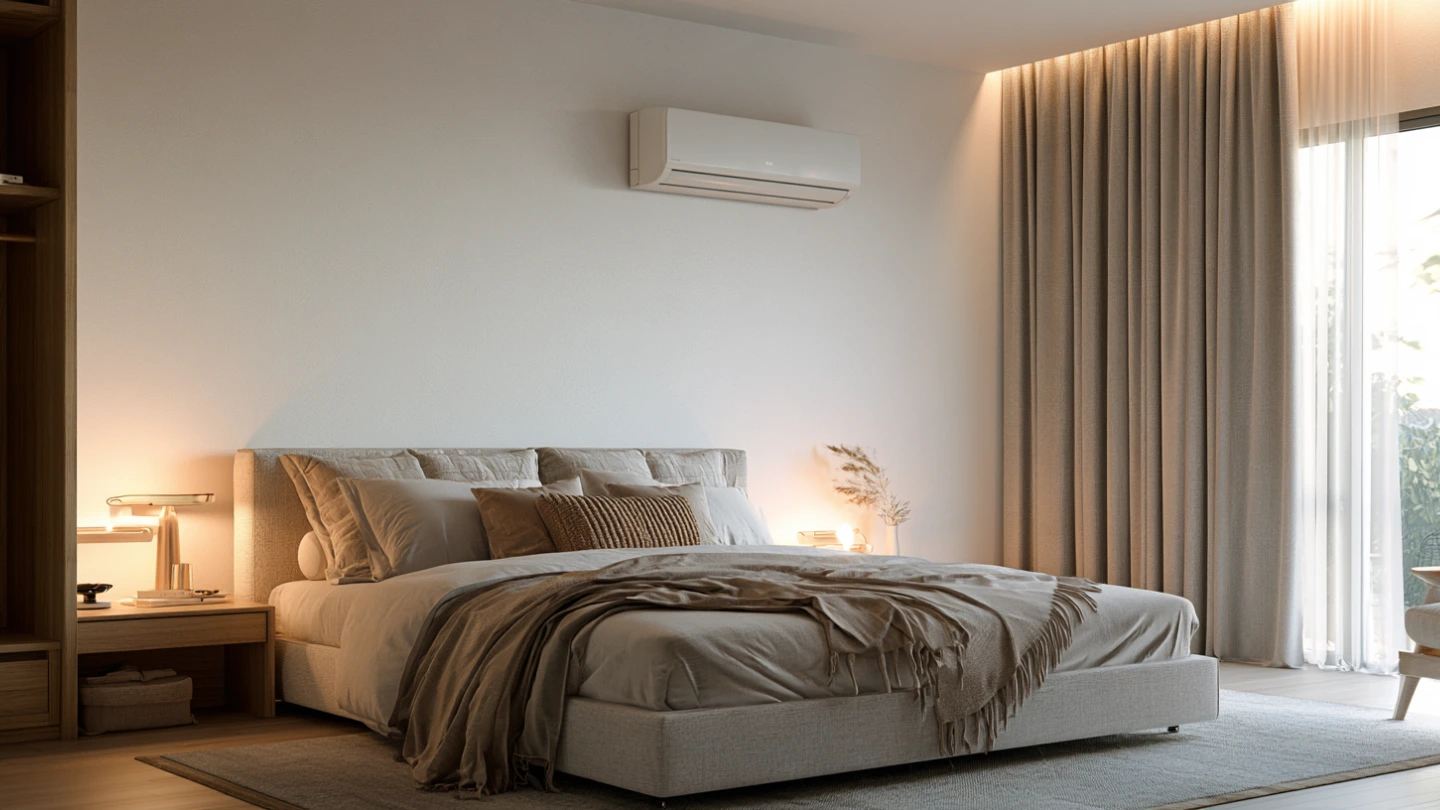
Why Aircon Placement Matters More Than You Think
Most homeowners focus entirely on brand and price when buying an aircon. Placement is an afterthought — and that's a mistake.
Poor placement leads to uneven cooling, where one part of the room is freezing while another stays warm. It causes the unit to work harder than it needs to, driving up your electricity bill and shortening the lifespan of the compressor. In some cases, badly positioned units can even cause water leakage into your walls or ceiling.
In a Malaysian home — where you're dealing with high humidity, direct sun exposure, and often compact layouts — getting placement right from day one is critical.
Types of Aircon Units Available in Malaysia
Before deciding on placement, it helps to know which type of aircon suits your space.
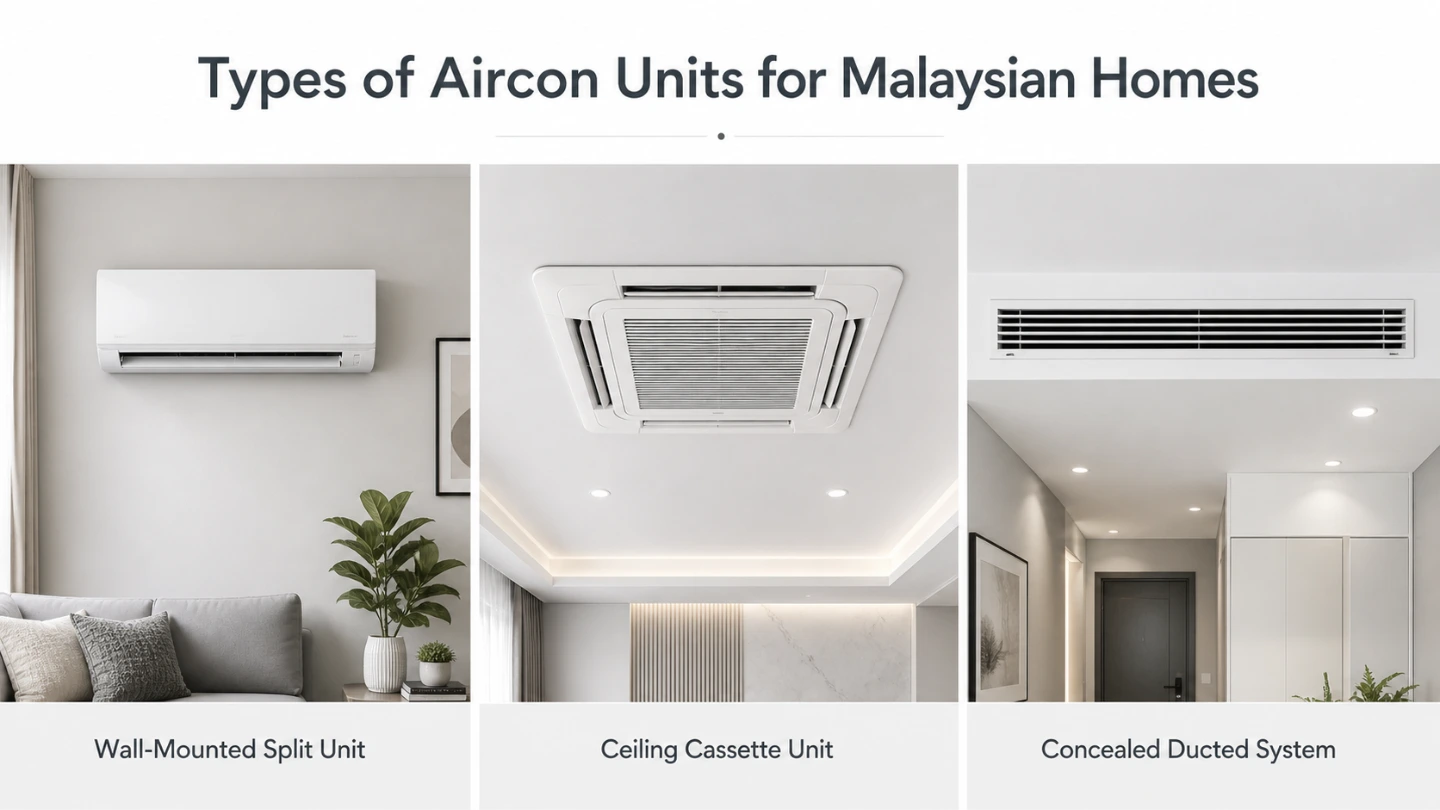
Split Unit (Wall-Mounted)
The most common type in Malaysian homes. The indoor unit mounts on the wall, while the outdoor compressor sits outside. Ideal for bedrooms, living rooms, and home offices. Easy to install and relatively affordable.
Inverter vs Non-Inverter
Inverter units adjust their compressor speed to maintain the set temperature, consuming less electricity over time. Non-inverter units run at full power until the room cools, then switch off — less efficient for long-term use. In Malaysia's climate, inverter units are almost always the better investment despite costing more upfront.
Ceiling Cassette
Mounted flush into the ceiling, these distribute air evenly in four directions. They're popular in open-plan living and dining areas, and commercial spaces. Installation is more complex and typically more expensive.
Ceiling-Concealed (Ducted)
Hidden above a false ceiling with vents throughout the room. Gives a clean, seamless look but requires more planning, more space above the ceiling, and a higher budget. Common in higher-end renovations.
Portable Aircon
No permanent installation needed, but significantly less efficient. Suitable only as a temporary or supplementary solution — not recommended as a primary cooling unit for Malaysian weather.
How to Choose the Right HP for Your Room
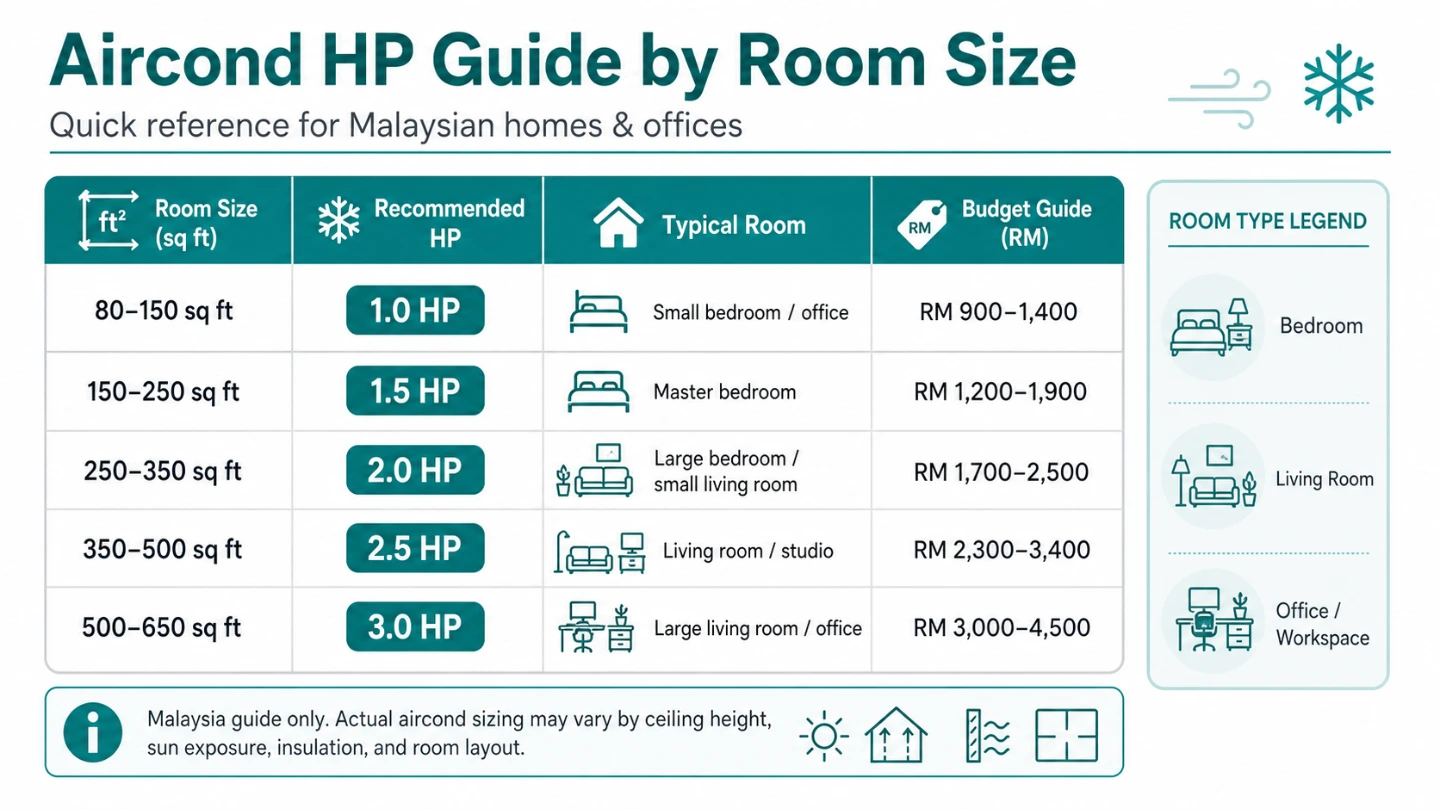
In Malaysia, aircon capacity is measured in Horsepower (HP) rather than BTU. As a general guide:
| Room Size | Recommended HP |
|---|---|
| Up to 150 sq ft (small bedroom) | 1.0 HP |
| 150–250 sq ft (standard bedroom) | 1.5 HP |
| 250–400 sq ft (master bedroom / large bedroom) | 2.0 HP |
| 400–550 sq ft (living / dining area) | 2.5 HP |
| 550–750 sq ft (large open-plan space) | 3.0 HP |
Prices listed are for reference only. Actual costs may vary — always refer to your vendor or contractor for the most accurate and up-to-date quotation.
Important caveats for Malaysian homes:
- Direct sunlight exposure — Rooms with large west-facing windows or minimal shade may need a higher HP rating
- Ceiling height — Rooms taller than 3 metres (e.g., bungalows or double-storey living halls) require more cooling capacity
- Occupancy — A bedroom used by two adults generates more body heat than a single-person room
- Kitchen proximity — Rooms near a wet kitchen with heat spillover may need upsizing
When in doubt, size up by 0.5 HP rather than down. An undersized unit will run continuously trying to reach your set temperature, wearing out faster and costing more in electricity.
Room-by-Room Aircon Placement Guide
Bedroom
The indoor unit should be mounted on the wall opposite or perpendicular to the bed — never directly above where you sleep. Cool air blowing directly onto a sleeping person causes discomfort and can trigger respiratory issues over time.
Mount the unit high on the wall (typically 15–20 cm from the ceiling) to allow cold air to circulate downward naturally. Ensure the airflow direction can be angled away from the bed.
What to avoid: Mounting above a wardrobe or headboard. This restricts airflow and makes maintenance (filter cleaning) difficult.
Living Room
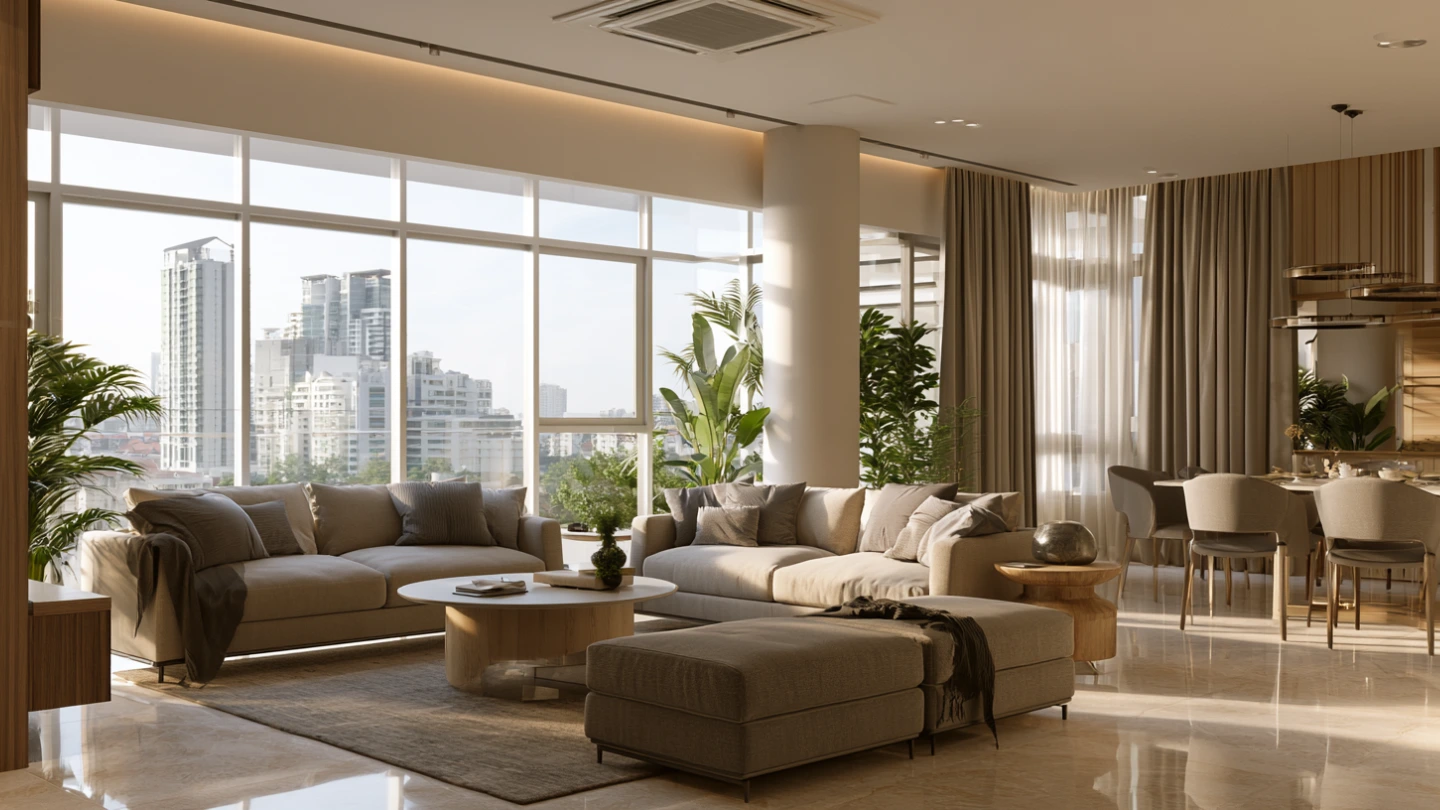
For a standard rectangular living room, place the unit on the shorter wall so cool air travels the length of the room. For open-plan layouts, a ceiling cassette is worth considering as it distributes air in multiple directions.
Avoid placing the unit directly above the TV or sofa — condensation drips and direct airflow are both unpleasant.
Kitchen / Dining Area
If your home has an enclosed dry kitchen or dining area, a standard split unit works well. Position it on the wall with the fewest obstructions and away from cooking equipment — grease and steam will clog filters and coat the indoor unit faster than in any other room.
Home Office
Position the unit so air flows across the room rather than directly at your desk. Direct airflow onto a computer screen or workspace causes glare and discomfort during long working hours. A unit on the side wall, angled slightly away, works well.
Children's Room
Apply the same logic as a bedroom — avoid mounting directly above the sleeping area. Children are more sensitive to direct cold airflow, so position the unit to cool the room indirectly.
Outdoor Compressor Placement: Often Overlooked, Always Important
The outdoor compressor is just as important as the indoor unit, yet most homeowners leave placement decisions entirely to the installer.
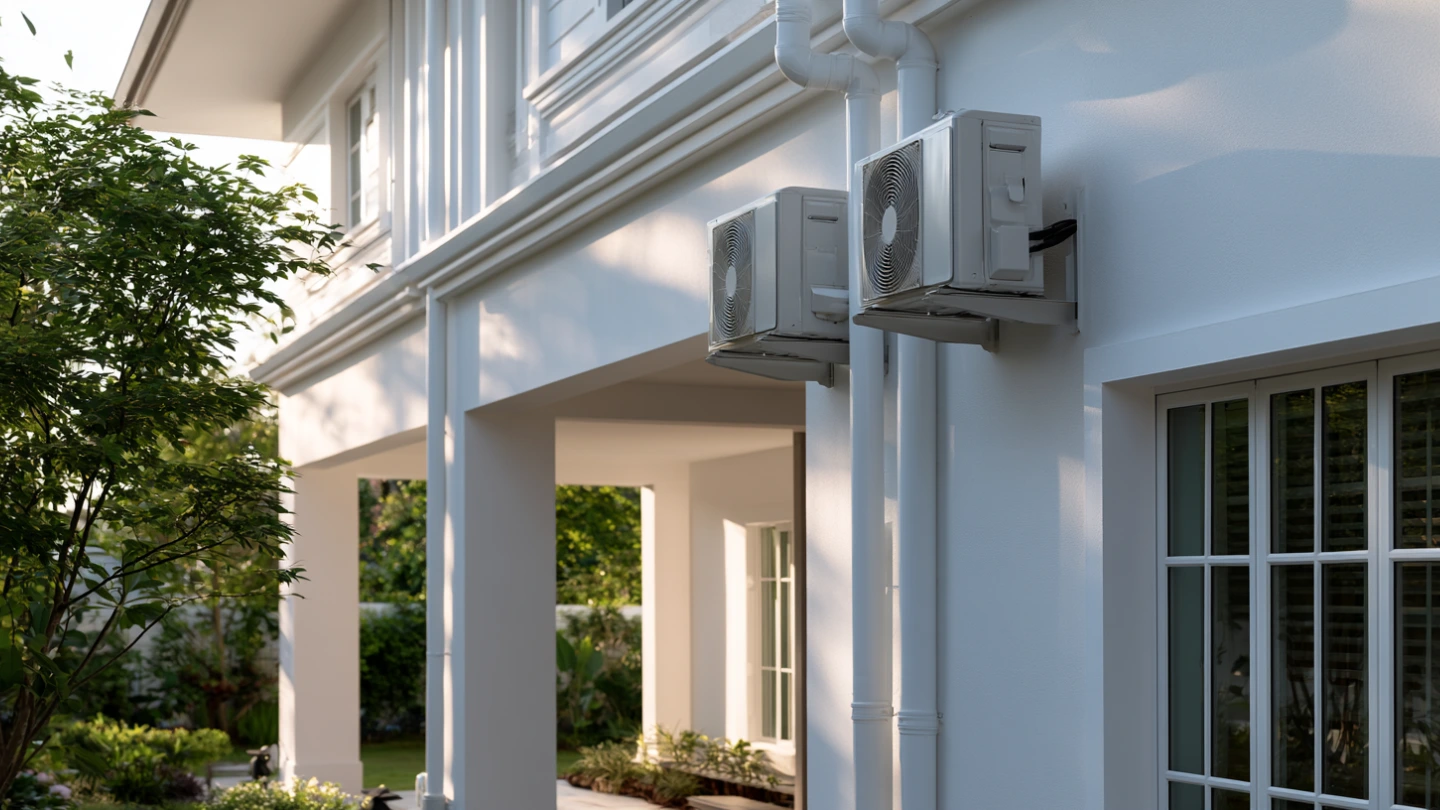
Key rules for compressor placement:
- Ventilation is everything — The compressor releases heat as it works. It needs adequate clearance on all sides (at least 30–50 cm) to breathe properly. A compressor boxed in by walls or fences will overheat and fail prematurely.
- Avoid direct afternoon sun — A compressor baking in direct west-facing sun has to work harder. Shade it with a louvred box or pergola if possible — but never enclose it fully.
- Keep the pipe run short — The longer the refrigerant pipes between indoor unit and compressor, the less efficient the system. Aim to keep the pipe run under 5 metres where possible.
- Drainage matters — Condensate water from the indoor unit must have a clear drainage path. Poor drainage leads to water stains on walls and, eventually, mould.
For condos: Check your JMB or management office guidelines before installation. Most condos restrict where compressors can be placed — common approved locations are the aircon ledge (if provided) or service yard. Unapproved placements can result in fines or forced removal.
Aircon Installation Costs in Malaysia (2025 Guide)
Installation costs vary depending on the unit type, pipe length, and whether hacking or false ceiling works are involved.
| Item | Estimated Cost (RM) |
|---|---|
| Standard split unit installation (1–2 HP) | RM 300 – RM 500 per unit |
| Inverter split unit (1.5–2.5 HP) | RM 400 – RM 700 per unit |
| Ceiling cassette installation | RM 800 – RM 1,500 per unit |
| Concealed/ducted aircon installation | RM 2,000 – RM 5,000+ per zone |
| Extra pipe run (per metre beyond 3m) | RM 30 – RM 60 per metre |
| Drainage pipe installation | RM 100 – RM 300 |
| Compressor bracket / wall mount | RM 80 – RM 150 |
Prices listed are for reference only. Actual costs may vary — always refer to your vendor or contractor for the most accurate and up-to-date quotation.
Hidden Costs Malaysian Homeowners Miss
This is where renovation budgets get derailed. Here are the extras that don't show up in the basic installation quote:
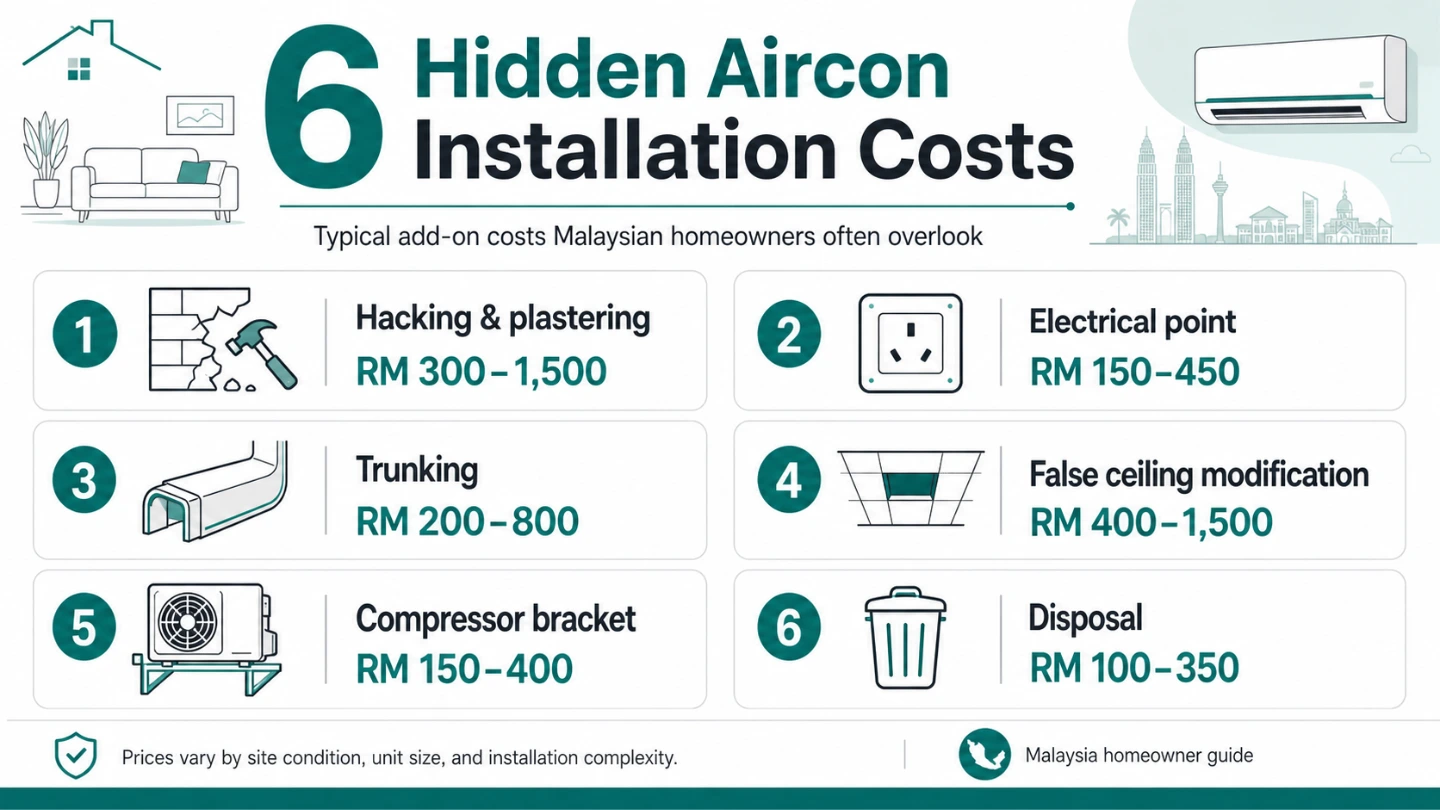
1. Hacking and plastering If you want to conceal pipes within the wall rather than running them on the surface with a pipe casing, walls need to be hacked and replastered. This adds RM 200–RM 600 per unit depending on wall type and pipe length.
2. Electrical point installation Each aircon unit requires its own dedicated electrical point. If your renovation doesn't already include these, you'll need an electrician to install them — typically RM 150–RM 350 per point.
3. Trunking (pipe cover) If pipes run along the surface of walls, PVC trunking covers them neatly. Budget RM 80–RM 200 per unit depending on length.
4. False ceiling modifications Installing ceiling cassettes or concealed units requires opening up or modifying your false ceiling. This can add significantly to costs — budget RM 500–RM 2,000 depending on scope.
5. Compressor platform or bracket A properly fabricated bracket or platform for the outdoor compressor, especially in high-rise condos, is a safety requirement and adds RM 100–RM 300 to your cost.
6. Transport and disposal Disposing of old aircon units and transporting equipment to upper floors in high-rises can carry additional charges — always ask your contractor upfront.
What to Check Before Your Installer Arrives
Spending five minutes on preparation saves hours of back-and-forth after installation day.
- Confirm power point locations — Make sure dedicated aircon power points are in place or planned before the aircon team arrives
- Decide on pipe routing — Know whether you want surface trunking or concealed pipes (this affects cost and timing significantly)
- Check compressor placement with your contractor — Walk through the proposed compressor location together; don't leave it entirely to the installer
- Ask about drainage — Confirm where condensate water will drain and make sure it doesn't stain your walls or pool on a neighbour's balcony
- Get a written quotation — Ensure all items (unit, installation, trunking, drainage, bracket) are itemised separately
Aircon Maintenance Tips for Malaysian Homes
Malaysia's humidity means your aircon works harder and longer than units in temperate climates. A few habits will extend its lifespan significantly.
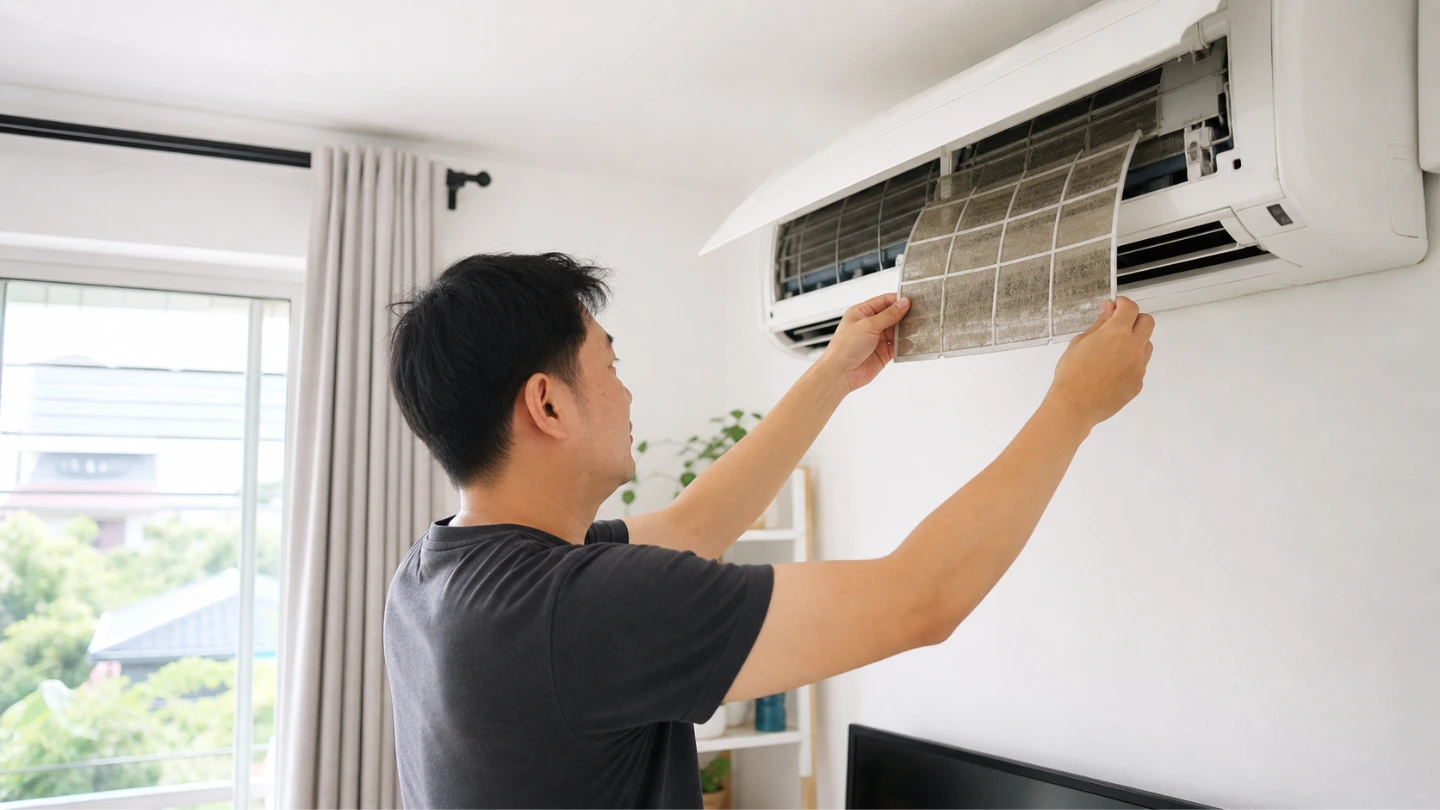
- Clean filters every 4–6 weeks — Dusty, clogged filters reduce airflow and force the compressor to work harder
- Service the unit every 6 months — Professional servicing includes chemical wash, checking refrigerant levels, and inspecting drainage
- Don't set below 22°C — Setting your aircon to 16°C to cool faster is a myth. It just runs longer and uses more electricity. The ideal setting for Malaysian weather is 24–26°C
- Use the timer function — Rather than running the aircon all night, set a timer to switch off 1–2 hours after you fall asleep
- Keep surrounding area clear — Ensure furniture, curtains, and walls don't block airflow from either the indoor or outdoor unit
Condo vs Landed Home: Key Differences to Know
Condo owners need to check with their JMB before any installation. Common rules include approved compressor locations, restrictions on hacking structural walls, and requirements for pipe concealment on façade-facing walls. Violating these can result in fines. Read your Deed of Mutual Covenants (DMC) carefully.
Terrace and semi-detached homeowners have more flexibility but still need to consider neighbour proximity when placing compressors — particularly in back-to-back terrace rows where a poorly placed compressor can be a noise nuisance.
Bungalow owners typically have the most freedom but also the largest spaces to cool — proper HP calculation and possibly zoning with multiple units becomes more important at this level.
Frequently Asked Questions
How many aircon units do I need for a 3-bedroom condo? Typically 3–4 units: one per bedroom and one for the living/dining area. Some homeowners also add a unit for the wet kitchen if it's enclosed.
Can I install aircon without hacking walls? Yes — surface-mounted pipe casing (trunking) avoids hacking entirely and is a popular choice in rentals or for budget-conscious homeowners. It's not as clean-looking but is fully functional.
How long does aircon installation take? A standard single split unit takes 2–4 hours. A full home installation of 4–5 units typically takes one full day if all electrical points are already in place.
Does my condo JMB need to approve aircon installation? Usually yes, particularly for the compressor location and any façade-visible pipe work. Always check with your management office before proceeding.
Ready to Plan Your Home's Aircon Layout?
Getting aircon placement right is one of the most practical decisions you can make during a renovation — it affects your comfort, your electricity bills, and the long-term performance of your units.
If you're in the middle of a renovation and want to ensure your aircon layout is planned alongside your electrical, ceiling, and interior works, our team can help you get it right from the start.
Get a free consultation with our interior design team →
We work with homeowners across Kuala Lumpur and Selangor to plan renovations that are practical, well-costed, and built for Malaysia's climate. Reach out today and let's talk about your home.