
You've just received your renovation quotation and noticed the flooring line item spans three different product categories — and you have no idea what the difference is. Sound familiar?
Flooring is one of the most permanent decisions in a renovation. Unlike paint colours or cushion covers, you cannot simply swap it out when you grow tired of it. Get it wrong and you're living with the consequences for the next ten to fifteen years. Get it right, and it quietly ties your entire home together.
In Malaysia, choosing flooring is made more complicated by our climate. High humidity, heavy monsoon rains tracked in from outside, and the absence of central heating all influence what performs well in our homes. What works beautifully in a dry European climate can warp, stain, or become dangerously slippery here.
This guide covers all the major flooring options available to Malaysian homeowners — with honest pros and cons, real RM cost estimates, and specific recommendations for different property types and rooms.
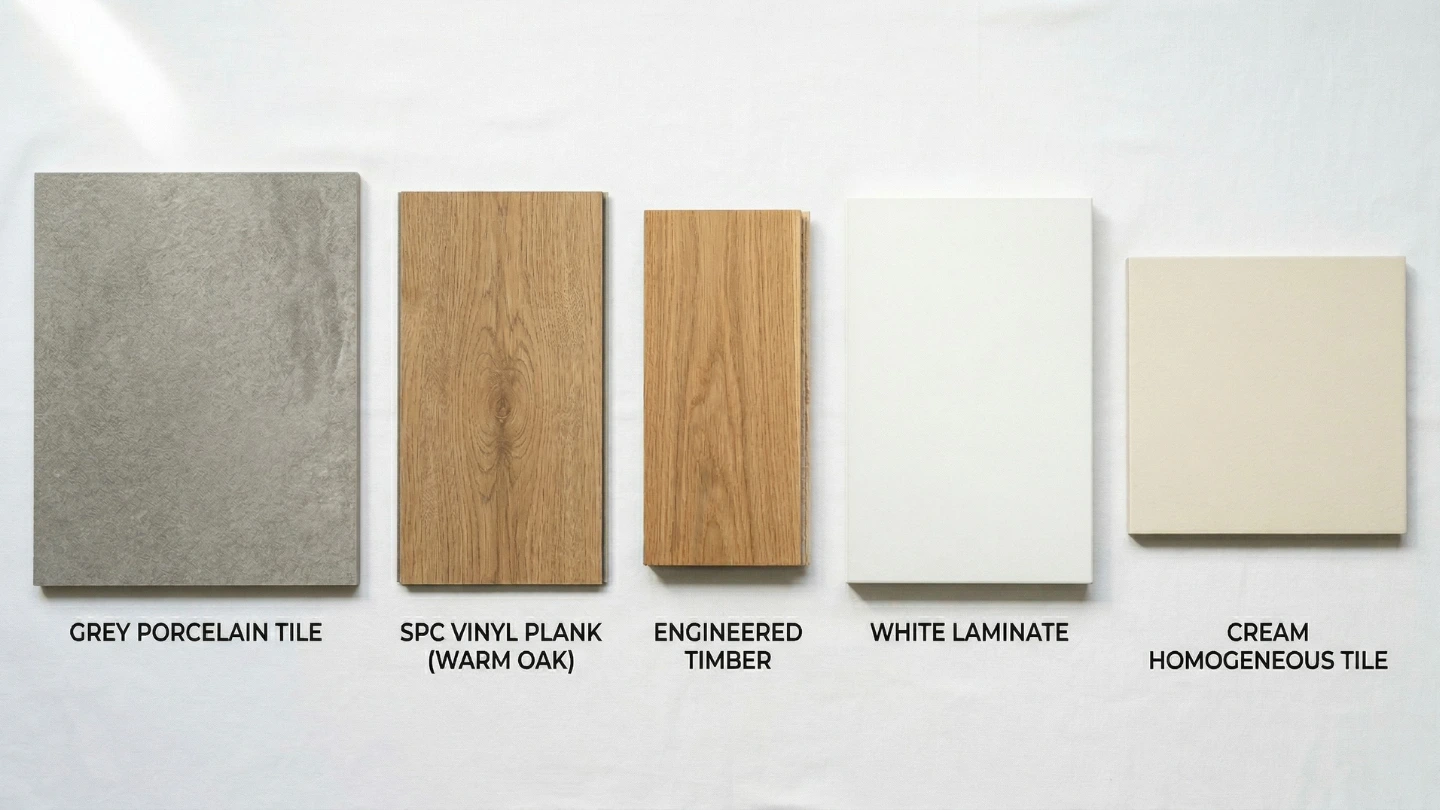
The Six Main Flooring Options for Malaysian Homes
Before diving into each type, here is a quick overview of what you will encounter when speaking to contractors and interior designers:
- Porcelain and ceramic tiles
- Homogeneous tiles
- Luxury Vinyl Tile (LVT) and Stone Plastic Composite (SPC) vinyl planks
- Engineered timber
- Laminate flooring
- Epoxy coating
Each has a different price point, aesthetic, and performance profile. The "best" choice depends on your room, your lifestyle, and your budget — not on what looks most impressive in a showroom.
1. Porcelain and Ceramic Tiles
Tiles remain the most popular flooring choice in Malaysian homes, and with good reason. They are completely impervious to moisture, easy to clean, and can handle the heat, humidity, and occasional flood that comes with tropical living.
Ceramic tiles are made from clay and are typically used in lower-traffic areas like bathrooms. They are softer, more affordable, and easier to cut — but also easier to chip. Porcelain tiles are fired at a higher temperature, making them denser, harder, and more suitable for living areas, kitchens, and outdoor spaces.
Large-format tiles (600mm x 600mm and above) have become the dominant trend in Malaysian homes, creating a seamless, spacious look that suits both condos and landed properties.
Pros:
- Extremely moisture-resistant — ideal for Malaysia's humidity
- Durable and long-lasting (20–30 years with proper care)
- Wide range of designs, including wood-look and marble-effect options
- Suitable for wet areas, kitchens, and outdoor covered areas
- Easy to clean and hygienic
Cons:
- Cold underfoot — can feel clinical in bedrooms
- Grout lines require regular cleaning to prevent mould
- Hard surface — uncomfortable to stand on for long periods
- Cracking if there is structural movement
- Installation is messy and time-consuming
Cost estimate (materials + installation):
- Ceramic tiles: RM 5 – RM 12 per sq ft
- Porcelain tiles (standard range): RM 8 – RM 18 per sq ft
- Large-format / imported porcelain: RM 15 – RM 35+ per sq ft
Best for: Living rooms, kitchens, bathrooms, wet areas, and outdoor covered spaces across all Malaysian property types.
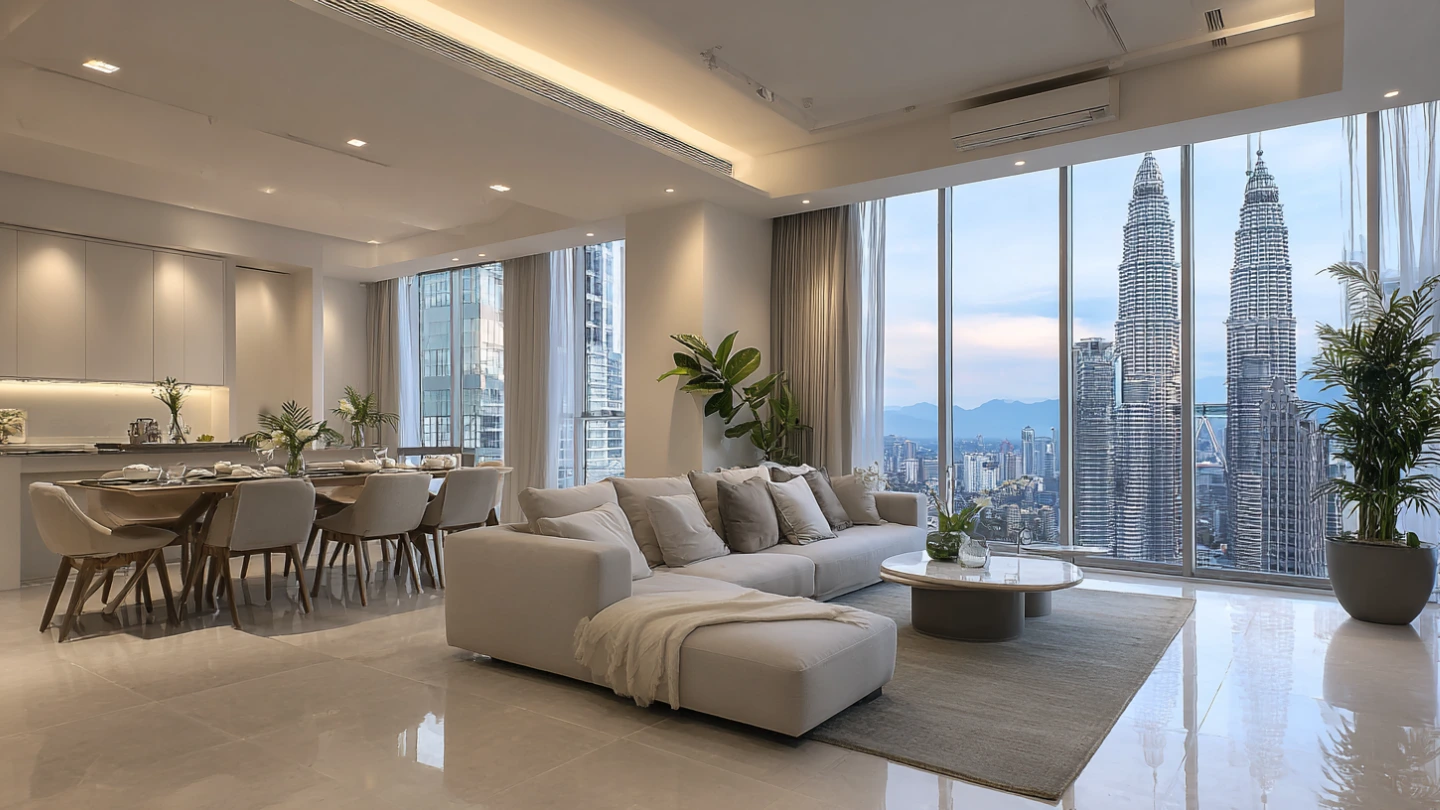
2. Homogeneous Tiles
Homogeneous tiles are a premium category of porcelain tile where the colour and pattern run through the entire thickness of the tile — not just the surface. This means chips and scratches are far less visible, making them exceptionally durable.
They are commonly found in higher-end Malaysian condos, commercial spaces, and public areas. For residential use, they are often selected for common areas, entranceways, and living rooms where both aesthetics and durability are priorities.
Pros:
- Extremely hard-wearing — scratch resistance is superior to standard tiles
- Consistent colour throughout, so chips are less noticeable
- Available in large formats with refined, luxurious finishes
- Suitable for high-traffic areas
Cons:
- Higher cost than standard porcelain
- Limited to solid or subtle pattern designs — less variety than printed tiles
- Still shares the same cold, hard feel underfoot
Cost estimate (materials + installation):
- RM 15 – RM 50+ per sq ft depending on size, finish, and brand
Best for: Entranceways, open-plan living areas, and commercial-grade renovations where long-term durability is the priority.
3. Luxury Vinyl Tile (LVT) and SPC Vinyl Planks
Vinyl flooring has undergone a complete transformation over the past decade. Modern LVT (Luxury Vinyl Tile) and SPC (Stone Plastic Composite) products bear almost no resemblance to the flimsy vinyl sheets of the past. They are now widely used in premium Malaysian condos and even commercial spaces.
SPC vinyl planks have become particularly popular in Malaysia because of their rigid core, which makes them stable in high-humidity environments. They convincingly mimic the look of timber or stone without the maintenance headaches that come with real wood.
Pros:
- 100% waterproof — suitable for bathrooms, kitchens, and laundry areas
- Comfortable and slightly warm underfoot compared to tiles
- Easier and faster to install (floating floor system — no adhesive required)
- Resistant to scratches, dents, and stains
- Softer on joints — great for families with elderly members or young children
- Wide variety of wood-look and stone-look designs
Cons:
- Cannot be refinished if deeply scratched — must be replaced
- Lower-quality products can look plasticky under certain lighting
- Edges can lift over time if not properly installed
- Not suitable for outdoor areas
Cost estimate (materials + installation):
- Entry-level LVT: RM 5 – RM 9 per sq ft
- Mid-range SPC vinyl plank: RM 9 – RM 18 per sq ft
- Premium SPC (thicker wear layer, embossed texture): RM 18 – RM 30 per sq ft
Best for: Bedrooms, living areas, home offices, and any room where you want the warm look of timber without the moisture vulnerability. Particularly popular in condos.
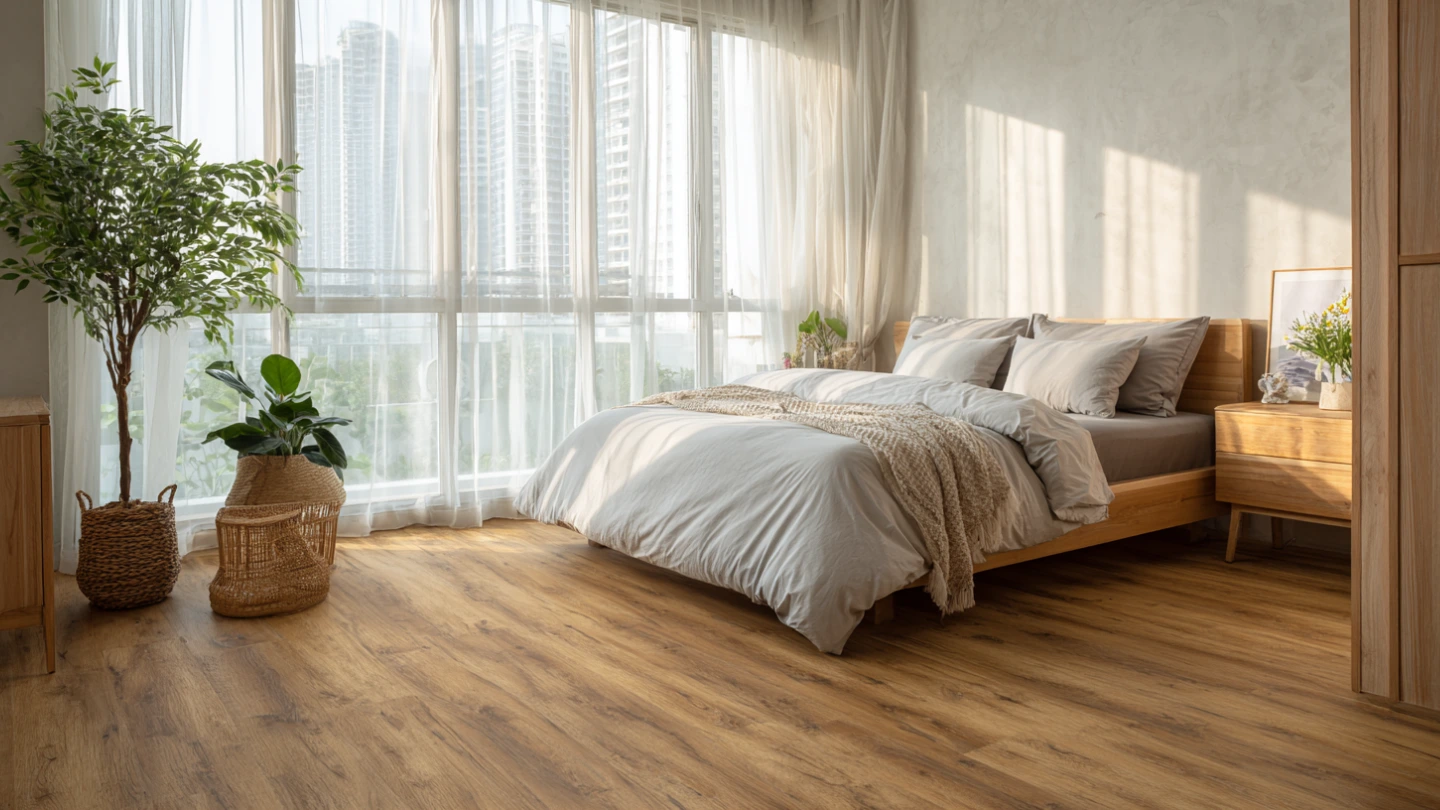
4. Engineered Timber
For homeowners who love the genuine warmth and character of real wood but are cautious about Malaysia's humidity, engineered timber is the practical compromise. It consists of a real hardwood veneer (typically 2–4mm thick) bonded over multiple layers of plywood or high-density fibreboard. This construction resists warping and expansion better than solid timber in humid climates.
Engineered timber looks and feels authentic underfoot. It can be sanded and refinished once or twice over its lifetime, extending its lifespan significantly.
Solid timber flooring is rarely recommended for Malaysian homes due to our humidity levels — it tends to expand, contract, and warp over time. Engineered timber is the accepted standard for wood flooring in this climate.
Pros:
- Genuine wood appearance and feel
- More stable than solid timber in Malaysia's humidity
- Can be refinished to refresh the surface
- Adds warmth and character that no tile or vinyl fully replicates
- Good acoustic performance — quieter underfoot than tiles
Cons:
- More expensive than vinyl and tiles
- Requires more maintenance — avoid mopping with excess water
- Vulnerable to moisture if subfloor is not properly waterproofed
- Scratches more easily than tiles or SPC vinyl
- Not suitable for bathrooms or wet areas
Cost estimate (materials + installation):
- Entry-level engineered timber: RM 12 – RM 20 per sq ft
- Mid-range (imported, thicker veneer): RM 20 – RM 40 per sq ft
- Premium (European oak, wide plank): RM 40 – RM 80+ per sq ft
Best for: Master bedrooms, living rooms, and study areas in landed properties where a premium natural finish is desired. Less common in high-rise condos due to moisture concerns.
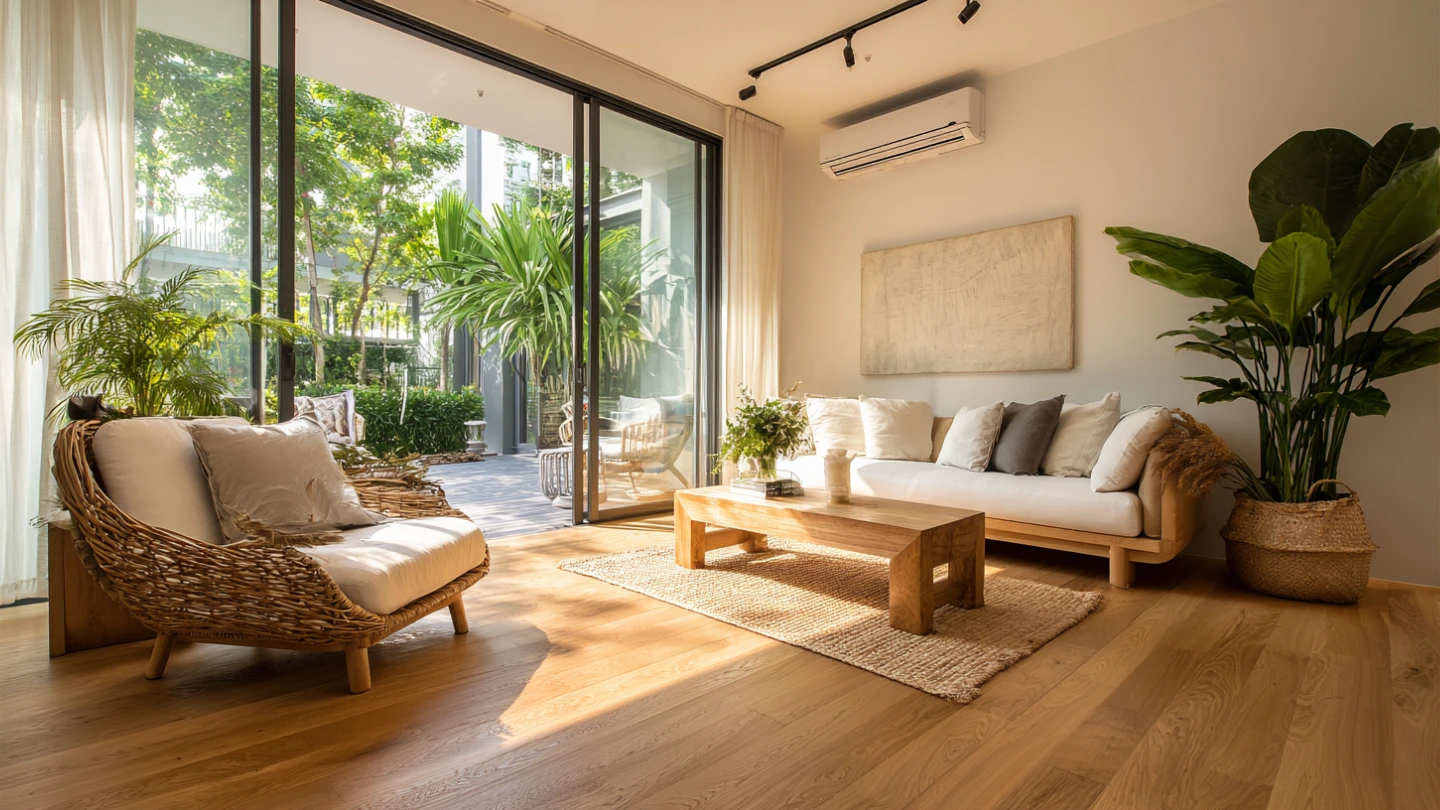
5. Laminate Flooring
Laminate is often confused with engineered timber, but they are fundamentally different products. Laminate does not contain any real wood. It is a printed photographic layer protected by a clear wear layer, mounted on a high-density fibreboard (HDF) core.
In Malaysia, laminate has fallen somewhat out of favour in recent years as SPC vinyl planks have improved in quality and price. However, it remains a budget-friendly option for bedrooms and dry living areas where moisture is not a concern.
Pros:
- Affordable — lower cost than timber or SPC vinyl
- Wide range of designs, including realistic wood and stone looks
- Easy to install as a floating floor
Cons:
- Swells and warps when exposed to moisture — unsuitable for Malaysia's humid climate if not properly managed
- Cannot be refinished — surface damage requires replacement
- HDF core is vulnerable to water ingress at the edges and joins
- Hollow sound underfoot compared to tiles or timber
Cost estimate (materials + installation):
- RM 4 – RM 12 per sq ft
Best for: Bedrooms and dry areas only. Not recommended for kitchens, bathrooms, or ground-floor rooms prone to moisture.
6. Epoxy Flooring
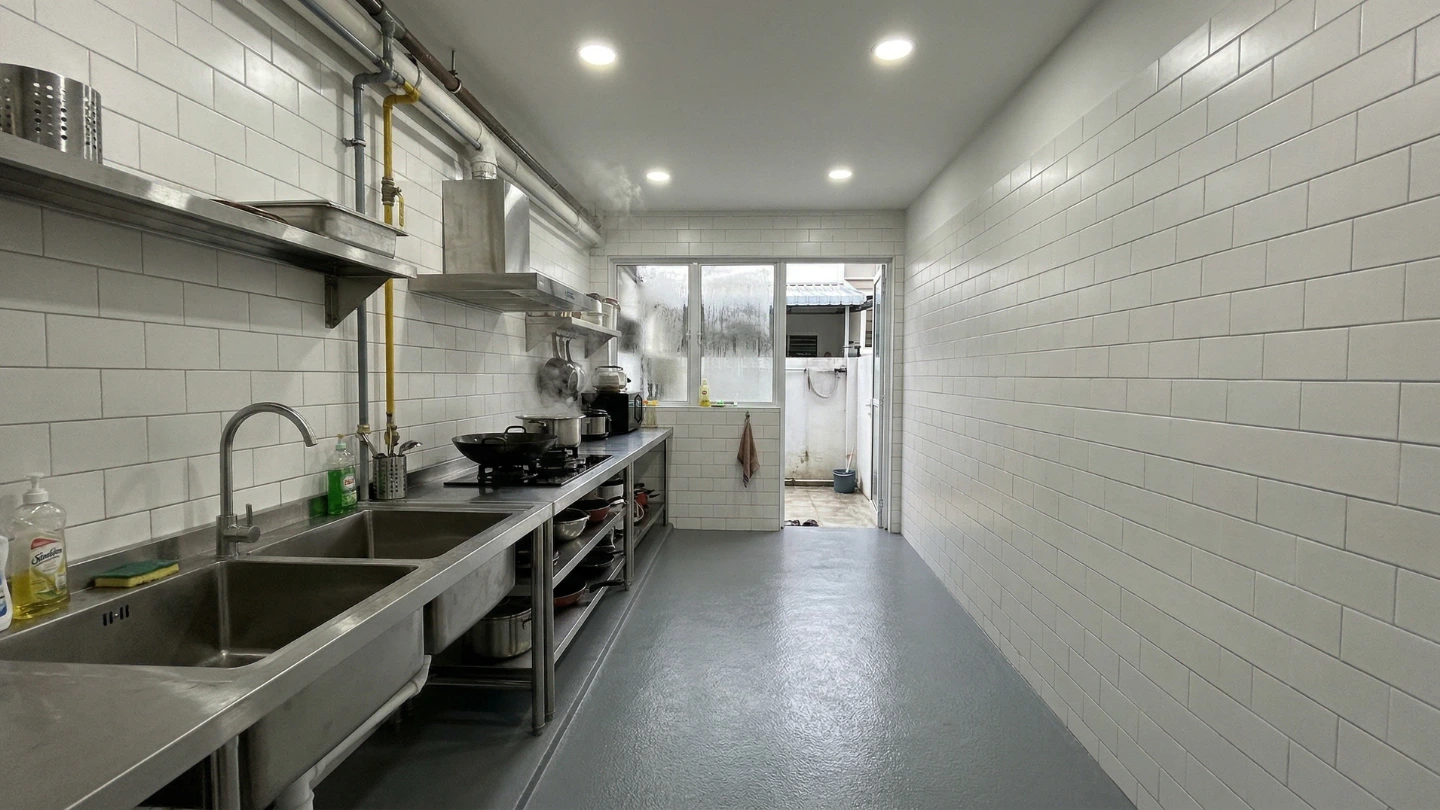
Epoxy is a coating system applied over a concrete subfloor, creating a seamless, hardwearing surface. It is commonly used in garages, wet kitchens, utility rooms, and industrial spaces — but has also entered the residential interior design space as a feature flooring option.
Polished concrete and epoxy terrazzo finishes have become a design trend in contemporary Malaysian homes, particularly for those going for a raw, industrial, or Japandi aesthetic.
Pros:
- Seamless — no grout lines to trap dirt
- Extremely durable and chemical-resistant
- Easy to clean and hygienic
- Unique, high-end look when done well
Cons:
- Can be slippery when wet unless anti-slip aggregate is added
- Professional application is critical — poor installation leads to peeling
- Limited to ground-level concrete substrates
- Repairs require resurfacing large sections
Cost estimate (materials + installation):
- Standard epoxy coating: RM 5 – RM 12 per sq ft
- Decorative / metallic epoxy: RM 15 – RM 35 per sq ft
Best for: Garages, wet kitchens, utility areas, and homeowners seeking an industrial or minimalist design aesthetic.
Room-by-Room Flooring Recommendations
Choosing a single flooring type for the entire home is not always the best approach. Here is how to think about it room by room.
Living and Dining Area
This is the most visible space in your home and typically receives the most traffic. Large-format porcelain tiles remain the most practical choice — they are durable, humidity-proof, and create a sense of spaciousness. If you want warmth, SPC vinyl planks or engineered timber are strong alternatives.
Top picks: Large-format porcelain tiles, SPC vinyl planks, engineered timber
Bedrooms
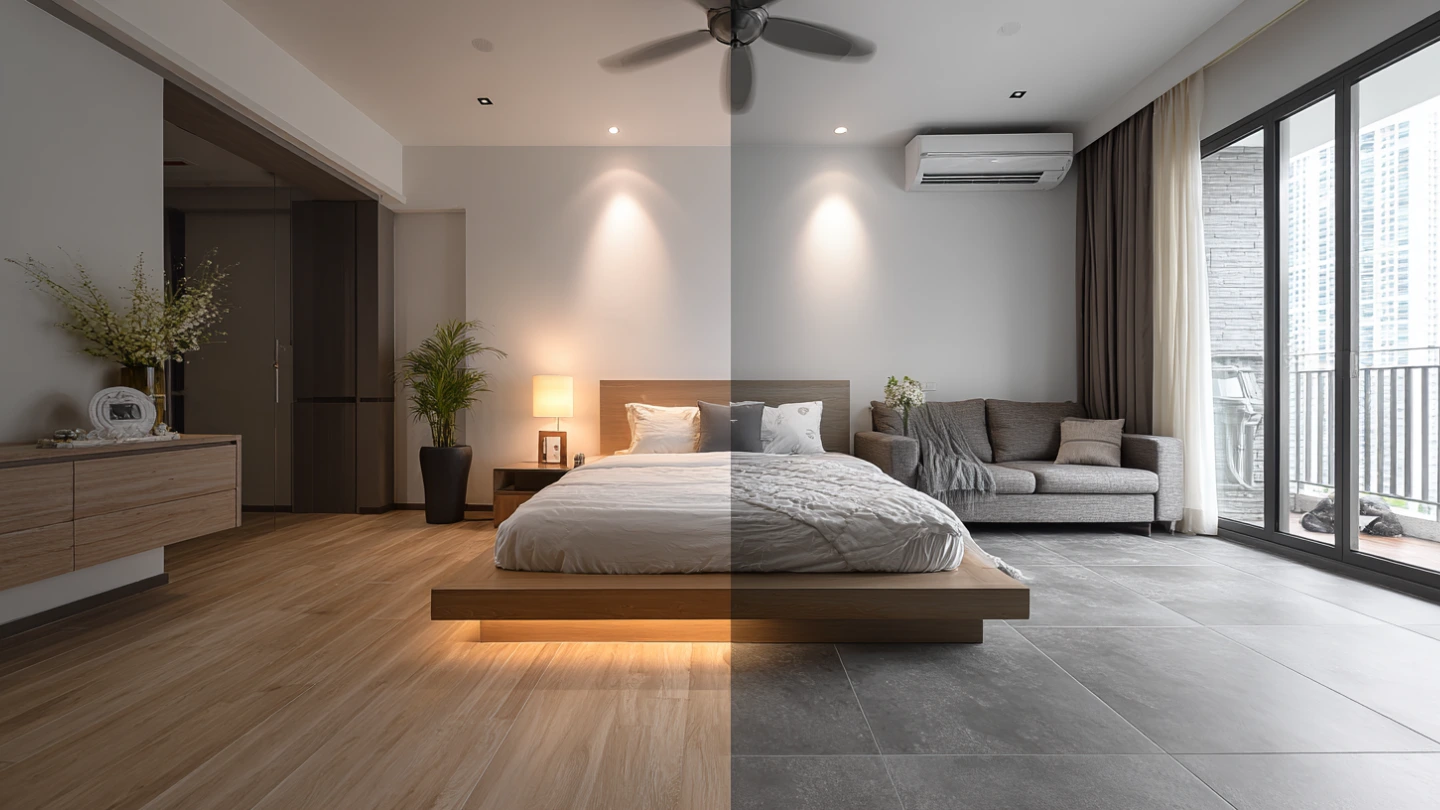
Comfort is the priority in bedrooms. Many Malaysian homeowners tile the bedrooms to match the rest of the house for a clean, uniform look — but this can feel cold. SPC vinyl planks or engineered timber bring warmth and comfort underfoot, particularly for a master bedroom.
Top picks: SPC vinyl planks, engineered timber, porcelain tiles
Kitchen (Dry)
The dry kitchen sees food prep, spills, and heavy foot traffic. Porcelain tiles are the standard choice — easy to mop, resistant to heat, and durable. Choose a matte or satin finish over a high-gloss tile to reduce slipping.
Top picks: Porcelain tiles (matte finish), homogeneous tiles
Kitchen (Wet) and Utility
The wet kitchen handles the messiest cooking — splashes, grease, and frequent wet mopping. Stick to tiles or epoxy. Avoid any wood-based product in this area, including LVT, which is technically waterproof on the surface but can be compromised at the joins.
Top picks: Porcelain tiles, epoxy coating
Bathrooms
Waterproof materials only. Porcelain and ceramic tiles are the standard. For a premium finish, large-format marble-effect porcelain creates a luxurious look. Always ensure adequate drainage gradient is built into the screed, not just relied upon by the tile itself.
Top picks: Porcelain tiles, ceramic tiles
Home Office or Study
Quieter, lower-traffic spaces are well-suited to SPC vinyl planks or engineered timber. These materials improve acoustics and create a warmer, more focused atmosphere than cold tiles.
Top picks: SPC vinyl planks, engineered timber
Side-by-Side Cost Comparison
Use this table as a quick reference when planning your flooring budget. Costs include both materials and standard installation. Prices reflect the Malaysian market in 2026 and will vary by supplier, region, and project complexity.
| Flooring Type | Cost Range (per sq ft) | Durability | Moisture Resistance | Best Room |
|---|---|---|---|---|
| Ceramic tiles | RM 5 – RM 12 | High | Excellent | Bathrooms, utility |
| Porcelain tiles | RM 8 – RM 35 | Very high | Excellent | All rooms |
| Homogeneous tiles | RM 15 – RM 50+ | Exceptional | Excellent | Living, entranceway |
| SPC vinyl plank | RM 5 – RM 30 | High | Excellent | Bedrooms, living |
| Engineered timber | RM 12 – RM 80+ | Medium–High | Moderate | Bedrooms, living |
| Laminate | RM 4 – RM 12 | Medium | Poor | Dry bedrooms only |
| Epoxy coating | RM 5 – RM 35 | Very high | Excellent | Wet kitchen, garage |
Key Factors to Consider When Choosing Flooring
Beyond cost, there are four questions every Malaysian homeowner should ask before committing to a flooring type.
1. Where is the room located? Ground-floor rooms — particularly in terrace houses — are more susceptible to rising moisture from the ground. In these spaces, moisture-resistant materials like porcelain tiles or SPC vinyl are strongly recommended over laminate or engineered timber without proper waterproofing.
2. Who lives in the home? Families with young children or elderly parents benefit from softer flooring surfaces that absorb impact and reduce slip risk. Matte tiles, SPC vinyl, and engineered timber are all more forgiving than high-gloss polished tiles, which can be dangerously slippery when wet. If durability against spills and rough play is a concern, you may also want to explore other durable material choices for family homes in Malaysia.
3. What is your renovation budget? Flooring typically accounts for 10–20% of a total renovation budget. If you are renovating a terrace house, for example, flooring across multiple rooms can add up quickly — understanding the overall cost to renovate a terrace house in Malaysia will help you allocate wisely.
4. Do you want consistency or variety throughout the home? A consistent floor tile throughout creates a larger, more unified feel — popular in modern condo designs. Using different flooring in bedrooms versus living areas (for example, vinyl plank in bedrooms and tiles in common areas) adds warmth and differentiation, but requires clean transition strips between zones.
Common Flooring Mistakes to Avoid
Choosing tiles purely for aesthetics. That stunning Italian marble-effect porcelain may look breathtaking in the showroom, but if it is a high-gloss finish with a polished surface, it will be dangerously slippery the moment a drop of water lands on it. Always request the tile's anti-slip coefficient before purchasing.
Underestimating installation quality. Even the finest flooring material will fail if the installation is poor. Hollow tiles, uneven vinyl joins, and inadequately primed subfloors are the leading causes of flooring problems in Malaysian homes. Always engage experienced tilers and ensure a qualified site supervisor oversees the work.
Forgetting to budget for wastage. Standard practice is to add 10–15% to your flooring area calculation to account for cuts, wastage, and future replacement tiles. Buy extra and store them — finding an exact match years later is notoriously difficult.
Mixing too many flooring types. Three or more different flooring materials across a single home can make the space feel disjointed. If you want to mix materials, keep it to two types: one for wet/common areas and one for bedrooms.
Final Recommendation: Which Flooring Is Right for You?
Here is a simple decision guide based on the most common scenarios we encounter with Malaysian homeowners.
You are renovating a condo with open-plan living: Go with large-format porcelain tiles (600x600mm or 800x800mm) throughout the living and dining areas, and SPC vinyl planks in the bedrooms. This combination gives you the durability and low-maintenance of tiles in high-traffic zones, and the warmth of a timber-look floor in private spaces.
You are renovating a double-storey terrace house: Porcelain tiles on the ground floor throughout (moisture risk is highest here), with engineered timber or SPC vinyl planks on the upper floor bedrooms and family area. This is the most popular combination among our clients in Klang Valley landed properties.
You want the premium look of real timber throughout: Engineered timber in the living and bedrooms, with porcelain tiles reserved strictly for wet areas. Budget accordingly — engineered timber is a premium investment, and the subfloor preparation must be done correctly to avoid moisture damage.
You are working with a tight budget: SPC vinyl planks offer the best value proposition right now in the Malaysian market. Mid-range SPC from reputable brands at RM 10 – RM 18 per sq ft gives you a product that is waterproof, warm, comfortable, and visually convincing — a significant upgrade from the linoleum and basic tiles of a decade ago.
The right flooring is not the most expensive one — it is the one that performs well in your specific rooms, suits your household's lifestyle, and fits within a sensible portion of your overall renovation budget. If you are unsure which direction to take, a single consultation with an experienced interior designer can save you from a costly decision you will live with for years.
Thinking about renovating your home? Our team at Reka Interior specialises in fit-out projects across Klang Valley — from condos to landed properties. Get in touch for a free consultation and let us help you make the right material choices from the very beginning.