
From plasterboard to timber battens — explore every false ceiling type, design style, and renovation cost to make the right choice for your Malaysian home.
If you've ever walked into a beautifully renovated home and felt that sense of polish and completeness — chances are, the ceiling had something to do with it. A false ceiling (also called a dropped ceiling or suspended ceiling) is one of the most transformative elements in interior design, yet it's often one of the last things homeowners think about.
For Malaysian homeowners, false ceilings serve a purpose well beyond aesthetics. They help conceal unsightly pipes and wiring, improve acoustics, create zones within open-plan spaces, and — critically in our tropical climate — make air-conditioning far more efficient. Whether you're renovating a condo in Mont Kiara, a terrace house in Subang Jaya, or a semi-detached in Damansara, the right false ceiling can elevate the entire look and feel of your home.
This guide walks you through everything you need to know: the different types, materials, design styles, RM cost breakdowns, and how to make the best choice for your specific home and budget.
What Is a False Ceiling?
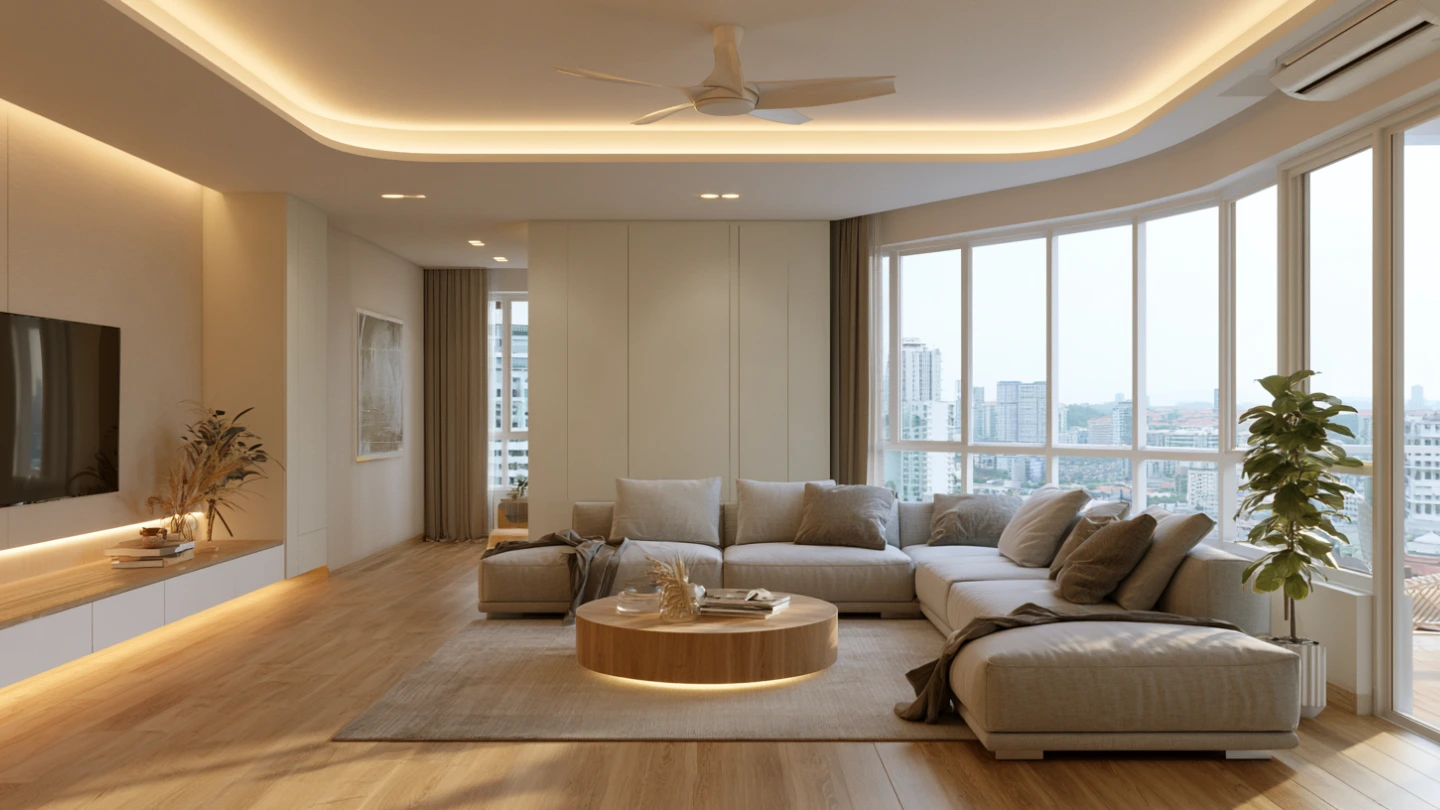
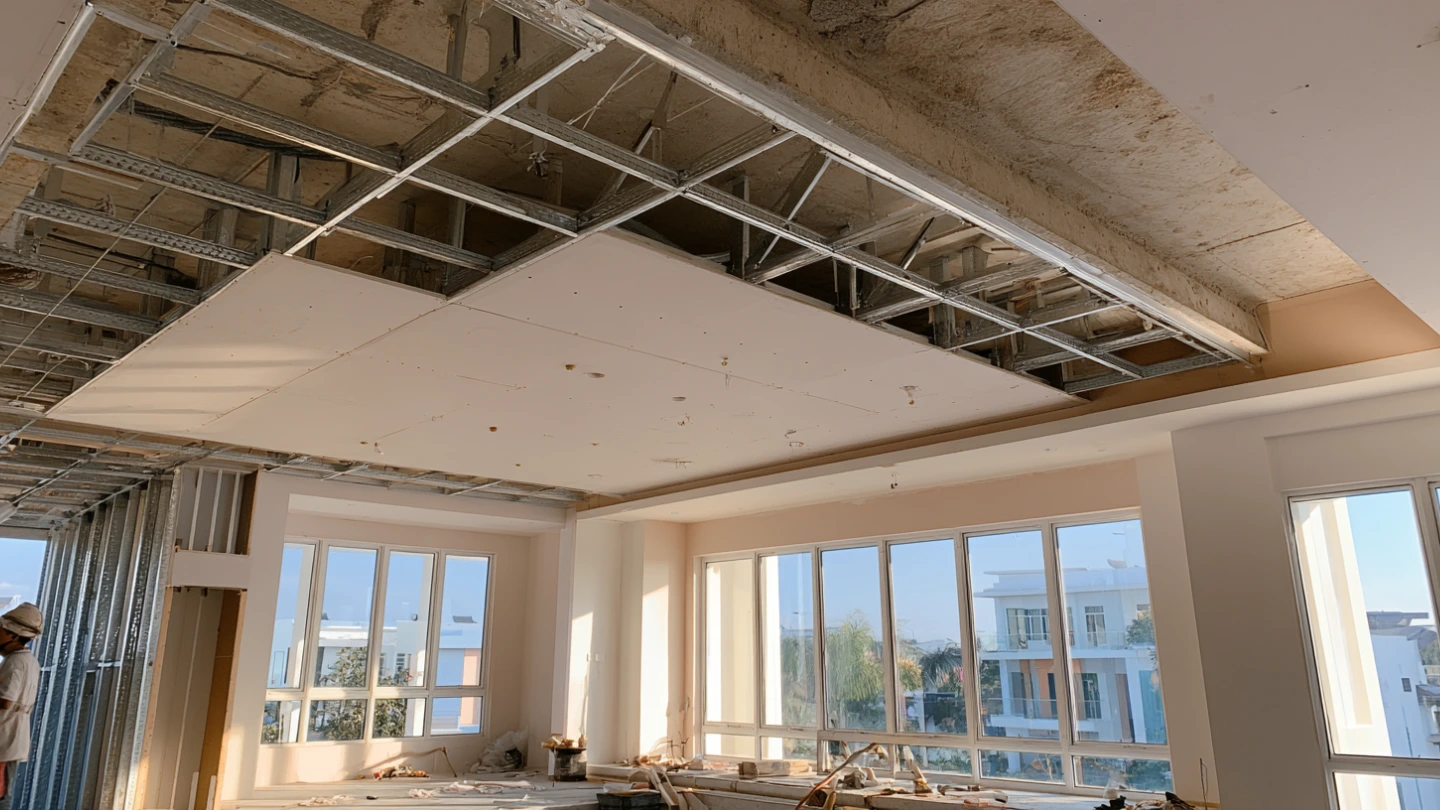
A false ceiling is a secondary ceiling installed below the main structural ceiling of a room. It creates a cavity between the two surfaces — a space that's incredibly useful for running electrical wiring, air-conditioning ducts, recessed lighting, and insulation.
In Malaysian homes, false ceilings are common in:
- Living and dining areas
- Master bedrooms
- Wet and dry kitchens
- Home offices
- Corridors and foyers
They're installed by plastering, framing, or suspending a new surface from the original ceiling using a metal or wooden framework.
Why Do Malaysian Homeowners Install False Ceilings?
Before diving into types and costs, it helps to understand why so many Malaysian homes have them.
1. Concealing Services
New builds and older homes alike often have exposed wiring, conduits, water pipes, and air-conditioning piping running along the ceiling. A false ceiling hides all of this cleanly, giving you a neat, finished look without expensive re-routing.
2. Better Air-Conditioning Efficiency
Malaysia's heat and humidity make air-conditioning a necessity. A false ceiling lowers the effective ceiling height, reducing the volume of air your air conditioner needs to cool. This can translate to real savings on your electricity bill — especially in open-plan spaces.
3. Integrated Lighting Design
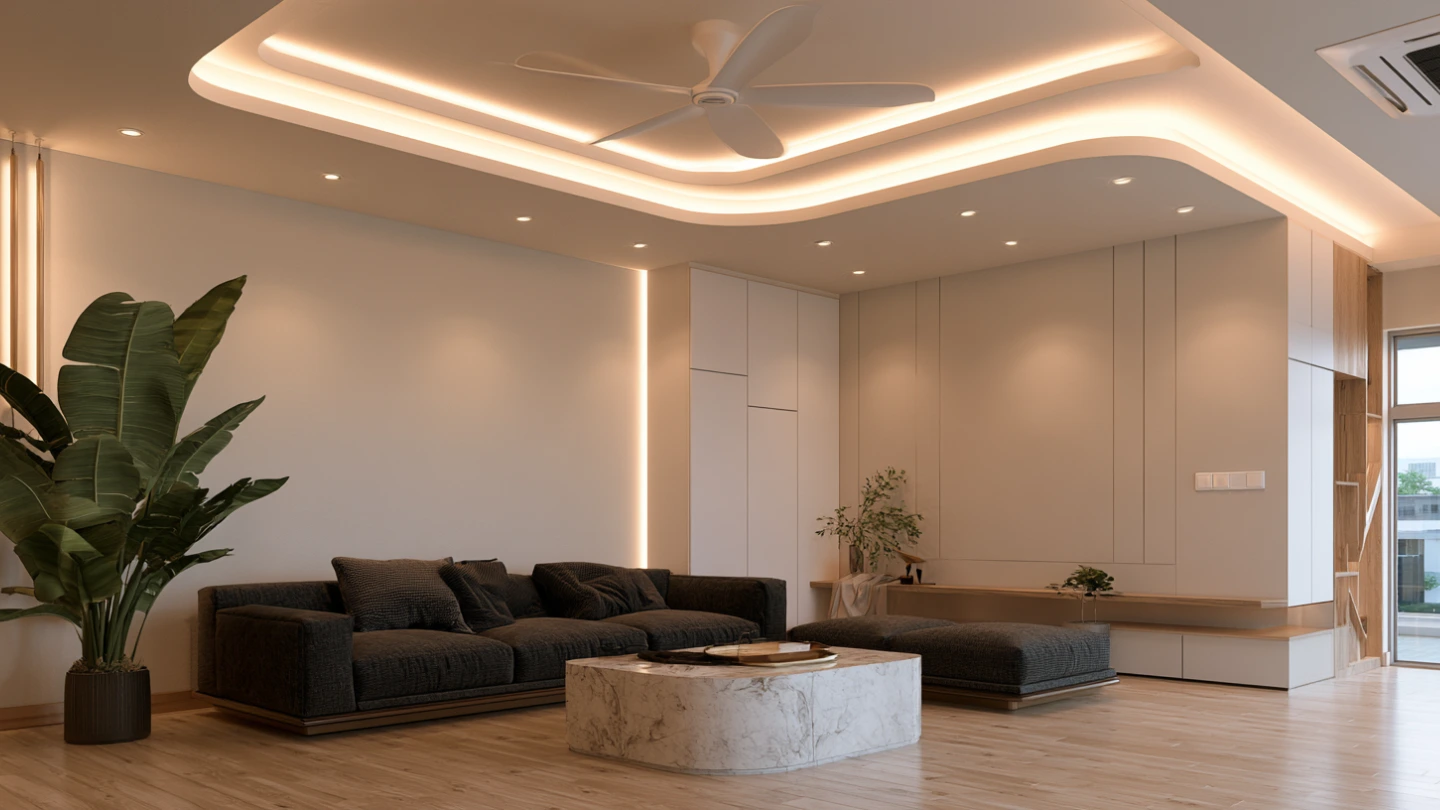
False ceilings allow for recessed downlights, LED strip cove lighting, and pendant drop points to be built in precisely where you want them. This creates layered, purposeful lighting that wall-mounted fixtures simply can't replicate.
4. Improved Acoustics
In condominiums especially, false ceilings with acoustic insulation help reduce noise transmission from the unit above — a common complaint among high-rise residents.
5. Aesthetic Definition
A well-designed false ceiling adds architectural character to what would otherwise be a plain, flat surface. It can define zones, create focal points, and give a room a sense of purpose and completion.
Types of False Ceilings in Malaysia
There's no one-size-fits-all solution. The right type depends on your room size, budget, design style, and functional needs. Here's a breakdown of the most common types used in Malaysian homes.
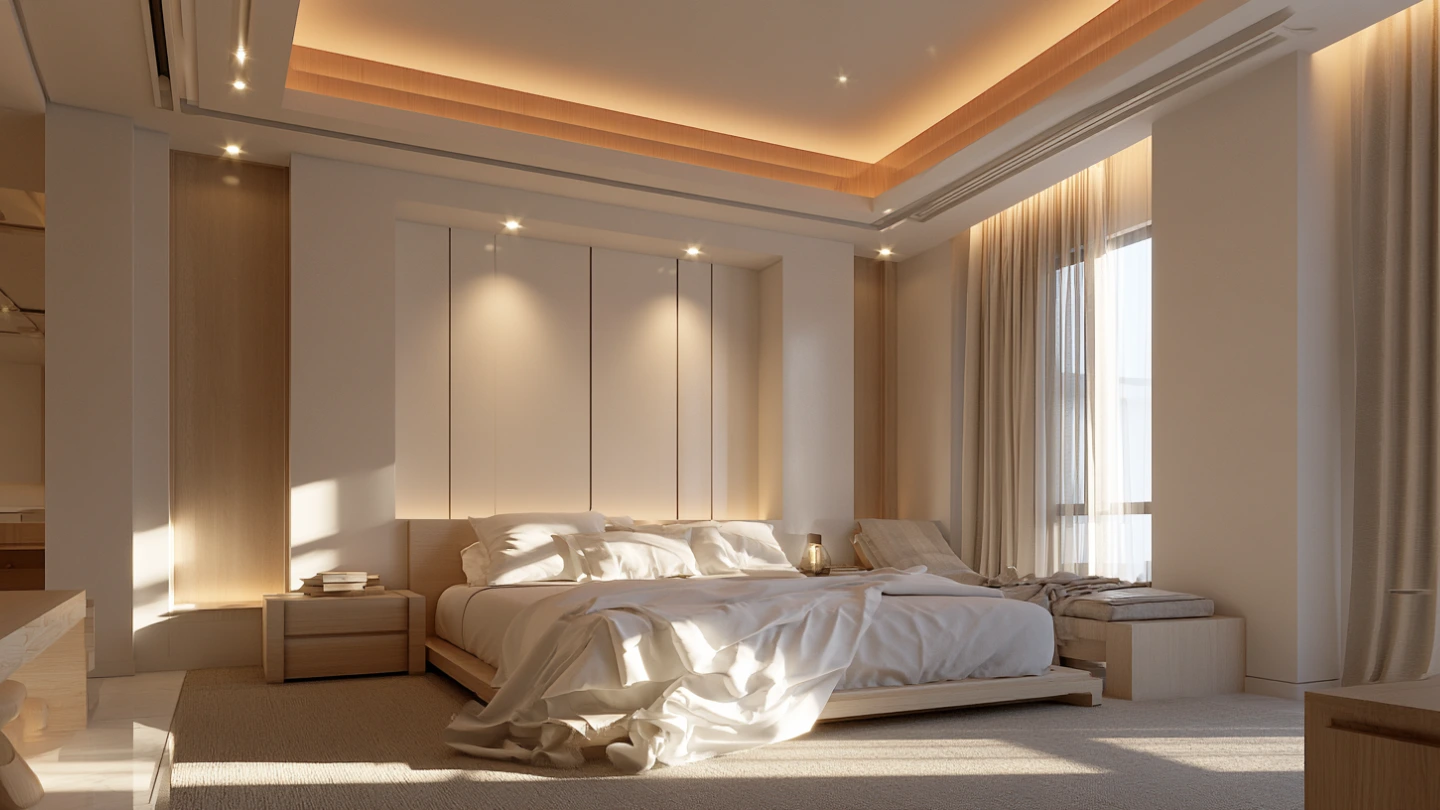
1. Gypsum Plasterboard (Plaster Ceiling)
Most popular choice for Malaysian homes.
Gypsum plasterboard — often just called "plaster ceiling" locally — is by far the most widely used false ceiling material in Malaysia. It's made from a calcium sulphate mineral core sandwiched between two sheets of paper, and it's incredibly versatile.
Pros:
- Smooth, paintable finish — blends seamlessly with walls
- Suitable for complex shapes, curves, and cove lighting details
- Fire-resistant and relatively moisture-tolerant (with moisture-resistant grades)
- Widely available; most contractors are experienced with it
Cons:
- Susceptible to water damage if there's a leak from above
- Repairs can be visible if not done by a skilled plasterer
- Heavier than some alternatives
Best for: Living rooms, bedrooms, dining areas, corridors — essentially any interior space in a landed property or condo.
2. Calcium Silicate Board
A popular alternative to gypsum, calcium silicate board is denser, more moisture-resistant, and better suited to high-humidity areas.
Pros:
- Excellent moisture and mould resistance
- More durable than standard gypsum
- Fire and termite resistant
- Good for wet kitchen areas or bathrooms
Cons:
- Heavier, so requires a sturdier frame
- Slightly more expensive than gypsum
- Less flexible for curved or intricate designs
Best for: Wet kitchens, bathrooms, utility areas, and any room prone to moisture or condensation.
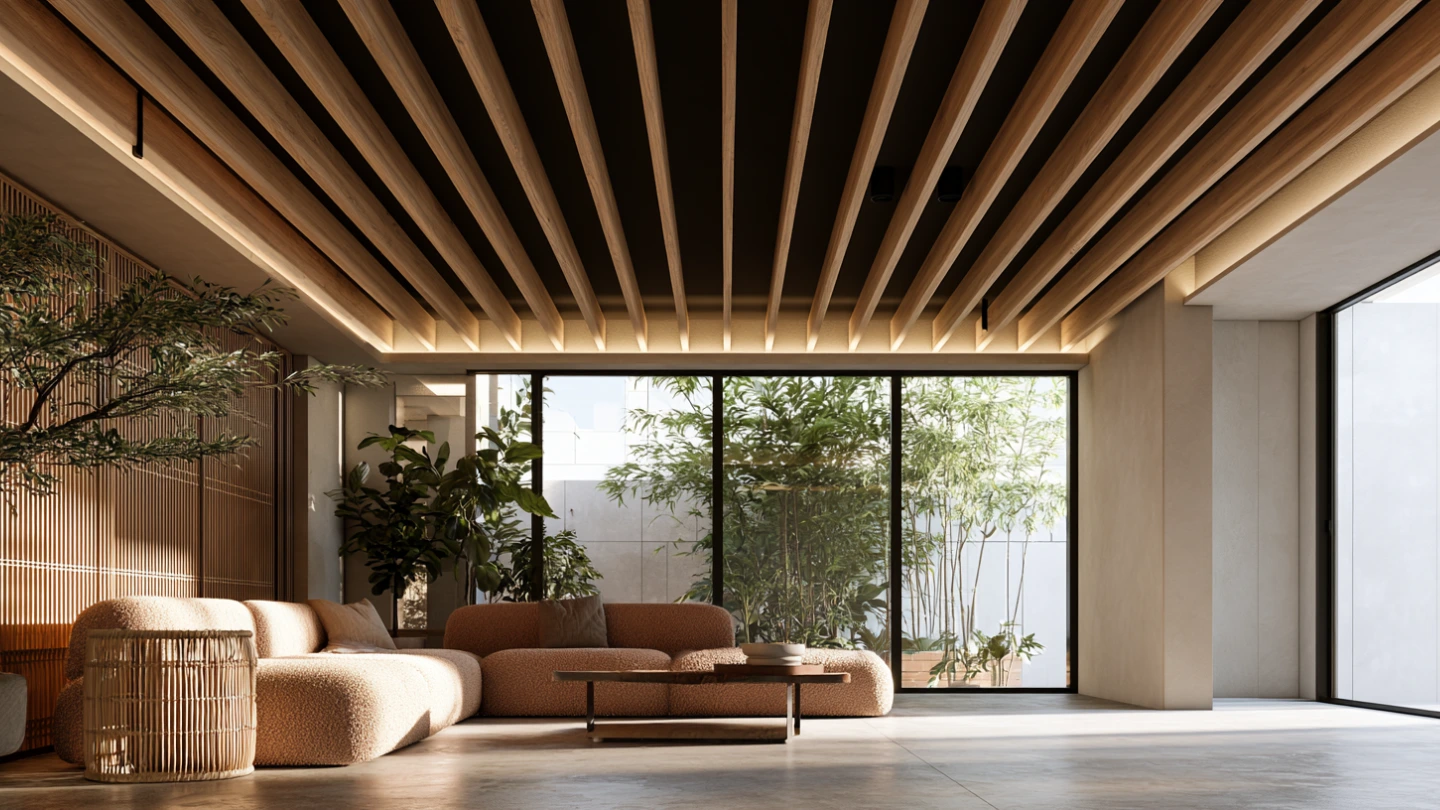
3. Timber / Wood Batten Ceiling
For homeowners going for a warm, organic aesthetic — Japanese, Japandi, tropical modern, or Scandinavian-inspired — a timber batten ceiling is a striking choice.
Pros:
- Rich visual texture and warmth
- Wide range of timber species and finishes
- Can be used as full coverage or feature panels
- Ages beautifully with the right finish
Cons:
- Higher cost than plasterboard
- Requires treatment against humidity, insects, and warping in Malaysia's climate
- Heavier; structural load must be considered
- Maintenance required over time
Best for: Feature walls, master bedrooms, living room focal points, and homes with a natural or biophilic design direction.
4. Metal Grid (Armstrong / Mineral Fibre Tiles)
Common in commercial spaces and offices, metal grid ceilings with mineral fibre or acoustic tiles are occasionally used in Malaysian homes — particularly in home offices, entertainment rooms, or utility spaces.
Pros:
- Easy access to services above (tiles can be lifted)
- Excellent acoustic performance
- Quick to install
Cons:
- Commercial aesthetic — can look out of place in residential settings
- Not suitable for cove lighting or curved designs
- Limited visual appeal for living spaces
Best for: Home offices, utility rooms, server rooms, or entertainment rooms where acoustic performance matters more than aesthetics.
5. PVC / Aluminium Strip Ceiling
PVC and aluminium strip ceilings are low-cost, moisture-proof options often used in bathrooms, car porches, and outdoor areas.
Pros:
- Highly water-resistant
- Easy to clean
- Lightweight and fast to install
Cons:
- Limited design options
- Can look basic or dated in main living areas
- Not suitable for recessed lighting without modification
Best for: Bathrooms, car porches, service yards, and outdoor covered areas.
False Ceiling Design Styles Popular in Malaysia
Choosing a material is only half the decision. The other half is the design style — how the ceiling is shaped, layered, and lit.
Single Flat Ceiling
The simplest form: a single level false ceiling that drops the room height uniformly. Clean, modern, and cost-effective. Works best in condos where ceiling height is already limited.
Cove Ceiling (Recessed Cove Lighting)
One of the most requested designs in Malaysian homes. The ceiling is recessed inward at the perimeter to create an indented ledge, which houses LED strip lighting. The light reflects off the upper surface, producing a soft ambient glow that feels luxurious without being harsh.
Two-Tier / Multi-Level Ceiling
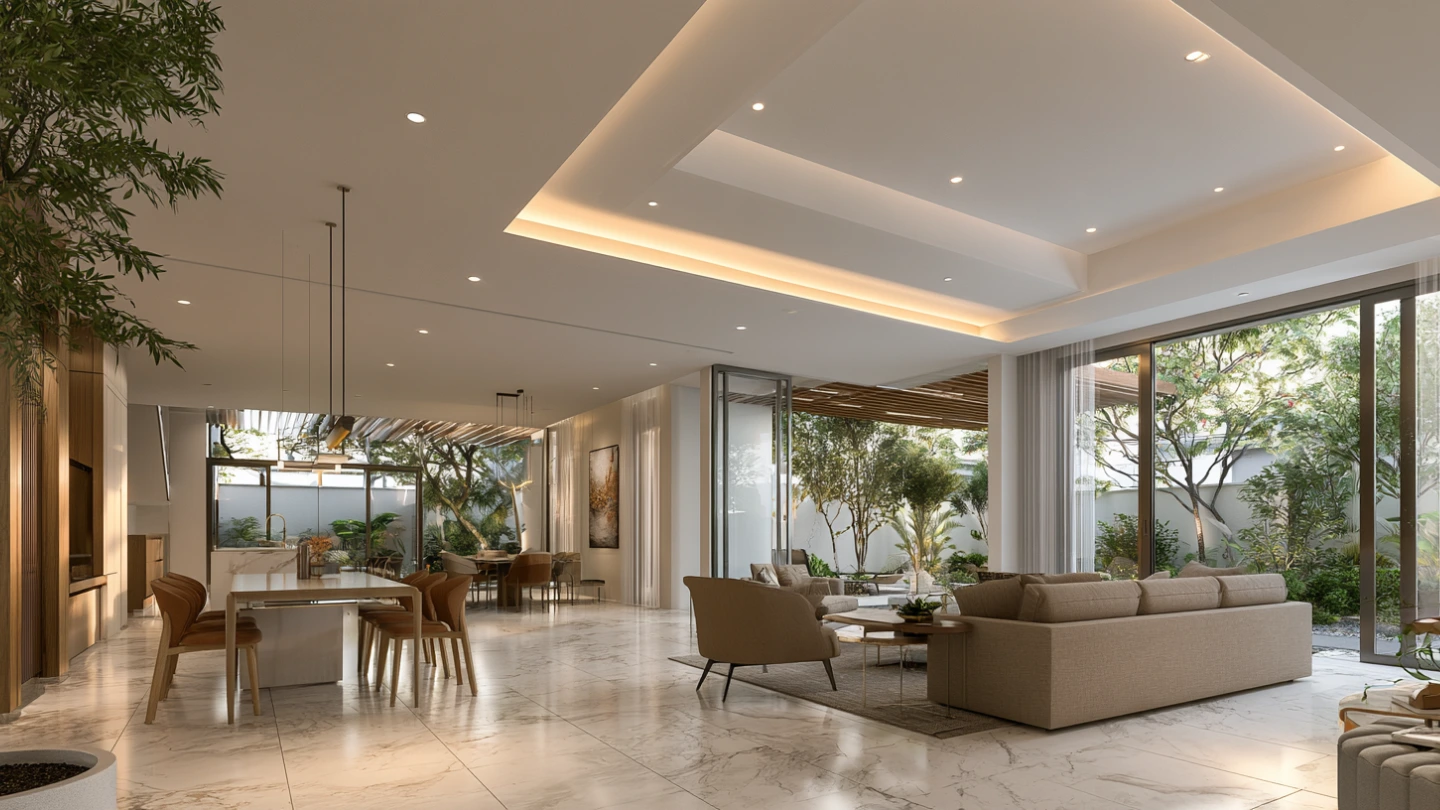
A more complex design where the ceiling steps down in two or more levels. This is popular in living rooms and open-plan areas where the designer wants to define different zones (e.g., living vs. dining) without a physical partition.
Coffered Ceiling
Inspired by classical architecture, a coffered ceiling features a grid of recessed panels — typically square or rectangular. It adds depth, symmetry, and a sense of grandeur. Well-suited to homes with higher ceilings or a more traditional, heritage-inspired aesthetic.
Feature Beam Ceiling
Exposed or decorative beams — either structural or applied — create a rustic, earthy look that's popular in landed properties. Works beautifully with timber accents and warm lighting.
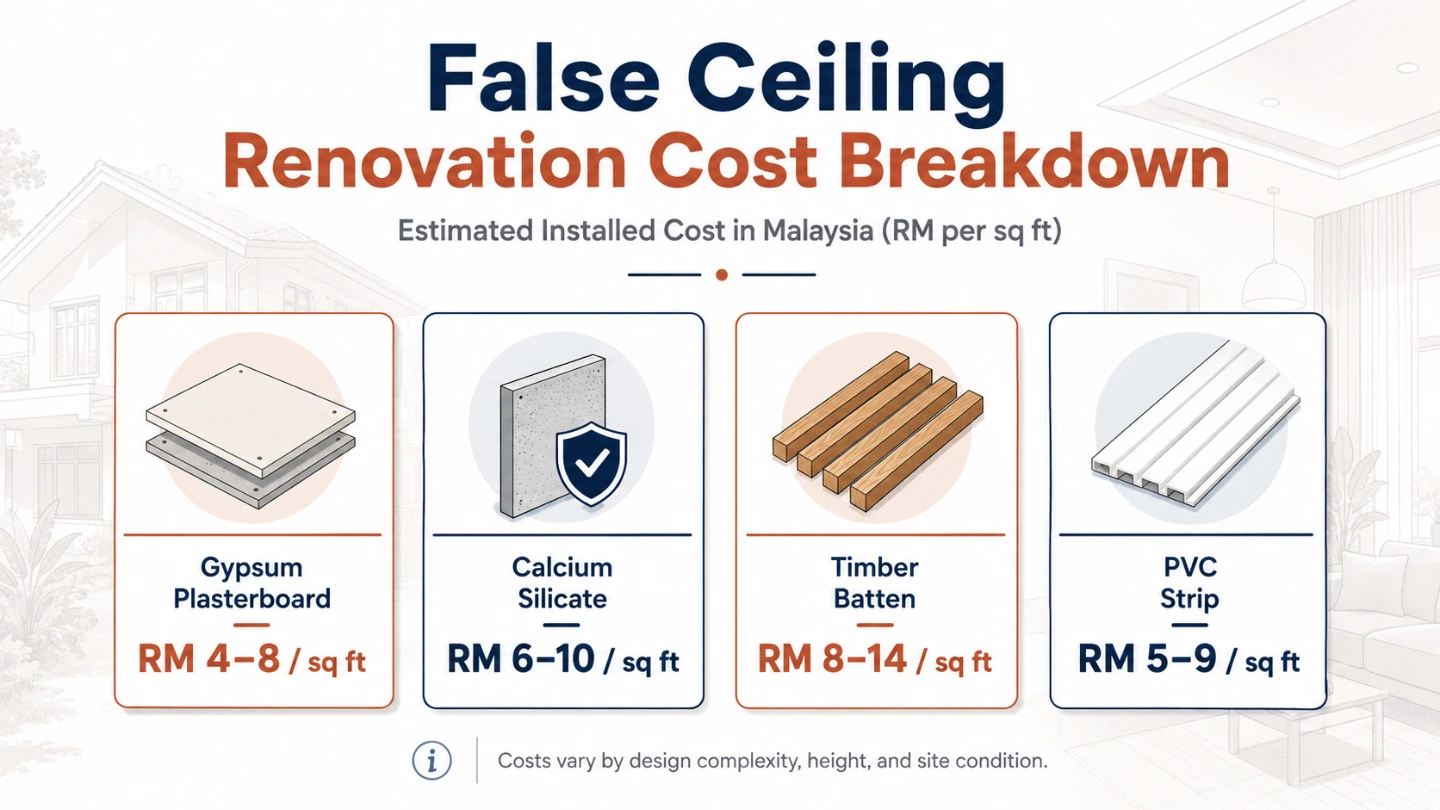
False Ceiling Cost Breakdown in Malaysia (RM)
One of the most common questions Malaysian homeowners ask: how much does a false ceiling cost?
The answer depends on the material, design complexity, room size, and your contractor's rates. Here's a general guide to help you budget.
Gypsum Plasterboard Ceiling
| Design Type | Estimated Cost (per sq ft) |
|---|---|
| Single flat ceiling | RM 8 – RM 14 |
| Cove ceiling with LED strip | RM 14 – RM 22 |
| Two-tier / multi-level | RM 18 – RM 30 |
| Coffered or custom design | RM 25 – RM 45+ |
Calcium Silicate Board Ceiling
| Design Type | Estimated Cost (per sq ft) |
|---|---|
| Single flat ceiling | RM 10 – RM 16 |
| Cove ceiling with LED strip | RM 16 – RM 25 |
Timber Batten Ceiling
| Design Type | Estimated Cost (per sq ft) |
|---|---|
| Timber batten (feature panel) | RM 30 – RM 65+ |
| Full coverage timber ceiling | RM 50 – RM 100+ |
PVC Strip Ceiling
| Design Type | Estimated Cost (per sq ft) |
|---|---|
| Standard PVC strip | RM 5 – RM 10 |
Prices listed are for reference only. Actual costs may vary — always refer to your vendor or contractor for the most accurate and up-to-date quotation.
Sample Budget Estimates by Room
To give you a practical sense of total costs, here are rough estimates for common room sizes:
| Room | Size (sq ft) | Estimated Cost (Gypsum, Flat) |
|---|---|---|
| Master bedroom | 150 sq ft | RM 1,200 – RM 2,100 |
| Living room | 300 sq ft | RM 2,400 – RM 4,200 |
| Kitchen | 100 sq ft | RM 1,000 – RM 1,600 |
| Full condo (1,000 sq ft) | 1,000 sq ft | RM 8,000 – RM 14,000 |
Prices listed are for reference only. Actual costs may vary — always refer to your vendor or contractor for the most accurate and up-to-date quotation.
Key Factors That Affect False Ceiling Cost in Malaysia
Understanding what drives the price helps you have smarter conversations with your contractor and avoid unexpected surprises.
1. Design Complexity
A flat ceiling is the most affordable. Every layer, curve, cove detail, or custom cutout adds cost — both in materials and labour time. Multi-tier ceilings can cost two to three times more than a basic flat installation.
2. Room Height
Standard residential ceiling heights in Malaysia are typically 9–10 feet in older properties and up to 12 feet in newer landed homes. Higher ceilings require more scaffolding, materials, and labour time, pushing costs up.
3. Integrated Lighting
Recessed downlights and LED strip cove lighting are usually quoted separately from the ceiling structure. Budget an additional RM 50–RM 150 per downlight point (including wiring), and RM 8–RM 20 per linear foot for LED strip installation.
4. Plastering and Finishing
Once the board is up, the joints need to be taped, skim-coated, sanded smooth, and painted. The quality of this finishing work determines the final look. A poorly finished ceiling will show every imperfection once painted, especially under directional lighting.
5. Contractor Experience
An experienced false ceiling specialist will deliver cleaner lines, better concealment of services, and a more durable installation. In Malaysia, the difference between a budget contractor and an experienced one can be significant — both in quality and warranty terms.
Things to Consider Before Installing a False Ceiling
Check Your Existing Ceiling Height
The biggest concern for Malaysian condos and apartments is available height. A false ceiling typically drops the ceiling by 8–12 inches. If your unit already has a ceiling height of 9 feet or lower, this can make the room feel compressed — especially in smaller condos.
Most interior designers recommend maintaining a minimum finished ceiling height of 8.5 feet (around 2.6 metres) after installation.
Plan Your Air-Conditioning Points First
False ceilings and air-conditioning are closely linked. Your air-conditioning installer and ceiling contractor need to coordinate — AC piping and trunking are concealed within the ceiling cavity. Get your air-conditioning layout confirmed before the ceiling goes in.
Account for Maintenance Access
If you have piping or equipment above the false ceiling, ensure your contractor installs access panels (maintenance hatches) at key points. These are small openings that can be opened for servicing without having to cut through the ceiling.
Fire Safety and Regulations
In Malaysia, particularly for condominiums, BOMBA (Fire and Rescue Department) guidelines apply to certain aspects of ceiling design — especially around sprinkler heads and smoke detectors. Ensure your ceiling design keeps all fire safety equipment accessible and unobstructed.
How to Choose the Right False Ceiling for Your Home
Here's a practical decision framework to help you narrow down your choices:
Step 1: Define your primary goal. Is it aesthetics, hiding pipes/wiring, improving AC efficiency, or acoustic insulation? Your priority will guide your material and design choice.
Step 2: Consider your room's function. Wet areas (kitchens, bathrooms) need moisture-resistant materials like calcium silicate or PVC. Living spaces can use gypsum. Feature rooms (master bedroom, living room) may warrant timber or custom plasterwork.
Step 3: Work out your ceiling height budget. Measure your current floor-to-ceiling height and decide the minimum height you're comfortable with. This will limit (or open up) your design options.
Step 4: Set a realistic budget. Use the RM cost guide above as a starting point, then get at least three quotes from qualified contractors. Be wary of prices that seem significantly below market rate — quality finishing takes time and skill.
Step 5: Align with your overall interior design theme. Your false ceiling should feel like a deliberate design choice, not an afterthought. If your home is going for a clean, modern look, keep the ceiling simple and uncluttered. If you're going warm and textured, consider a timber feature or coffered detail.
Working with an Interior Designer for Your False Ceiling
While many contractors can build a basic flat ceiling, the real design value comes when an experienced interior designer is involved from the start. A designer will:
- Coordinate the ceiling design with your lighting plan, furniture layout, and overall aesthetic
- Ensure air-conditioning placement integrates cleanly into the ceiling
- Source and specify materials that balance quality, look, and budget
- Manage the contractor to ensure proper finishing standards
At Reka Interior, we've designed and delivered false ceilings across condos, terrace houses, semi-detached homes, and bungalows across the Klang Valley. We understand the local climate, the available materials, and the common pitfalls — and we work with you to make decisions that you'll be happy with for years.
Final Thoughts
A false ceiling isn't just a renovation checkbox — it's one of the few design elements that affects how every room looks, feels, and functions. Get it right, and it elevates your entire home. Get it wrong, and it can make a room feel lower, darker, or more cluttered than before.
The key is to plan early, choose the right material for each space, coordinate with your lighting and air-conditioning layout, and work with a contractor — or better yet, a full interior design team — who knows what they're doing.
Ready to start planning your renovation? Get a free consultation with our team — we'll help you map out a false ceiling design that fits your home, your style, and your budget.