
How to Avoid Lippage and Hollow Tiles: A Malaysian Homeowner's Guide to Flawless Floors
You've spent weeks picking the perfect tiles. The renovation is finally done, the dust has settled, and you walk barefoot across your new floor for the first time. Then you feel it — a tiny edge catching your toe. You tap another tile and hear that dull, hollow tok-tok-tok sound. Your heart sinks.
Welcome to two of the most common — and most preventable — tiling defects in Malaysian homes: lippage and hollow tiles. They don't just look and feel wrong. Left unaddressed, they can crack your tiles, trap moisture, and force you to rip up entire sections of flooring within a few years.
The good news? Both issues come down to workmanship and preparation. If you know what to watch for before, during, and after installation, you can avoid expensive rework and get the flawless finish you paid for.
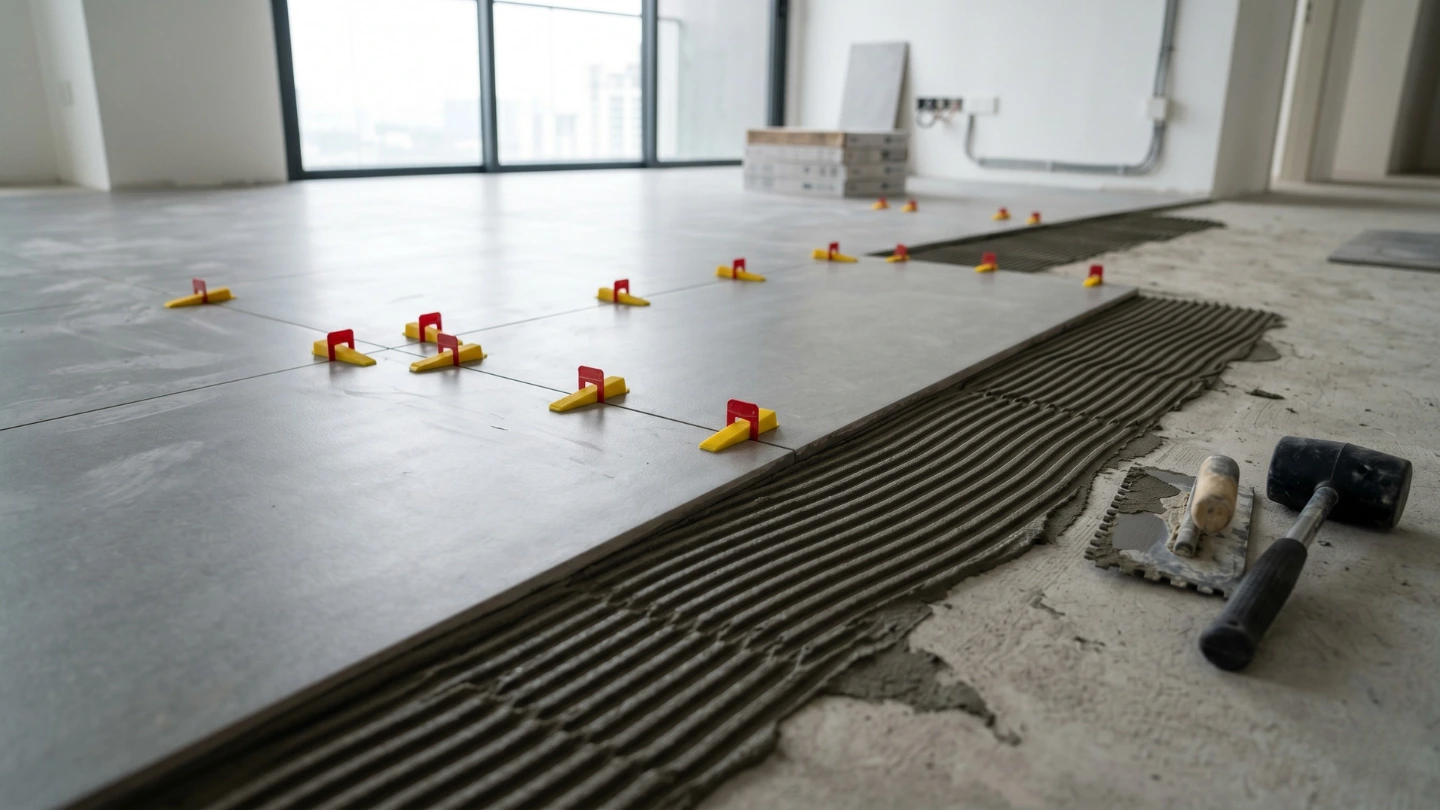
What is Lippage? (And Why It Matters)
Lippage is when the edge of one tile sits higher than the edge of the tile next to it, creating an uneven ridge along the grout line. Run your hand across the floor — if you can feel a step, that's lippage.
A tiny amount of lippage is almost unavoidable, especially with handmade or rustic tiles. But anything more than about 1mm on a polished surface becomes visible, catches light in ugly shadows, and is a genuine trip hazard. For bathrooms and wet kitchens, it's even worse — standing water pools on the low side and soaks into grout lines it shouldn't.
Common Causes of Lippage in Malaysian Homes
- Warped or "bowed" tiles — large-format tiles (600x600mm and above) are prone to slight curvature from the kiln. If your contractor doesn't check each tile before laying, you'll see it on the floor.
- Uneven screeding — the cement screed underneath must be flat. Many Malaysian contractors skip proper screeding on budget jobs and try to "correct" levels with adhesive.
- Wrong adhesive thickness — thin-set mortar that's too thin or too thick will cause tiles to settle at different heights.
- Skipping tile levelling clips — these inexpensive plastic spacers force adjacent tiles to sit flush while the adhesive cures. They're standard on good installations and frequently skipped on rushed ones.
- Laying large tiles in a 50/50 brick pattern — with long tiles, offsetting by half creates maximum lippage at the centre (the highest point of any tile bow). Industry guidance is to offset by no more than one-third.
What are Hollow Tiles? (And Why They're a Ticking Time Bomb)
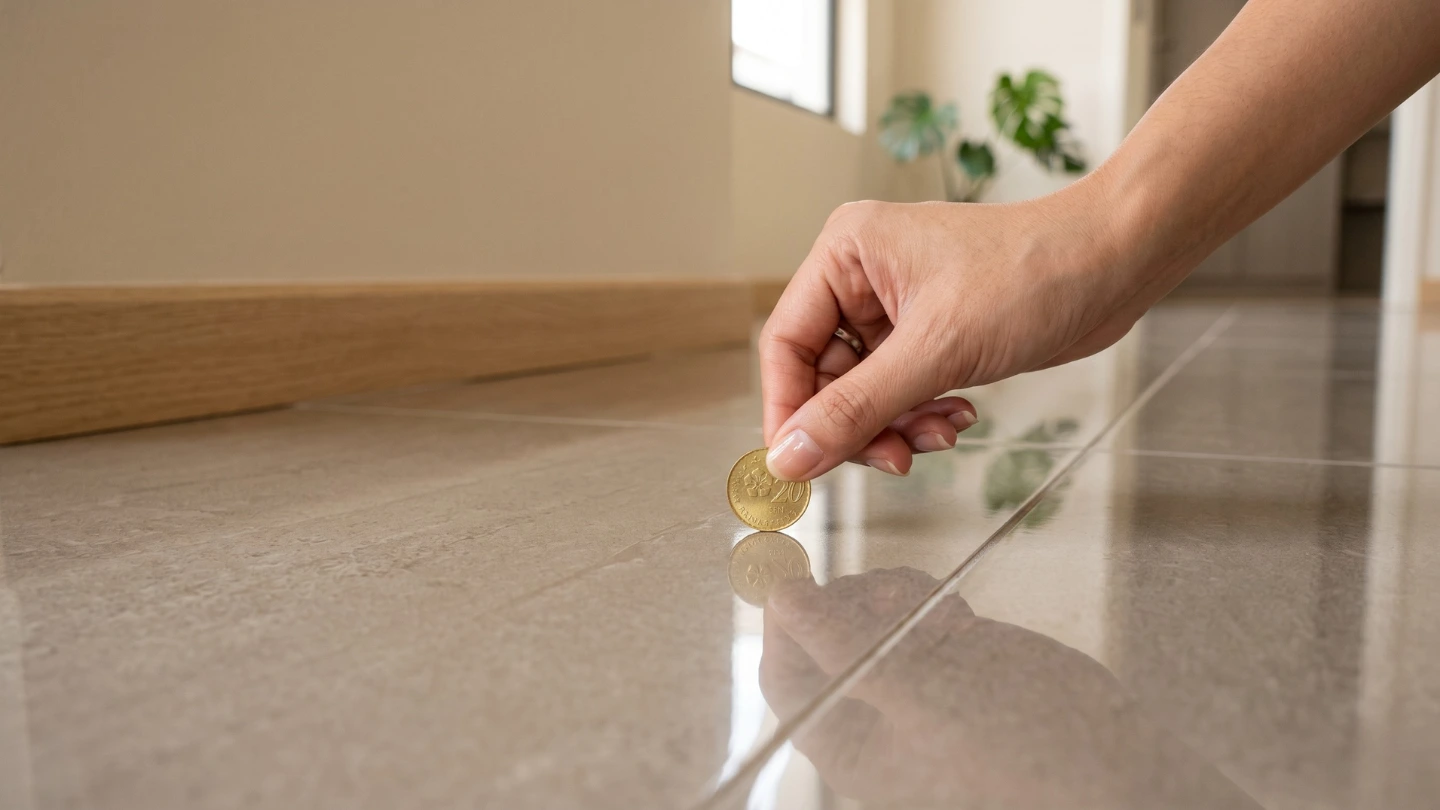
Hollow tiles are tiles that haven't fully bonded to the substrate underneath. When you tap them with a coin or small metal tool, they produce a distinct hollow, drum-like sound instead of a solid tok.
Here's why they're more than a cosmetic issue:
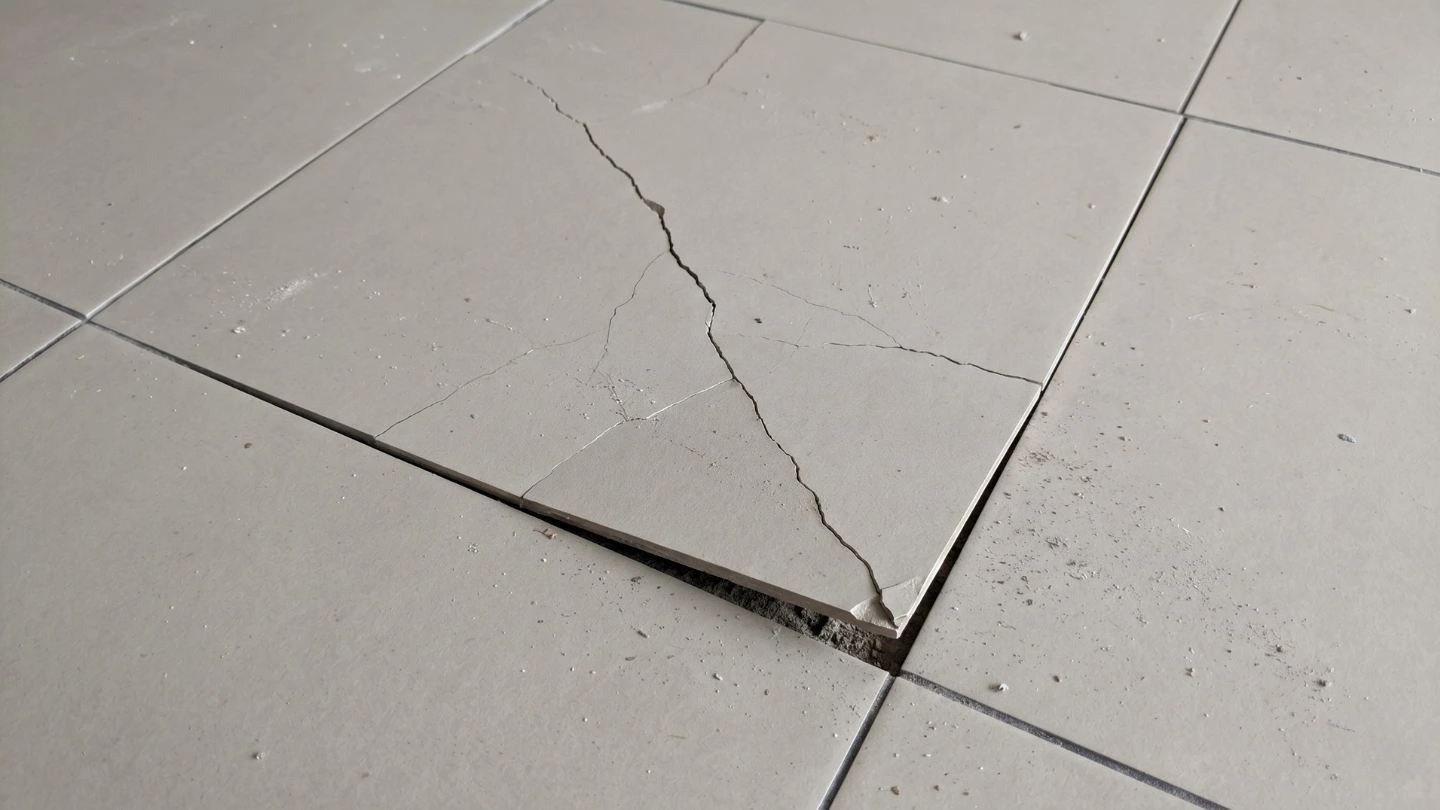
- They crack easily — without full support from the adhesive, the tile flexes when you walk on it or place heavy furniture. Cracks appear, often years later.
- They debond completely — over time, the partial bond fails entirely and the tile lifts. You'll hear it shift underfoot.
- Water ingress in wet areas — in bathrooms, kitchens, and balconies, water seeps through grout lines into the void, eventually damaging the screed, rotting skirting, or leaking to the unit below in condos.
- Costly repair — fixing one hollow tile often damages surrounding tiles. If the original batch is discontinued (very common in Malaysia), you may need to redo a whole section.
Common Causes of Hollow Tiles
- Insufficient adhesive coverage — the back of every tile needs at least 80% mortar contact (closer to 95% for wet areas). "Spot bonding" (five dabs of adhesive, one at each corner and one in the middle) is a shortcut still used by budget contractors and it guarantees hollow tiles.
- Dirty or contaminated substrate — dust, oil, or loose debris on the screed prevents the adhesive from bonding.
- Wrong adhesive for the tile type — porcelain tiles require a higher-grade cement-based adhesive than ceramic. Using the wrong product causes poor bonding.
- Tiles not "beaten in" — after placing a tile, the contractor must tap it firmly with a rubber mallet to collapse any air pockets in the adhesive.
- Installation in extreme heat — in an un-airconditioned Malaysian renovation in peak afternoon sun, adhesive can skin over before the tile is set, preventing proper bonding.
- Movement during curing — walking on freshly laid tiles within 24 hours breaks the bond before it has fully formed.
The Real Cost of Getting It Wrong
A hollow or lipped floor isn't just ugly — it's an early write-off of your renovation budget. Replacing a 200 sq ft tiled area in a typical KL condo can cost RM 4,000 to RM 8,000 once you factor in hack-out, disposal, new tiles, new adhesive, and labour. And that assumes the same tile is still in stock.
For wet areas, the damage compounds. A hollow tile in a bathroom that leaks into the unit below in a condo can trigger strata liability claims running into five figures. This is exactly why tiling — more than paint, lighting, or cabinetry — is the part of your renovation you cannot afford to cut corners on.
How to Prevent Lippage and Hollow Tiles During Installation
Prevention is almost always about workmanship. Here's what to insist on before your contractor starts laying a single tile.
1. Insist on Proper Substrate Preparation
- The screed must be flat, dry, and clean before tiling begins. Ask the contractor to use a spirit level or laser level to check flatness — not just their eye.
- Any loose or dusty patches should be swept, vacuumed, and primed.
- For wet areas, ensure waterproofing membrane has been applied and cured before tiling. Never let a contractor tell you tiles alone will waterproof a bathroom.
2. Check Your Tiles Before They Go Down
- Open multiple boxes and mix tiles from different cartons — this blends minor shade and size variations across the floor instead of concentrating them.
- Reject any tiles that are visibly warped, chipped, or have inconsistent dimensions. Good suppliers in KL will replace them.
- For large-format tiles (600x1200mm or larger), a small amount of bowing is normal. This is why offset pattern choice matters (see below).
3. Use the Right Adhesive and Full Back-Buttering
- For porcelain and large tiles, use a C2-grade cement-based adhesive minimum.
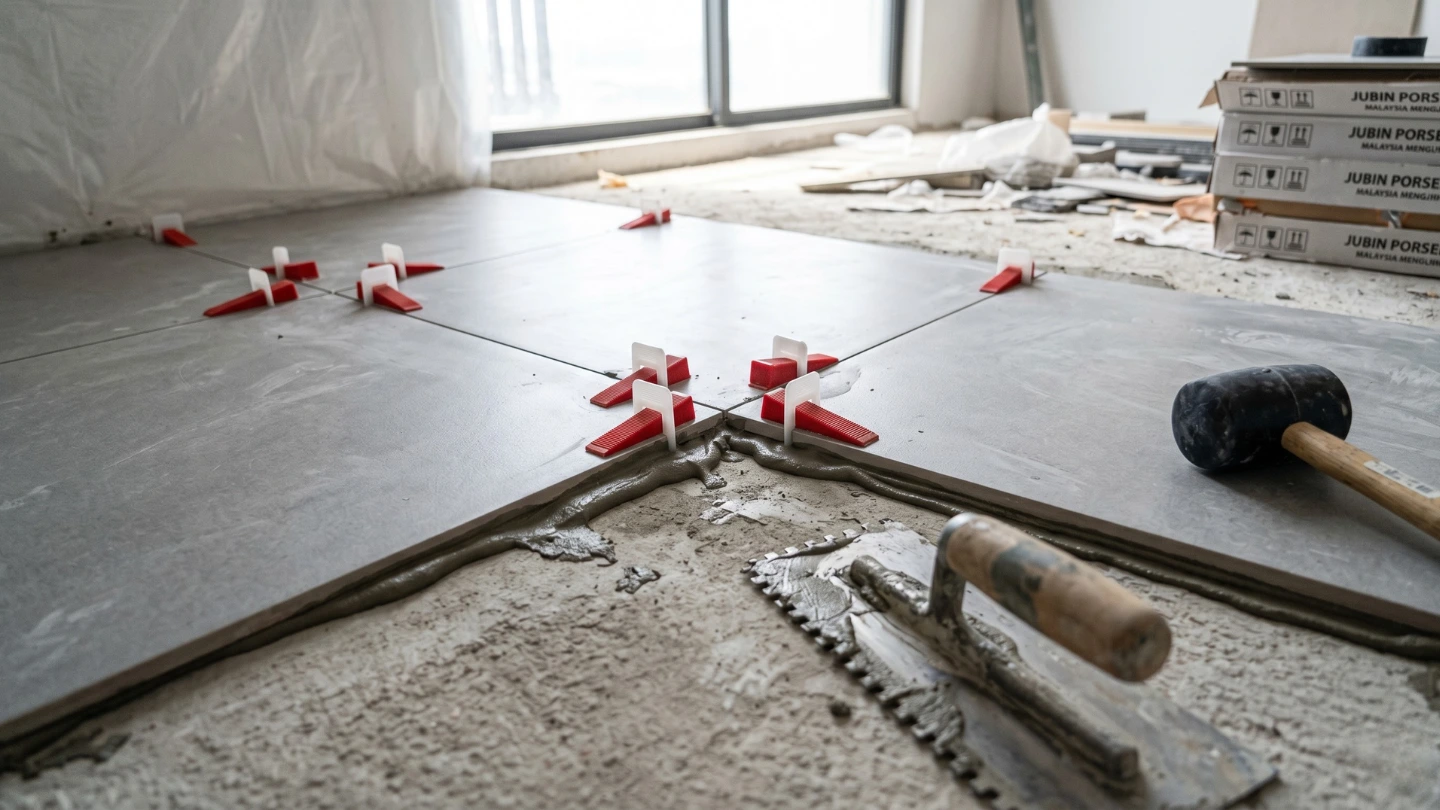
- Insist on the "double-buttering" method: adhesive is trowelled onto the screed and onto the back of the tile. This virtually eliminates voids.
- The notched trowel size must match the tile size — bigger tiles need deeper notches.
4. Use Tile Levelling Systems
Tile levelling clips and wedges cost about RM 80–RM 150 for a typical bathroom's worth of tiles. They force adjacent tiles to sit perfectly flush while the adhesive cures. There is no reason not to use them on any modern installation, especially for tiles 400mm or larger.
5. Choose the Right Layout Pattern
- For large rectangular tiles, use a one-third offset (not 50/50 brick pattern). This minimises visible lippage from natural tile bowing.
- For square tiles, stack-bond or 50/50 is fine.
- Keep grout lines at least 2–3mm wide — ultra-thin grout lines (1mm) amplify every height variation.
6. Control the Environment
- Don't tile in direct afternoon sun. Renovations during Malaysia's hottest months (March–May) need shade or air movement on-site.
- Block off the tiled area for a minimum of 24 hours after laying. Grouting should wait at least 48 hours. No walking, no furniture moving, no inspection with hard shoes.
How to Inspect Your Tiling Before Signing Off
This is the step most Malaysian homeowners skip — and it's the most important. Before you release the final payment to your contractor:
The Coin Tap Test
Grab a 50 sen coin or a small metal rod. Tap every tile in turn, especially in corners and along edges. A solid, sharp click means the tile is properly bonded. A dull, hollow thud means a void. Mark any hollow tiles with masking tape and ask for them to be redone before handover.
A tolerance of 2–5% hollow tiles in a large area is sometimes considered industry-acceptable, but any hollow tile in a wet area (bathroom, kitchen, balcony, yard) should be rejected without exception.
The Straight Edge and Torch Test
- Lay a straight edge (a metre-long spirit level works well) across the floor in multiple directions. Any gaps under the edge are high or low points.
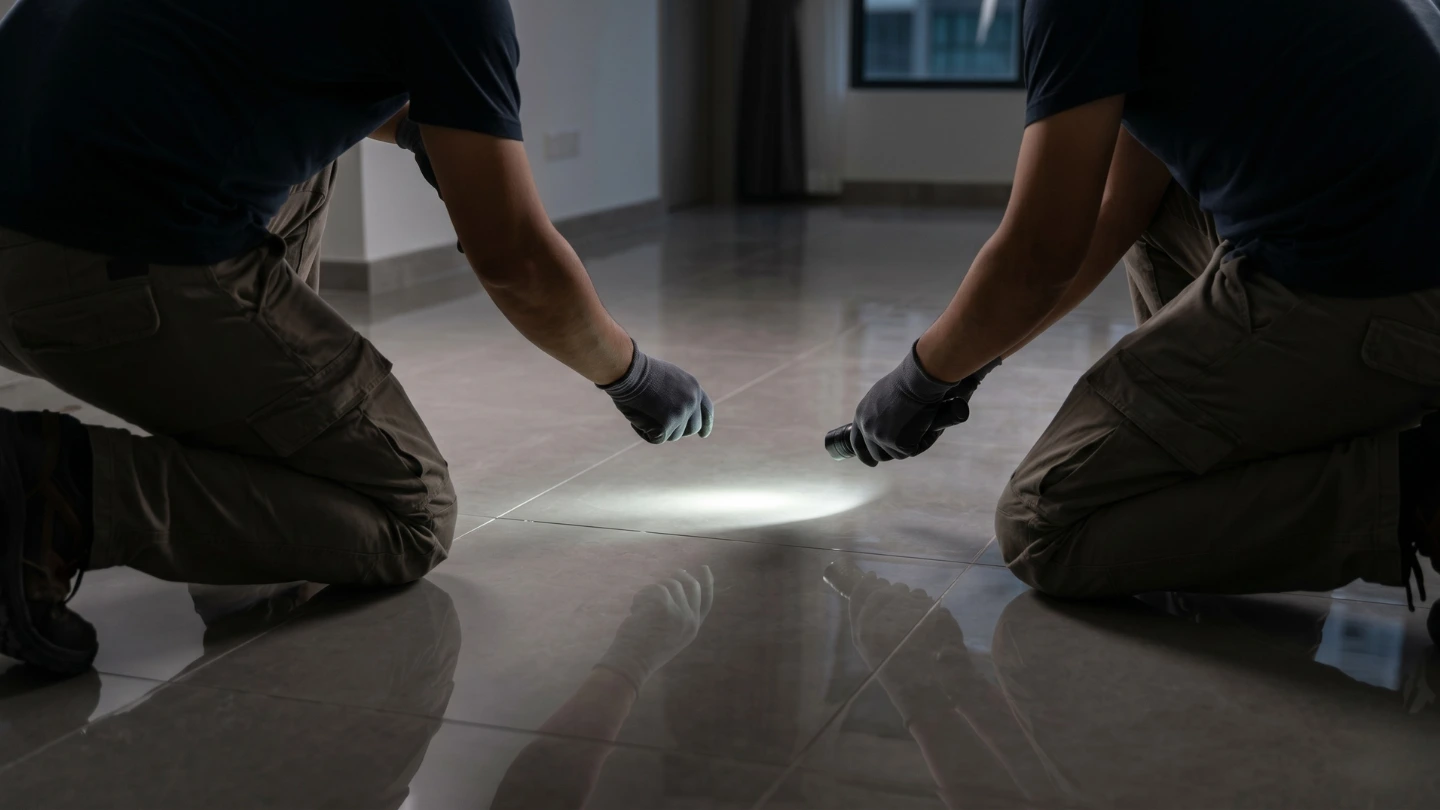
- At night, shine a bright torch at a low angle across the floor. Lippage casts long shadows that are invisible under normal lighting. This is a trick professional inspectors in Malaysia use and it works on polished porcelain in seconds.
The Water Test for Wet Areas
Before grouting final, run a water test in bathrooms and balconies — water should flow toward the floor trap, not pool in the middle or near walls. If it ponds, you have screed-level issues that must be corrected before final tiling.
What to Do If You Already Have Lippage or Hollow Tiles
If your home is already tiled and you've discovered issues, your options depend on severity:
- Minor lippage (under 1mm) on non-traffic areas — you can often live with it. Applying a slightly wider grout line when regrouting can mask it visually.
- Visible lippage in main walkways — professional diamond-grinding can shave down high edges, but it removes the tile's factory finish and is only viable on matte porcelain, not glossy or textured tiles.
- Hollow tiles in dry areas (bedrooms, living room) — if they're not cracked, they can be monitored. Many last for years.
- Hollow tiles in wet areas — replace them. Full stop. The water risk isn't worth it.
- Widespread hollow tiles across the whole floor — this is a workmanship dispute. Document with photos and the coin-tap test, and raise it with your contractor before final payment if possible, or through CIDB / consumer tribunal if you've already paid and they've disappeared.
The Bottom Line: Your Tiler's Skill Matters More Than Your Tile Choice
You can spend RM 15,000 on designer Italian porcelain and still end up with a floor that looks worse than RM 3/sq ft local ceramic — if the installation is bad. Lippage and hollow tiles aren't caused by cheap tiles. They're caused by rushed, underpaid, or inexperienced tilers cutting corners on preparation and adhesive coverage.
The best protection is twofold: hire a contractor with a proven track record (ask for photos of completed projects, not just showroom shots), and inspect the work yourself before signing off. Ten minutes with a coin and a torch can save you RM 5,000 and two weeks of rework.
Get Your Renovation Right the First Time
At Reka Interior, we've seen too many homeowners inherit tiling defects from previous contractors — and we know that proper workmanship at the tiling stage is what separates a renovation that lasts 15 years from one that needs patching up in three. If you're planning a renovation in the Klang Valley and want to work with a team that gets the details right from day one, get in touch for a free consultation today. We'll walk through your space, your timeline, and exactly how we ensure your floor is flawless — from screed to grout.