
You've approved the 3D design. The flooring is chosen. The kitchen cabinet colour is finalised. And then your contractor asks: "So how many electrical points do you want?"
Most Malaysian homeowners freeze at this question. You haven't thought about it, your ID hasn't brought it up in detail, and you have absolutely no idea what the "right" answer is. So you guess — and six months later, you're living in a home with a TV wall that has only one socket, a kitchen counter with no plug point near the mixer, and an air-conditioner that hums away with no proper isolator switch.
Electrical planning is one of the most overlooked stages of any renovation. It's invisible once the walls are plastered, which is exactly why it needs to happen before the hacking begins — not after. This room-by-room guide will walk you through exactly what you need, what it costs, and how to avoid the mistakes that are almost impossible to fix once your renovation is done.
Why Electrical Planning Can't Be an Afterthought
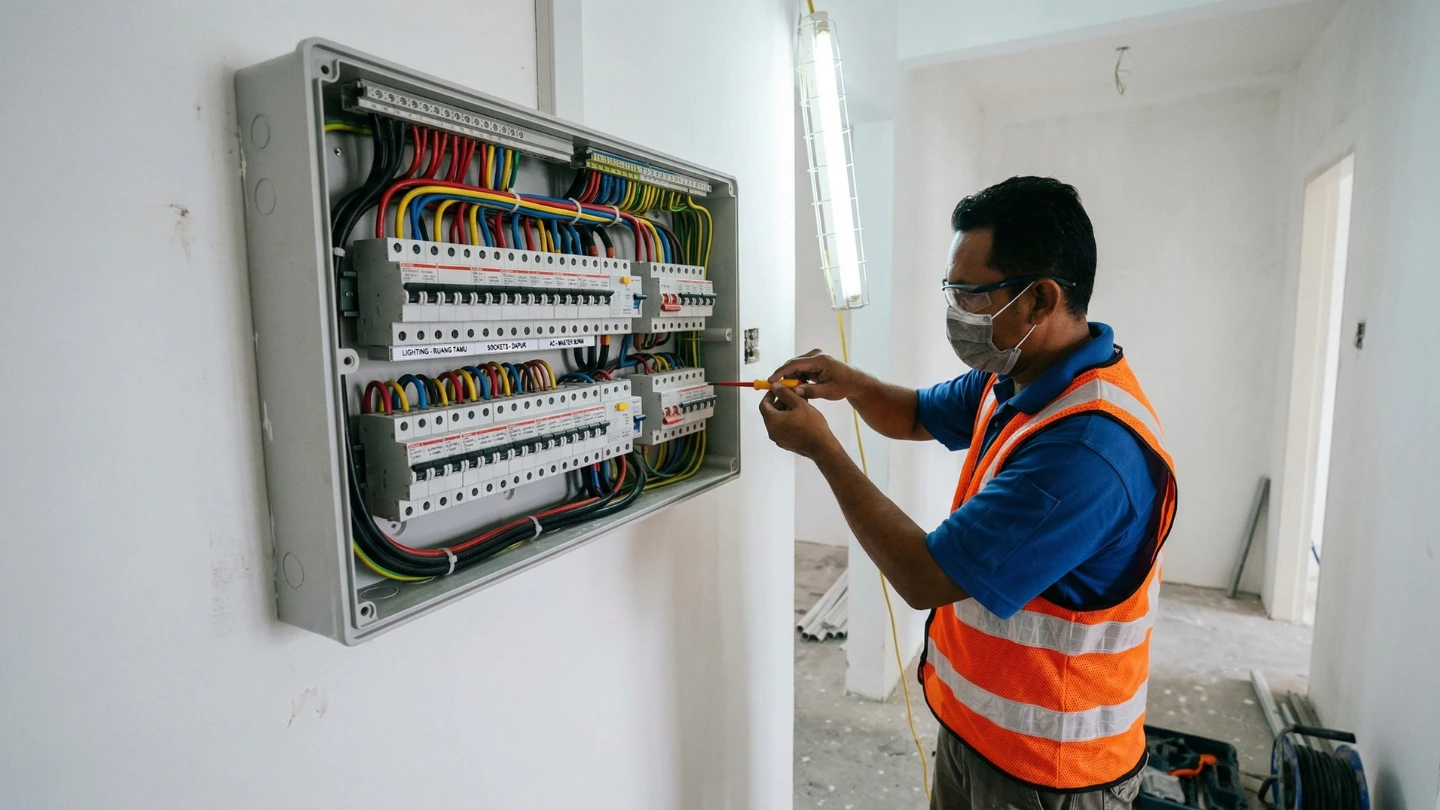
In Malaysia, any modification to a home's electrical wiring must comply with MS IEC 60364, the Malaysian Standard for low-voltage electrical installations, and all works must be carried out by a Chargeman or Licensed Electrical Contractor (LEC) registered with Suruhanjaya Tenaga (ST). This isn't just a formality — it's a legal and safety requirement.
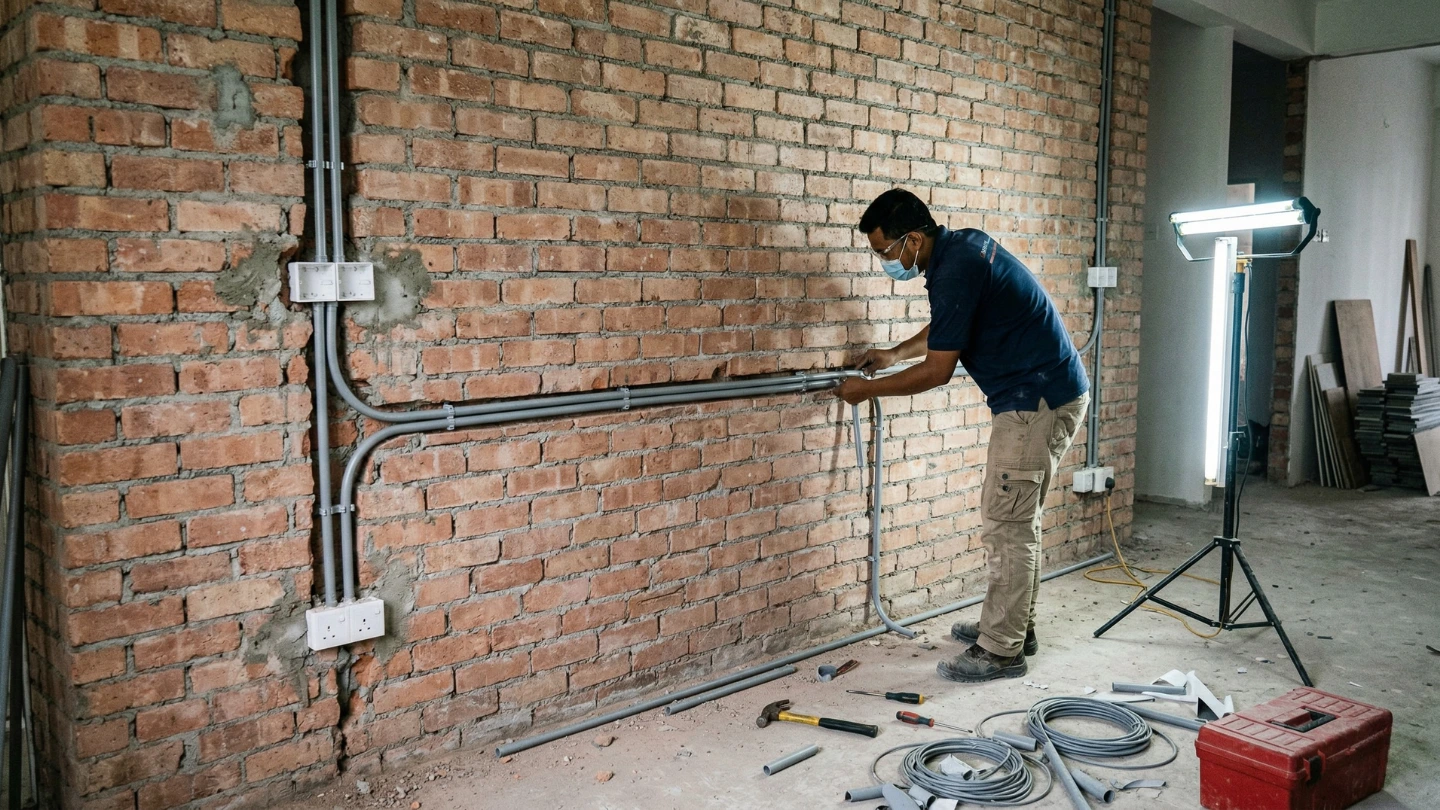
More practically, walls in Malaysian homes are either brick or lightweight block. Once plastered and painted, adding a new electrical point means hacking the wall open, chasing a new conduit, replastering, and repainting. A single forgotten socket can cost you RM300–RM800 to add after renovation. Plan properly now and it's a fraction of that cost.
What Counts as an "Electrical Point"?
Before diving into room-by-room breakdowns, it helps to know what you're counting:
- 13A socket outlet — your standard double or single plug point
- Isolator switch — a dedicated on/off switch for fixed appliances like air-conditioners and water heaters
- Switch point — a wall switch controlling a light fitting or fan
- DB (Distribution Board) circuit — each major appliance or zone typically requires its own circuit breaker
- USB charging point — increasingly popular in bedrooms and studies
- 20A socket — used for high-draw appliances like ovens, washing machines, and refrigerators
Each of these needs to be specified before wiring begins. Your electrical contractor will submit a wiring plan to Suruhanjaya Tenaga for inspection upon completion, so the layout needs to be deliberate from day one.
Room-by-Room Electrical Point Guide
Living Room
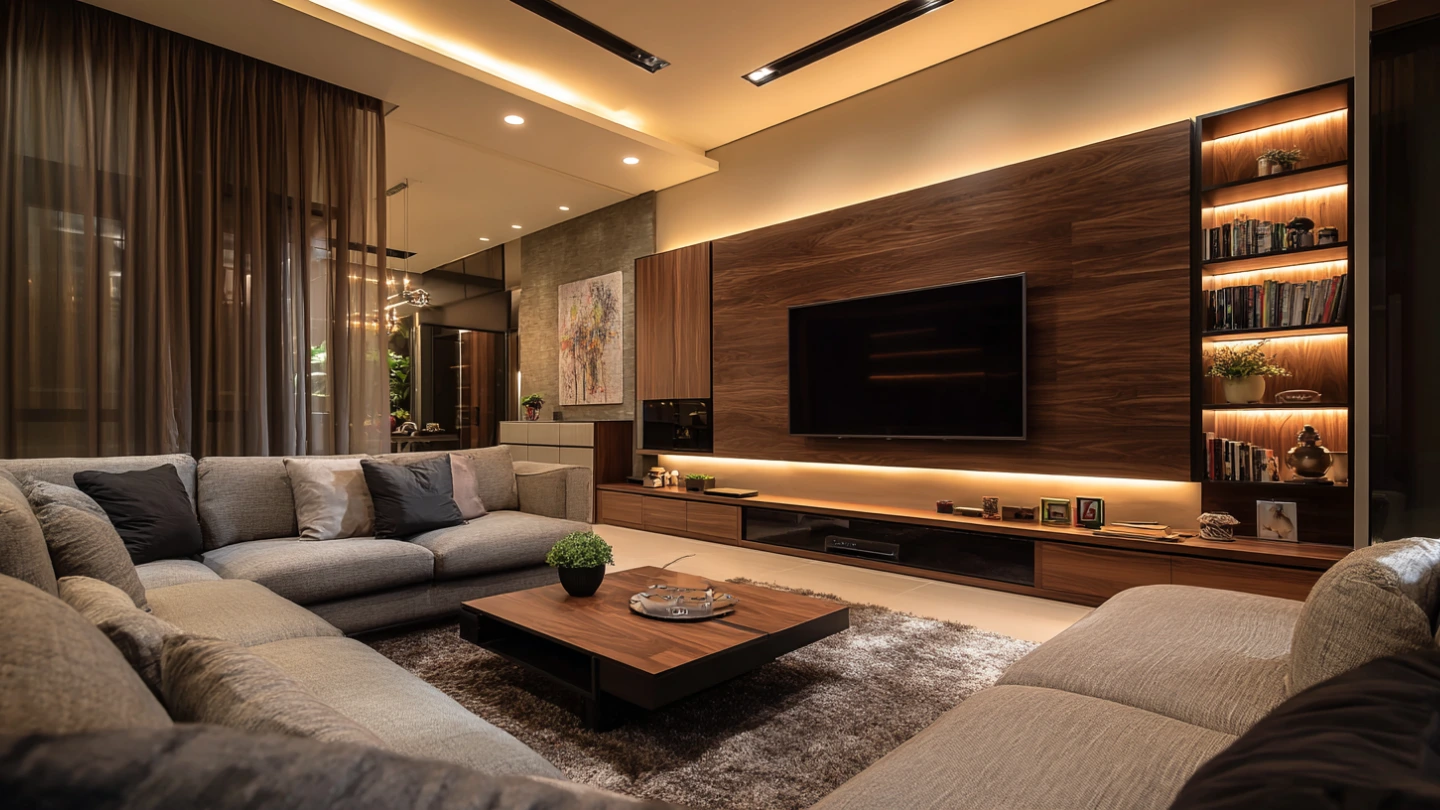
The living room typically has the most complex electrical layout in a Malaysian home — you're dealing with the TV console, entertainment system, feature wall lighting, ceiling fan, air-conditioner, and decorative lamps all at once.
Recommended minimum:
- TV wall: 4–6 socket outlets (TV, soundbar, streaming device, gaming console, HDMI switches), plus 1 data point if you're running wired internet
- Sofa side: 2 socket outlets on each side (for lamps, phone charging)
- Air-conditioner: 1 isolator switch + dedicated circuit
- Ceiling fan/light: 1 switch point (or smart switch if you're going that route)
- Feature wall/cove lighting: 1–2 switch points depending on lighting zones
Practical tip: If you're planning a TV console with concealed wiring, ask your ID to include a cable trunking outlet — a recessed compartment for HDMI and power cables that keeps the wall clean. It's a small extra cost (RM150–RM250) that makes a significant aesthetic difference.
Kitchen (Dry Kitchen)
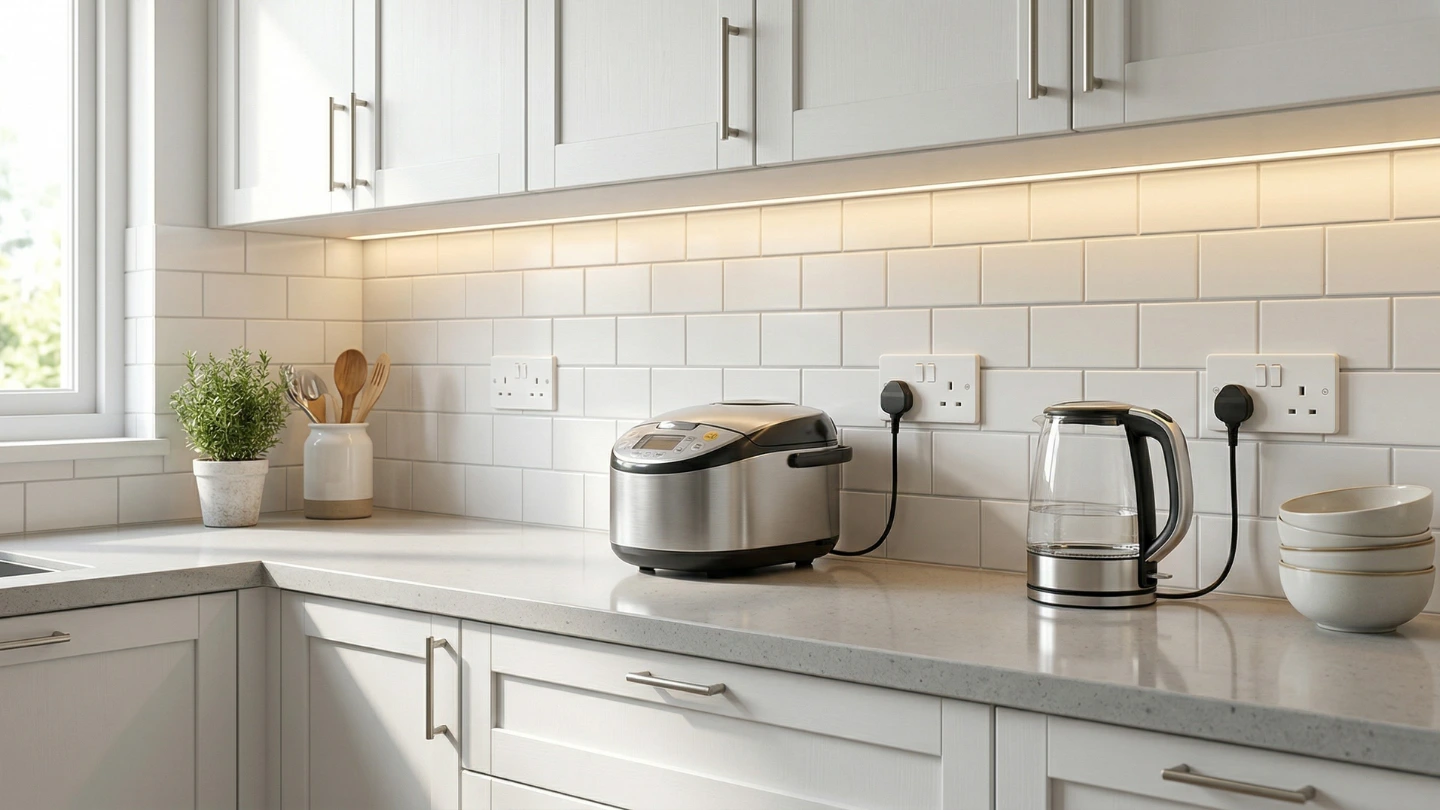
The dry kitchen in a Malaysian home is where most homeowners underestimate socket count. Every countertop appliance — rice cooker, air fryer, toaster oven, coffee machine, electric kettle, blender — needs its own accessible point. Sharing one socket strip is a fire hazard and an everyday frustration.
Recommended minimum:
- Countertop zone: 6–8 socket outlets along the backsplash at counter height (above worktop, not below)
- Refrigerator: 1 dedicated 13A socket on its own circuit
- Microwave/oven: 1 dedicated 20A socket (if built-in oven, a 20A isolator)
- Hood/hob: 1 dedicated isolator switch
- Under-cabinet lighting: 1–2 switch points
- Island (if applicable): 2–4 socket outlets on each side
Common mistake: Homeowners put socket outlets below the countertop in the cabinet. You don't want to be crouching down every time you plug in the kettle. Always position kitchen backsplash sockets 15–20cm above the worktop surface.
Kitchen (Wet Kitchen)
The wet kitchen requires specific attention to moisture-rated fittings. All sockets and switches near water sources should be IP44-rated (splash-proof) at minimum.
Recommended minimum:
- Countertop: 3–4 socket outlets above worktop
- Water heater (storage or instant): 1 isolator switch + dedicated circuit per unit
- Washing machine: 1 dedicated 13A socket with individual circuit
- Yard light: 1 switch point
Master Bedroom
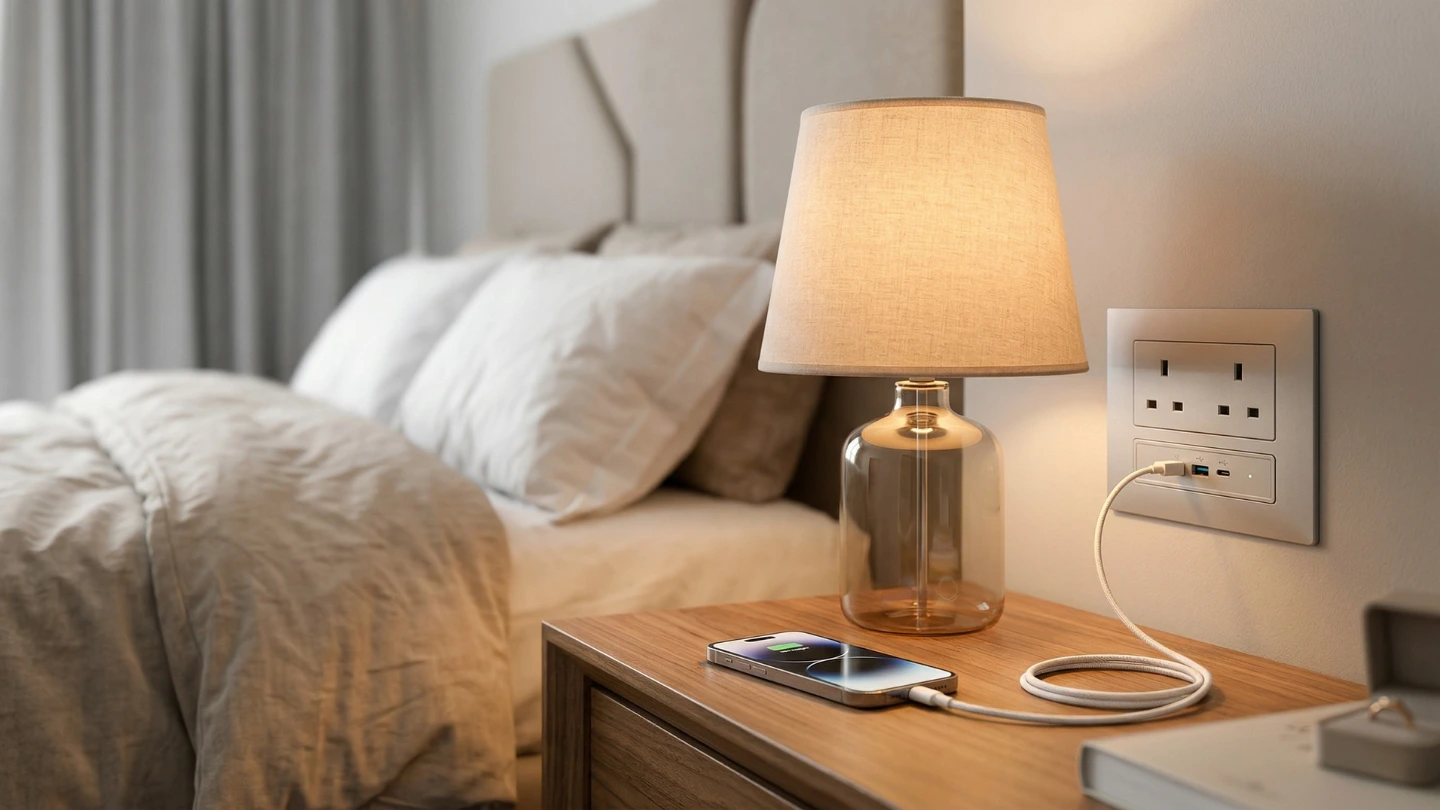
Bedrooms in Malaysian homes often suffer from too few socket outlets near the bed. With two people, two phones, a bedside lamp, and a tablet charging simultaneously, you'll want far more than the standard two points builders typically provide.
Recommended minimum:
- Each bedside (x2): 2 socket outlets + 1 USB charging point per side
- Dressing table/vanity area: 2 socket outlets (hair dryer, straightener)
- Air-conditioner: 1 isolator switch + dedicated circuit
- Wardrobe/TV area (if applicable): 2 socket outlets
- Ceiling fan/light: 1 switch point
- Feature wall/bedhead lighting: 1 switch point
For master bedrooms with attached bathrooms: Add 1 switch point for bathroom exhaust fan and 1 isolator for the water heater, ideally located just outside the bathroom door.
Smart home note: If you're planning smart switches or a home automation system, the electrical layout needs to account for a neutral wire at each switch point — something traditional Malaysian wiring often omits. Confirm this with your electrician at the planning stage.
Common Bedroom (Children's or Guest Room)
These rooms can be scaled down slightly from the master, but still need future-proofing — especially children's rooms, where usage needs will change significantly as they grow.
Recommended minimum:
- Study desk area: 3–4 socket outlets + 1 data point for computer or router
- Bedside: 2 socket outlets (at minimum one per side)
- Air-conditioner: 1 isolator switch + dedicated circuit
- Ceiling fan/light: 1 switch point
For young children's rooms, consider requesting tamper-resistant (TR) socket outlets — these have internal shutters that prevent small fingers or objects from being inserted. They're available from most Malaysian electrical suppliers at minimal extra cost.
Bathroom
Bathrooms in Malaysian homes are wet zones, which means socket requirements are governed by IP (Ingress Protection) ratings. As a general rule, no standard socket outlets should be within 60cm of a shower or bathtub.
Recommended minimum:
- Water heater: 1 isolator switch (located outside bathroom, above door height, or in adjacent corridor)
- Exhaust fan: 1 switch point (can be combined with bathroom light switch)
- Vanity lighting: 1 switch point
- Shaver socket (optional): 1 IP44-rated shaver point above vanity mirror
For bathrooms with a freestanding bathtub or premium fitouts, consult your LEC on compliant socket placement — the rules around bathroom zones are strict under MS IEC 60364.
Home Office / Study Room
With remote working now mainstream, the home office deserves serious electrical planning. Inadequate power points in a study lead to extension cords, which are both unsightly and a safety hazard.
Recommended minimum:
- Desk area: 4–6 socket outlets (monitor, laptop charger, desk lamp, printer, speakers, phone charger)
- 1–2 data points (wired internet is significantly more stable for video calls than WiFi)
- Air-conditioner: 1 isolator switch + dedicated circuit
- USB charging points: 1–2 at desk level
What Does It All Cost? A Rough RM Guide
Electrical work in Malaysia is typically quoted either per point or as a lump sum. Here's a general range to help you budget:
| Item | Estimated Cost (RM) |
|---|---|
| 13A double socket outlet (supply + install) | RM80 – RM150 per point |
| 20A isolator switch | RM120 – RM200 per point |
| Switch point (light/fan) | RM60 – RM120 per point |
| USB charging point | RM120 – RM180 per point |
| New circuit from DB | RM300 – RM600 per circuit |
| Full rewiring (3-bedroom condo) | RM5,000 – RM12,000 |
| Adding a point post-renovation (hacking + replaster) | RM300 – RM800 per point |
Prices vary by contractor, property type, and location. These are indicative 2026 estimates for Klang Valley.
5 Electrical Planning Mistakes Malaysian Homeowners Make
1. Not walking through the space with your electrician Your ID creates the layout, but your electrician implements it. Always request a joint site walk with both present so spatial decisions and wiring runs are aligned from the start.
2. Forgetting dedicated circuits for high-draw appliances Air-conditioners, water heaters, ovens, and washing machines must each have their own circuit breaker. Running them on shared circuits causes tripping and long-term damage to your DB.
3. Planning sockets to match current appliances only You don't own a standing fan today, but you might in three years. Plan sockets based on how you'll use the room over the next decade, not just your current appliance count.
4. Ignoring outdoor and yard points Terrace house owners frequently overlook the yard area. A single weatherproof socket near the back door serves a washing machine, water pump, outdoor speakers, or landscape lighting — whichever you need in the future.
5. Skipping the DB (Distribution Board) capacity check If you're renovating a resale property, have your LEC assess whether the existing DB can handle your new electrical load. Upgrading a DB typically costs RM800–RM2,500 — far cheaper than an electrical fault.
How to Work With Your ID and Electrician
The best time to finalise your electrical layout is during the space planning stage, when you're still moving furniture around on a 2D or 3D plan. At this point, you can:
- Mark every intended appliance position and count the required sockets
- Identify all fixed appliance positions (air-cons, water heaters, kitchen hood)
- Confirm smart switch requirements (neutral wire)
- Agree on switch heights and socket heights as a consistent standard throughout the home
A well-prepared electrical plan submitted to your contractor before hacking begins avoids costly changes mid-renovation and ensures your licensed electrician can submit a compliant wiring layout to Suruhanjaya Tenaga for inspection.
Ready to Get Your Renovation Right the First Time?
Electrical planning is the kind of detail that separates a thoughtfully renovated home from one you'll be patching up for years. The decisions you make now — which walls get wires, how many circuits you run, where every switch lands — will follow you for the life of the property.
If you'd like expert guidance on your renovation layout, including electrical point planning, contact our team for a free consultation. We'll help you map out every detail before the first wall is touched.