
From moisture-resistant laminates to solid wood and PVC, discover which kitchen cabinet material suits Malaysian homes — with RM cost breakdowns and expert tips
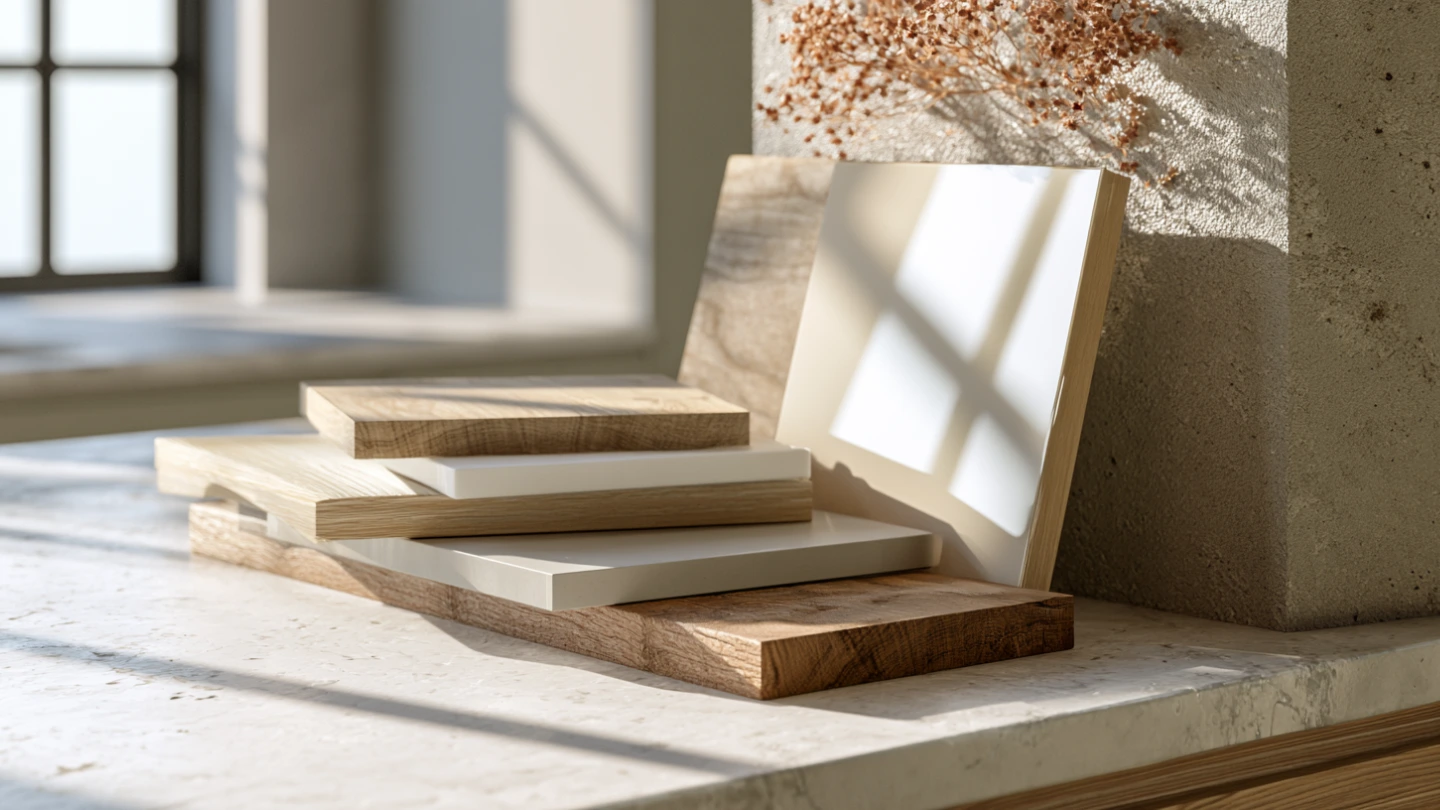
You've shortlisted your kitchen layout, picked your colour palette, and now your contractor sends over a quotation with terms like "MDF", "PVC board", "HPL", and "solid wood" — all at wildly different price points. Sound familiar?
Choosing the right kitchen cabinet material is one of the most consequential decisions in any Malaysian home renovation. Get it right, and your cabinets look great and last 15 years. Get it wrong, and you're dealing with swollen doors, peeling surfaces, and mould — all within a few years of moving in.
This guide breaks down the 6 most common kitchen cabinet materials used in Malaysian homes today, comparing them on durability, moisture resistance, cost, and maintenance — so you can make a confident, informed choice.
Why Material Choice Matters More in Malaysia
Before we dive into the materials, it's worth understanding why this decision carries more weight here than in, say, the UK or Australia. Malaysia's climate — high humidity, frequent rain, and temperatures that rarely drop below 25°C — creates specific challenges for kitchen cabinetry:
- Moisture and humidity cause wood-based materials to expand, warp, or swell over time
- Condensation near wet kitchen areas accelerates surface delamination and mould growth
- Cooking steam from a busy Malaysian kitchen (think rendang, curry, and stir-fry) adds another layer of heat and moisture exposure
A material that performs beautifully in a temperate climate may fail prematurely in a Malaysian wet kitchen. With that context, let's look at your options.
1. Moisture Resistant (MR) MDF
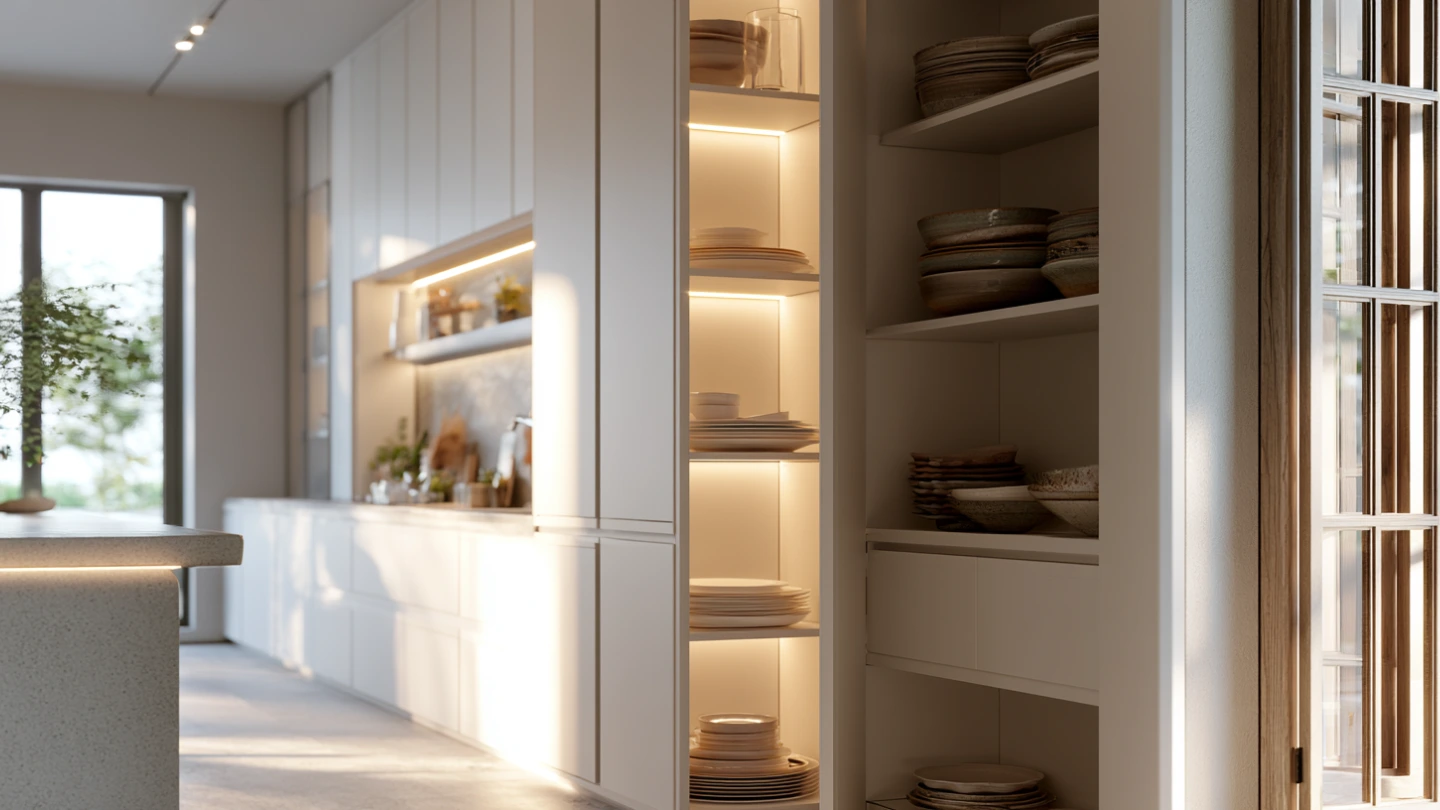
What it is: Medium Density Fibreboard (MDF) is an engineered wood product made from compressed wood fibres and resin. The "Moisture Resistant" grade includes added wax or resin to improve its resistance to humidity.
Pros:
- Smooth, consistent surface — ideal for painted finishes and wrapped veneers
- Easy to cut and machine — allows for detailed profiles and custom shapes
- More affordable than solid wood or solid surface materials
- Moisture Resistant grade handles moderate humidity reasonably well
Cons:
- Not fully waterproof — prolonged exposure to direct water (leaks, splashing) will cause swelling
- Heavier than plywood, which can strain cabinet hinges over time
- Cannot be re-finished as easily as solid wood once damaged
Best for: Dry kitchen cabinets in condos and apartments with proper ventilation. Less suitable for wet kitchen areas directly adjacent to sinks or open cooking zones.
Typical Cost (Malaysia): RM 250 – RM 450 per linear foot (supply and install), depending on finish and hardware.
Prices listed are for reference only. Actual costs may vary — always refer to your vendor or contractor for the most accurate and up-to-date quotation.
2. Plywood
What it is: Plywood is made from thin layers (plies) of wood veneer glued together in alternating grain directions. Marine-grade or moisture-resistant plywood is commonly used in Malaysian kitchen construction.
Pros:
- Superior structural strength and screw-holding ability compared to MDF
- More resistant to moisture than standard MDF — less likely to swell from humidity
- Lighter than MDF at equivalent thickness
- Holds up better in wet kitchen conditions when properly sealed or finished
Cons:
- Surface is not as smooth as MDF — not ideal for high-gloss or painted finishes without additional treatment
- More expensive than MDF
- Quality varies significantly between brands and grades — always specify the grade
Best for: Cabinet carcasses (the structural box) in both wet and dry kitchens. Often used as the internal framework even when the exterior doors are a different material.
Typical Cost (Malaysia): RM 350 – RM 600 per linear foot (supply and install).
Prices listed are for reference only. Actual costs may vary — always refer to your vendor or contractor for the most accurate and up-to-date quotation.
3. PVC Board
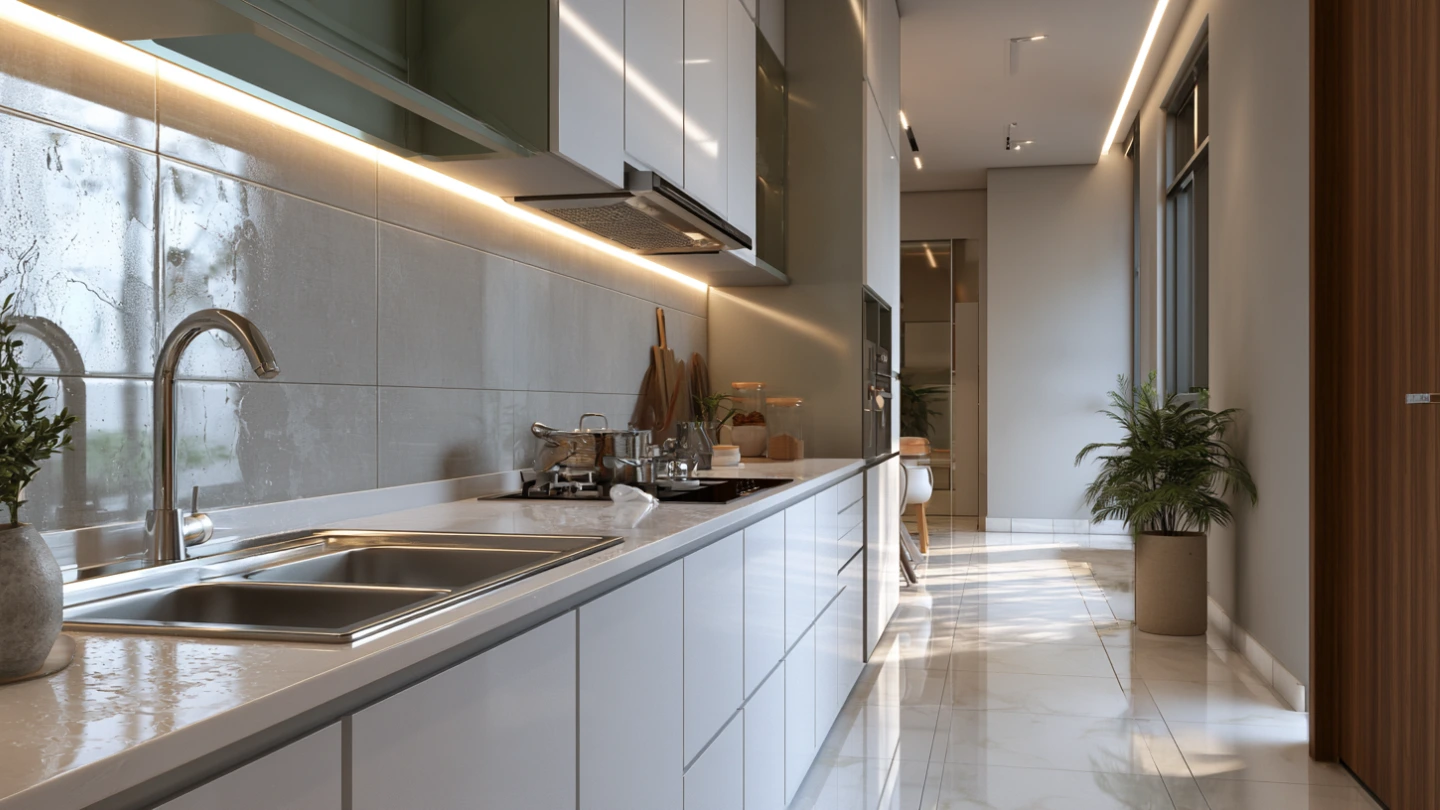
What it is: PVC (Polyvinyl Chloride) board is a fully synthetic material made from plastic compounds. It's increasingly popular in Malaysian kitchens, particularly for wet kitchen applications.
Pros:
- 100% waterproof — the single biggest advantage for Malaysian wet kitchens
- Termite-proof and mould-resistant
- Lightweight and easy to handle
- Low maintenance — wipes clean easily
Cons:
- Can appear less premium than wood-based materials — more plastic-like finish
- Not as rigid as plywood under heavy loads
- Limited aesthetic options compared to laminates or veneer finishes
- Can discolour or warp under prolonged direct heat (e.g., cabinet directly next to a gas hob without a heat shield)
Best for: Wet kitchen cabinets, cabinets under sinks, and any areas with direct water exposure. Excellent for homeowners prioritising practicality over aesthetics.
Typical Cost (Malaysia): RM 200 – RM 380 per linear foot (supply and install).
Prices listed are for reference only. Actual costs may vary — always refer to your vendor or contractor for the most accurate and up-to-date quotation.
4. High Pressure Laminate (HPL)
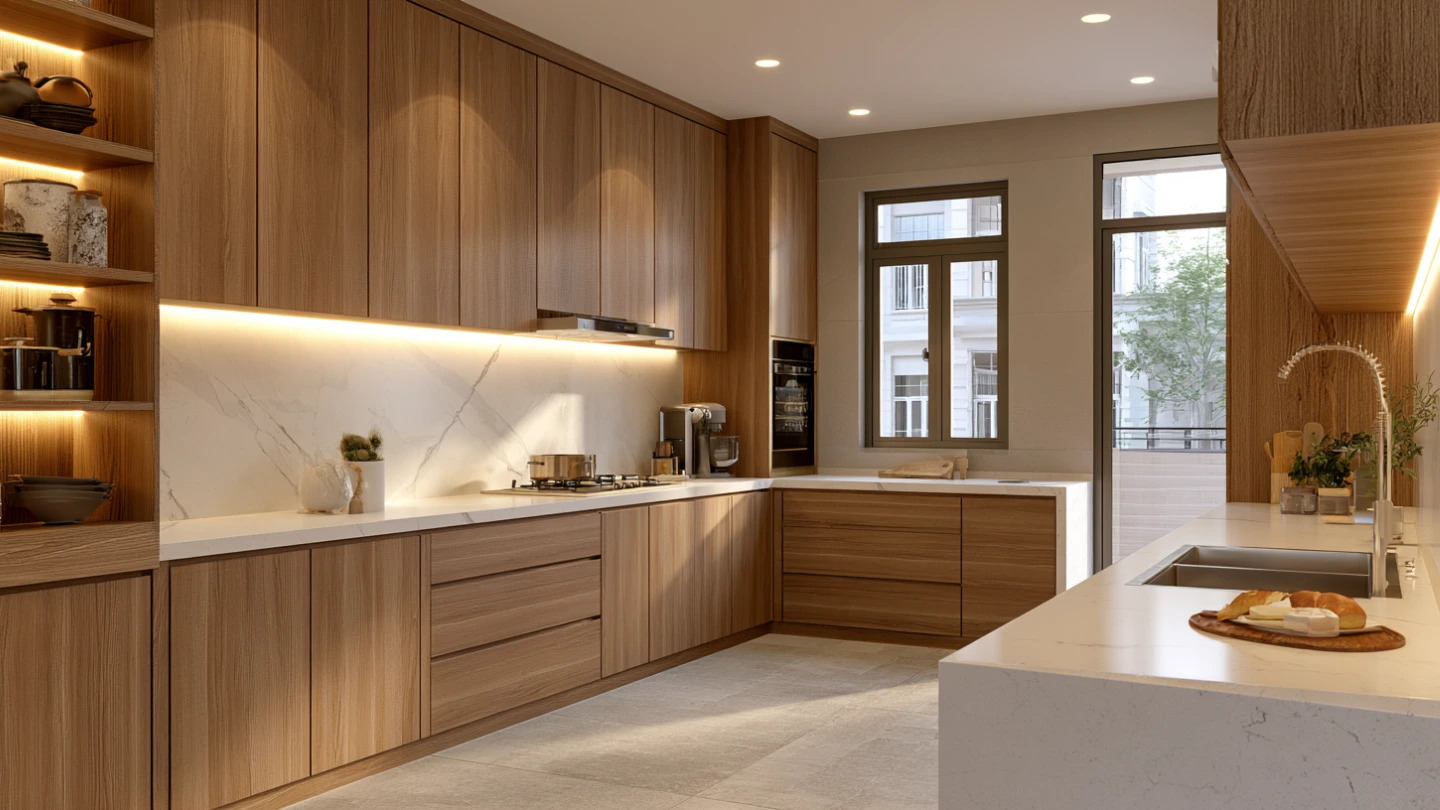
What it is: HPL is not a substrate material on its own — it's a decorative surface finish bonded under high pressure to a core material (typically MR MDF or plywood). It's one of the most widely used kitchen cabinet finishes in Malaysia.
Pros:
- Highly durable surface — resistant to scratches, abrasion, and moderate heat
- Wide range of colours, textures, and wood-look patterns
- More affordable than solid wood while mimicking its appearance
- Relatively easy to clean and maintain
Cons:
- The durability depends heavily on the quality of the substrate underneath
- Edges can chip or peel if not properly sealed with edge banding
- Surface is not repairable — once chipped or scratched, the panel typically needs replacing
Best for: Dry kitchen and dry kitchen cabinet doors where a balance of aesthetics, durability, and value is needed. One of the most versatile options in the Malaysian market.
Typical Cost (Malaysia): RM 280 – RM 500 per linear foot (HPL-finished cabinets, supply and install), depending on brand and substrate.
Prices listed are for reference only. Actual costs may vary — always refer to your vendor or contractor for the most accurate and up-to-date quotation.
5. Solid Wood
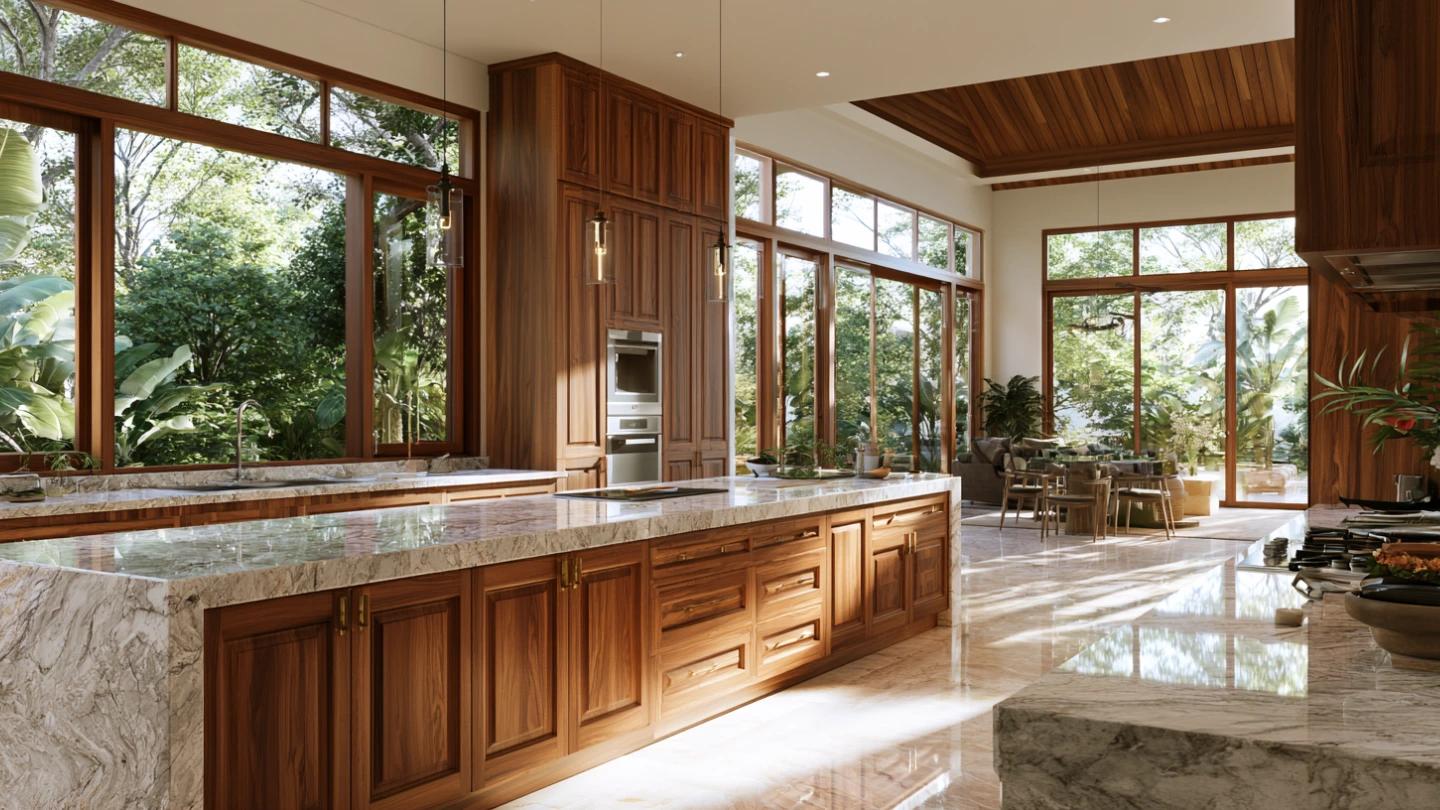
What it is: Solid wood cabinets are made from natural timber — common species used in Malaysia include rubberwood, meranti, oak, and teak. It's the most premium cabinet material and carries a distinct visual character.
Pros:
- Beautiful, natural aesthetics — each piece is unique
- Can be sanded and re-finished multiple times, extending lifespan significantly
- Strong and durable when properly sealed and maintained
- Adds perceived value to the home
Cons:
- Most expensive option — significantly higher cost than engineered alternatives
- Susceptible to warping, expanding, and contracting with humidity changes in Malaysia
- Requires more maintenance — regular sealing, polishing, and vigilance against termites
- Heavy — requires robust cabinet hardware
Best for: High-end landed properties (bungalows, semi-detached) where budget allows and the homeowner is committed to regular maintenance. Less practical for high-humidity wet kitchens without proper protective treatment.
Typical Cost (Malaysia): RM 700 – RM 1,500+ per linear foot (supply and install), depending on timber species and design complexity.
Prices listed are for reference only. Actual costs may vary — always refer to your vendor or contractor for the most accurate and up-to-date quotation.
6. Acrylic / High-Gloss Panels
What it is: Acrylic panels are smooth, glossy sheets applied to a substrate (typically MDF) as the cabinet door finish. They're popular for modern, minimalist kitchen designs.
Pros:
- Stunning high-gloss finish — creates a sleek, contemporary look
- Reflects light, making smaller kitchens feel more spacious
- Easy to wipe clean
- Colour-consistent and vibrant
Cons:
- Fingerprints and smudges show very easily — high maintenance in a busy family kitchen
- Scratches are visible and difficult to repair
- Higher cost compared to HPL finishes
- Can crack under impact
Best for: Dry kitchens in condos and modern apartments where aesthetics are a priority and the kitchen sees lighter daily use. Pairs beautifully with handleless cabinet designs.
Typical Cost (Malaysia): RM 400 – RM 700 per linear foot (supply and install), depending on brand and thickness.
Prices listed are for reference only. Actual costs may vary — always refer to your vendor or contractor for the most accurate and up-to-date quotation.
Side-by-Side Comparison
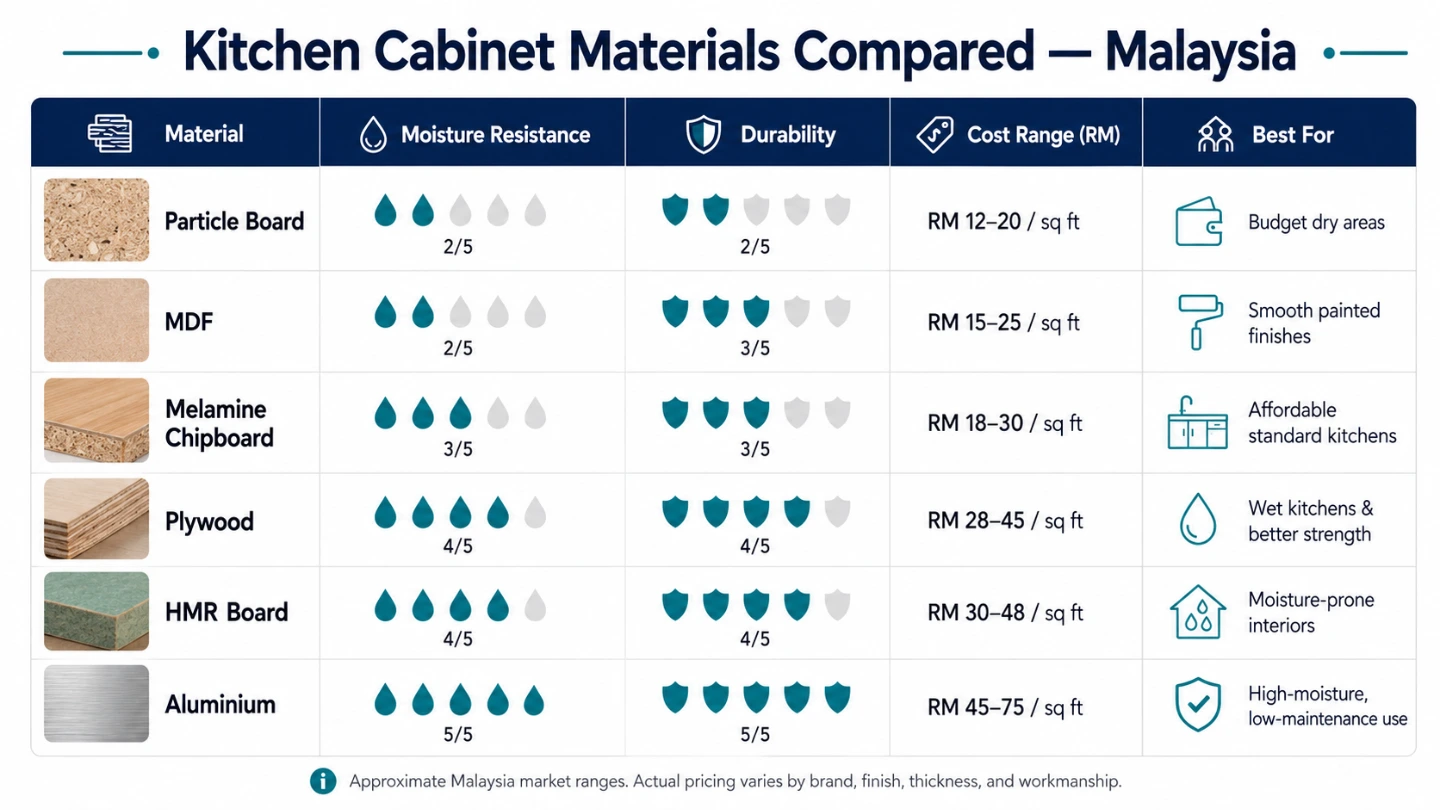
| Material | Moisture Resistance | Durability | Cost Range (per linear ft) | Best For |
|---|---|---|---|---|
| MR MDF | Moderate | Good | RM 250 – 450 | Dry kitchen, condos |
| Plywood | Good | Very Good | RM 350 – 600 | Carcasses, wet & dry |
| PVC Board | Excellent | Good | RM 200 – 380 | Wet kitchen, under sinks |
| HPL | Good (surface) | Very Good | RM 280 – 500 | Dry kitchen doors |
| Solid Wood | Low–Moderate | Excellent (with upkeep) | RM 700 – 1,500+ | Premium landed homes |
| Acrylic | Good (surface) | Moderate | RM 400 – 700 | Modern dry kitchens |
Prices listed are for reference only. Actual costs may vary — always refer to your vendor or contractor for the most accurate and up-to-date quotation.
What Malaysian Designers Actually Recommend
Most experienced Malaysian interior designers and contractors don't use a single material throughout — they combine materials strategically:
The smart combination for most Malaysian homes:
- Plywood carcass (the internal box structure) for structural strength and moisture resistance
- HPL doors for the dry kitchen — durable, attractive, and value-for-money
- PVC board for the wet kitchen cabinet carcass and any under-sink areas
- Acrylic or HPL doors for the dry kitchen island or feature cabinets if budget allows
This approach balances performance, aesthetics, and cost — and it's what you'll find in most well-executed Malaysian kitchen renovations in the RM 30,000–60,000 range.
Key Questions to Ask Your Contractor
Before you sign off on any kitchen cabinet quotation, get clear answers to these questions:
- What material is the carcass (box)? Don't assume — specify plywood if that's what you want.
- What grade of MDF or plywood is being used? Always ask for Moisture Resistant (MR) grade.
- What brand of HPL or acrylic is being used? Reputable brands like Formica, Wilsonart, or local equivalents make a significant quality difference.
- How are the edges finished? Proper edge banding prevents peeling and chipping.
- Is the wet kitchen area getting PVC or plywood carcasses? This is non-negotiable for longevity in Malaysian wet kitchens.

Final Thoughts
There's no single "best" kitchen cabinet material — the right choice depends on your property type, usage patterns, budget, and how much maintenance you're willing to commit to. But in Malaysia's humid climate, one rule applies universally: never compromise on the substrate quality in wet kitchen areas.
Whether you're renovating a condo in Petaling Jaya, a terrace house in Subang, or a bungalow in Damansara, getting the material specification right from the start will save you thousands in premature replacements down the line.
Unsure which combination works best for your kitchen layout and budget? Our design team would love to help. Get a free consultation with Reka Interior and we'll walk you through the options that make the most sense for your home.